
Beautiful Plants For Your Interior
Beautiful Plants For Your Interior
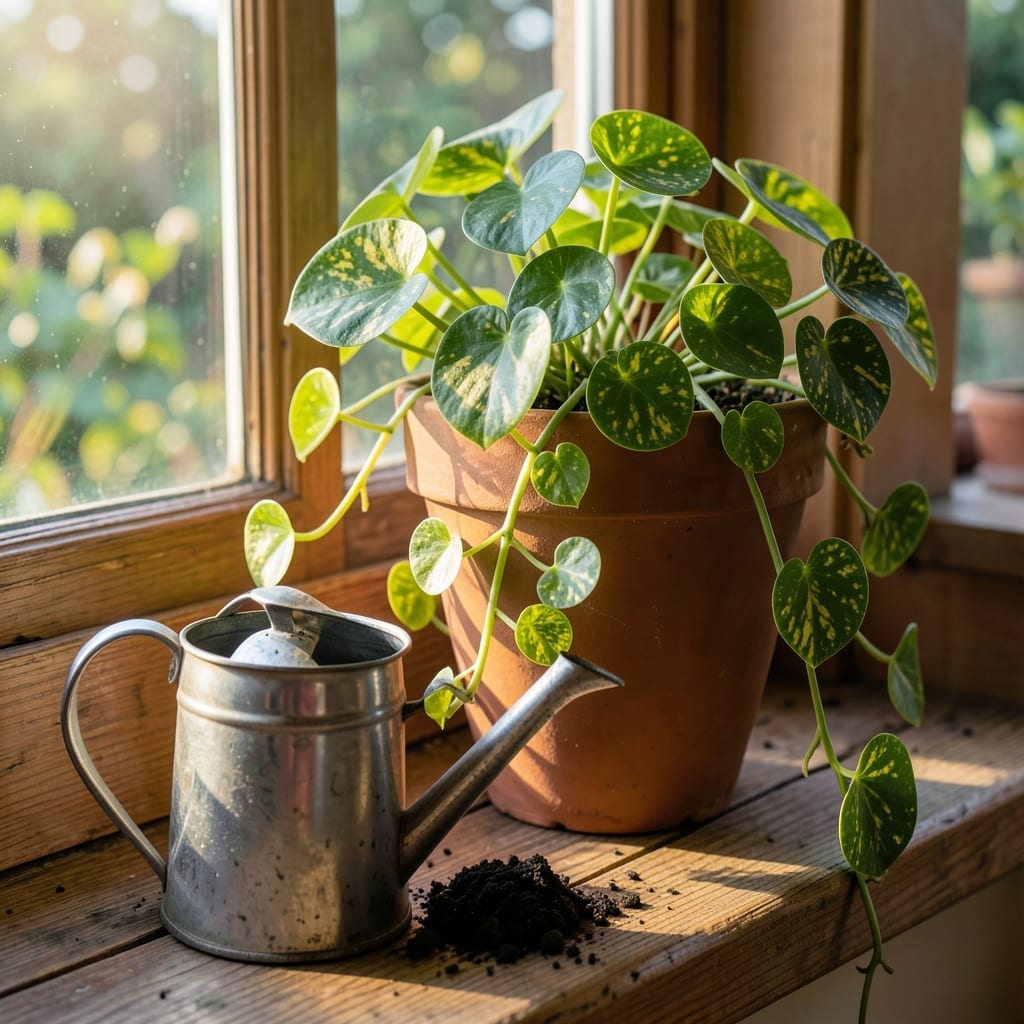
That perfectly round Chinese Money Plant 🌿 in your living room might be sending silent SOS signals about its watering needs. Too much love with the watering can, and you risk drowning its charm.
Getting the balance right is the key to keeping your Pilea peperomioides thriving. The secret lies in understanding its seasonal rhythms and subtle cues.
Let me walk you through the simple schedule that will keep your Chinese Money Plant happy and healthy year-round. You’ll never have to second-guess your watering routine again.
I’ve found that the Chinese Money Plant thrives when its watering schedule matches the seasons. This means adjusting your routine as the weather changes to keep your Pilea peperomioides in peak condition.
In my experience, the key factor is always checking the soil moisture before watering. This simple step prevents both overwatering and underwatering issues that can stress your plant.
| Season | Watering Frequency | Soil Check |
|---|---|---|
| Spring | Weekly | Top inch dry |
| Summer | Every 5-7 days | Top 1-2 inches dry |
| Fall | Every 10-14 days | Top 2 inches dry |
| Winter | Every 2-3 weeks | Completely dry |
The spring growth spurt demands more frequent watering as your plant produces new leaves. I always check the top inch of soil—if it’s dry, it’s time to water.
During summer heat, your Pilea may need water every 5-7 days. I recommend watering in the early morning to reduce evaporation and prevent fungal issues.
As fall arrives, growth slows and water needs decrease. I’ve learned to wait until the top 2 inches of soil are dry before watering again.
In winter dormancy, your plant needs very little water. I only water when the soil is completely dry, which might be just 2-3 times in the entire season.
Remember that humidity levels and light exposure can affect these guidelines. In my home, I adjust based on whether the plant is near a sunny window or in a shadier spot.
For indoor plants, the finger test works wonders. I simply stick my finger about 1-2 inches into the soil to check moisture levels before deciding to water.
I’ve noticed that outdoor Pileas in warmer climates may need more frequent watering, especially during heat waves. Always check the soil rather than sticking to a rigid schedule.
Your Chinese Money Plant will often tell you when it’s thirsty or drowning. I’ve learned to watch for subtle changes in its appearance and texture.
The most common sign of overwatering is yellowing leaves that feel soft to the touch. This usually means the roots are struggling to breathe in soggy soil.
For underwatering, I notice my Pilea’s leaves become dry and crispy, especially at the edges. The soil will also pull away from the pot’s sides when bone dry.
Another telltale sign is drooping leaves, though this can be tricky as both over and underwatering can cause it. I check the soil moisture to confirm which issue I’m dealing with.
I’ve found that root rot from overwatering often comes with a musty smell. If you notice this, it’s time to repot your plant in fresh, dry soil immediately.
Remember that seasonal changes affect these signs. In winter, your Pilea needs less water, so what looks like underwatering might just be normal dormancy behavior.
I always recommend checking the soil moisture with your finger before adjusting your watering routine. This simple test prevents most watering-related issues with your Chinese Money Plant.