
Beautiful Plants For Your Interior
Beautiful Plants For Your Interior
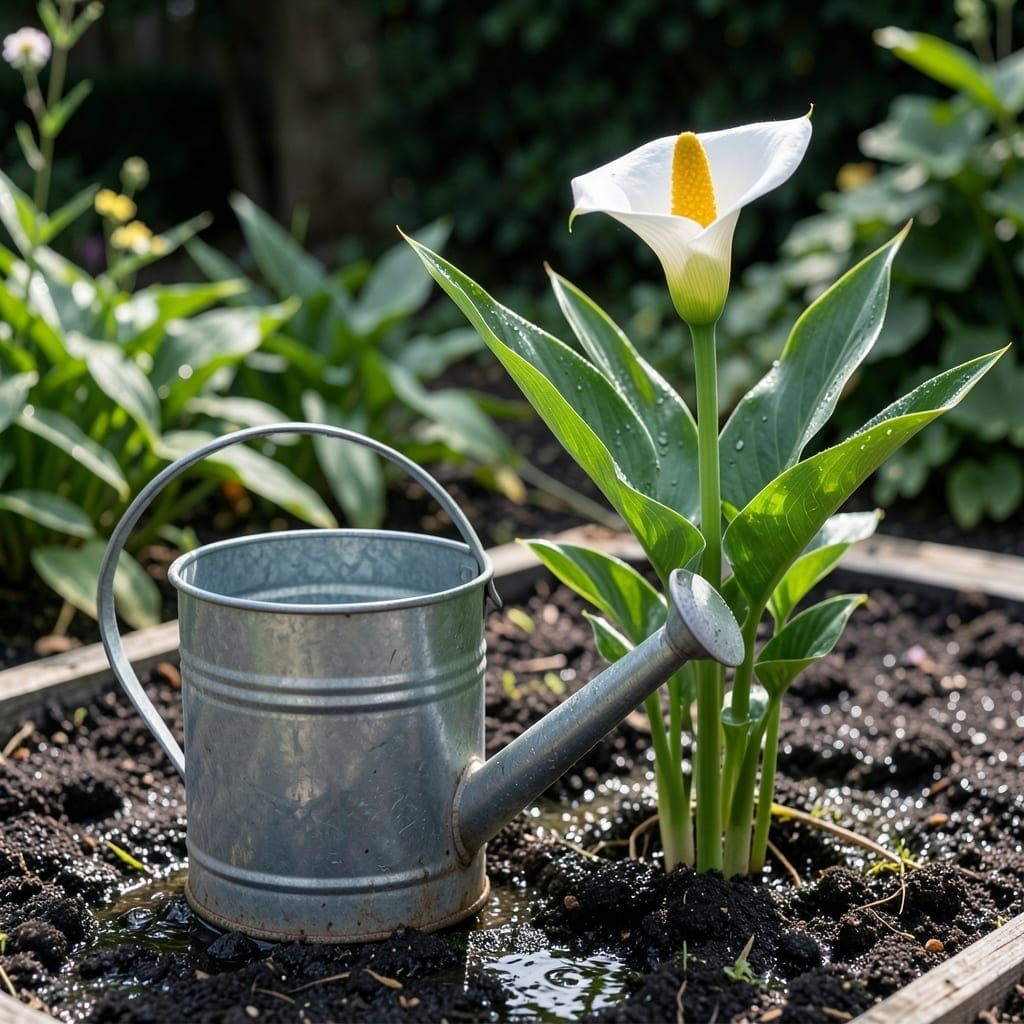
Calla lilies bring elegant, trumpet-shaped blooms to gardens and homes, but their watering needs often confuse even experienced gardeners. Get it wrong, and you’ll face drooping leaves or root rot instead of vibrant 🌸 Calla Lily flowers.
I’ve seen too many gardeners struggle with this beautiful yet finicky plant. The key is understanding that their water needs change with the seasons and growth stages.
Discover the simple yet effective schedule that’ll keep your calla lilies thriving year-round. Let me walk you through the essentials.
Getting the watering schedule right is crucial for healthy calla lilies. These plants thrive when their soil moisture stays consistent but never soggy. I’ve found that their needs shift dramatically with the seasons and their growth phase.
Their active growth in spring and summer demands more frequent watering, while dormant periods in fall and winter require much less attention. Let’s break it down by time of year.
| Season | Frequency | Amount | Notes |
|---|---|---|---|
| Spring | Weekly | Deep soak | Active growth begins |
| Summer | 2x/Week | Generous | Hot weather increases thirst |
| Fall | Weekly | Moderate | Slow growth phase |
| Winter | Bi-weekly | Light | Dormant period |
In spring, I start watering weekly as new shoots emerge. The soil should feel moist but not wet about an inch down. This is when your calla lily is building its energy for those stunning blooms.
When summer heat arrives, I increase watering to twice weekly. The key is deep watering—give them a thorough soak rather than frequent light sprinkles. This encourages strong root development and prevents shallow root systems.
As we move into fall, the plant’s growth slows. I scale back to weekly watering again, but I’m careful not to overdo it. The soil should dry slightly between waterings at this stage.
During winter dormancy, calla lilies need very little water. I switch to a bi-weekly schedule with just enough to prevent the soil from completely drying out. This mimics their natural cycle and prevents rot.
Container-grown calla lilies often need more frequent watering than those in the ground. I check my potted plants every 5-7 days because containers dry out faster, especially in warm weather.
For in-ground plants, I find they do well with watering every 10-14 days, depending on rainfall. The soil’s ability to retain moisture is better in garden beds than in pots.
Remember, these are guidelines. Always check your soil moisture before watering. I use the simple finger test—stick your finger an inch into the soil. If it feels dry, it’s time to water.
With this seasonal approach, your calla lilies will reward you with lush foliage and vibrant blooms year after year 🌸
I’ve learned that calla lilies are quite vocal about their watering needs—if you know what to look for. These plants show clear distress signals when they’re getting too much or too little moisture.
Catching these signs early can mean the difference between a thriving plant and one that’s struggling to survive. Here are the most common red flags I watch for in my garden.
If I see yellow leaves, I immediately check the soil moisture. More often than not, I’ve been too generous with the watering can. I’ll stop watering and let the soil dry out a bit before resuming a more moderate schedule.
When leaves start drooping, I know it’s time to give my calla lily a deep drink. I water slowly and thoroughly, making sure the moisture reaches the root zone. The plant usually perks up within a few hours.
For brown tips, I increase humidity by misting the leaves or placing a tray of water with pebbles nearby. This often resolves the issue without changing my watering routine.
If I spot mold or fungus, I stop watering completely for a few days and ensure the plant has good air circulation. Sometimes, I’ll even repot the plant in fresh, well-draining soil to prevent further issues.
My calla lilies thrive when I respond quickly to these water stress signs with the right adjustments 🌿