
Beautiful Plants For Your Interior
Beautiful Plants For Your Interior
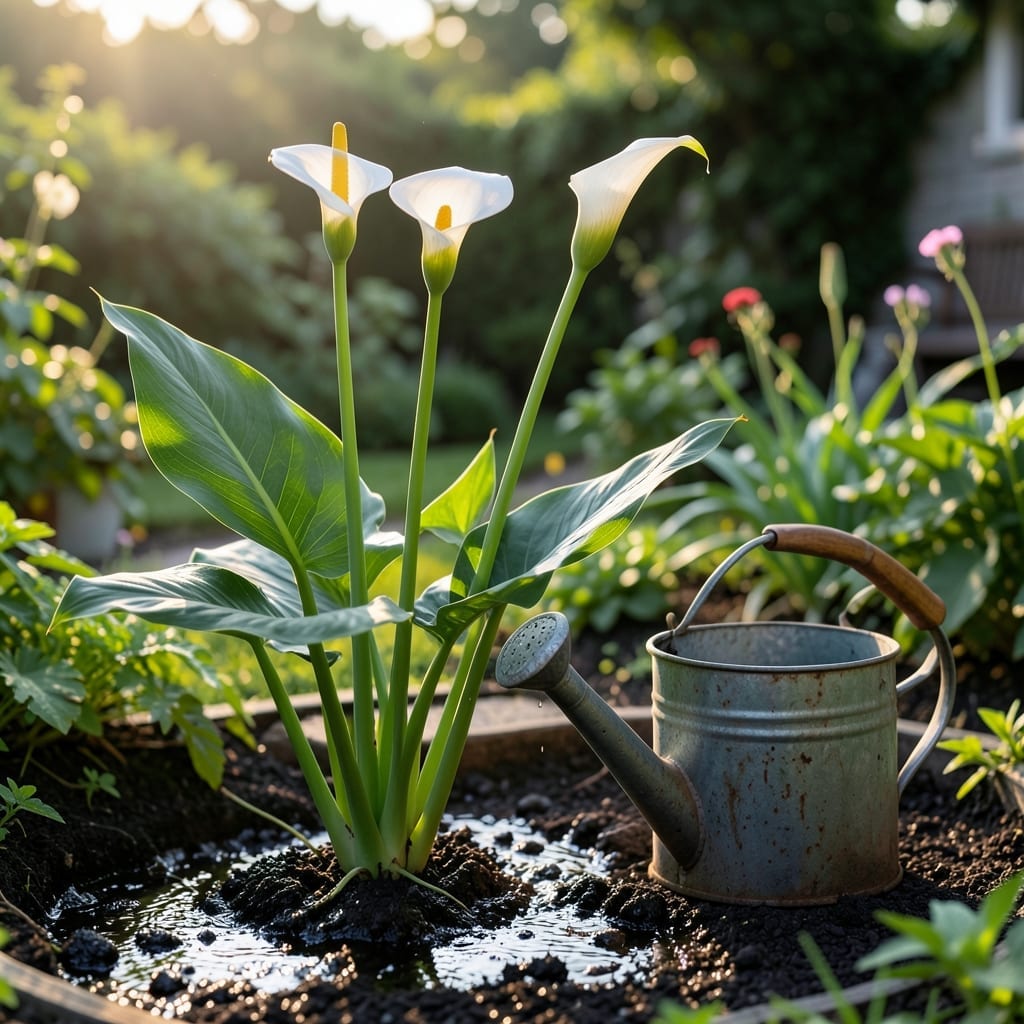
Mastering the watering routine for your Calla Lily 🌸 can mean the difference between lackluster leaves and vibrant, long-lasting blooms. These elegant plants thrive with consistent moisture but despise soggy roots.
I’ve learned through trial and error that getting the balance right is the key to healthy growth. Whether you’re growing in pots or garden beds, the right approach changes with the seasons and conditions.
Discover how to adjust your watering schedule for perfect results. From spring planting to summer heat, I’ll show you exactly what your calla lilies need to flourish.
Getting the watering frequency right for your Calla Lily is crucial. These plants love consistent moisture but will suffer if their roots sit in water. I’ve found that adjusting your routine with the seasons makes all the difference.
The key is to match your watering schedule to the plant’s growth stage. Active growth, flowering, and dormancy each demand a different approach to keep your calla lilies thriving.
| Growth Stage | Watering Frequency | Key Notes |
|---|---|---|
| Spring Planting | Weekly | Keep soil evenly moist to encourage root growth. |
| Active Growth | Every 5-7 days | Increase to 2x weekly in extreme heat. |
| Flowering | 2x per week | Maintain moist soil for vibrant blooms. |
| Dormancy | Bi-weekly | Reduce water to prevent rot during rest. |
| Fall | Weekly | Gradually reduce as growth slows. |
During spring planting, I water my calla lilies weekly to help establish their roots. The soil should stay consistently moist but never waterlogged. This is when the plant is building its foundation for the growing season.
In the active growth phase, which typically spans late spring to early summer, I switch to watering every 5-7 days. If the weather turns particularly hot or dry, I’ll bump it up to twice a week to keep the soil from drying out.
When my calla lilies start flowering, they need more attention. I water them twice per week to support those stunning blooms. The key here is to maintain even moisture without letting the roots sit in standing water.
As the plant enters dormancy in late summer or fall, I scale back to bi-weekly watering. This prevents root rot while still providing enough moisture to sustain the plant through its resting phase.
In fall, I gradually reduce watering to once a week. This helps the plant prepare for dormancy. It’s important to monitor the soil moisture closely during this transition period.
Remember, these are general guidelines. Always check the top inch of soil before watering—if it’s dry, it’s time to water. If it’s still moist, wait another day or two. This simple check can prevent both overwatering and underwatering issues.
Spotting watering issues early can save your Calla Lily. I’ve seen both overwatering and underwatering cause serious damage, but the symptoms are easy to miss if you don’t know what to look for.
Often, the first sign of trouble is in the leaves. Yellowing, drooping, or crispy edges can all point to watering problems. The key is to act quickly before the issue spreads to the roots or blooms.
Overwatered calla lilies often develop yellow leaves that feel soft to the touch. The soil may stay soggy, and you might notice mold growth on the surface. In severe cases, the roots turn black and mushy.
On the other hand, underwatered plants show brown, crispy leaf edges and wilting foliage. The soil pulls away from the pot edges, and growth slows dramatically. Blooms may fail to appear or drop prematurely.
I always check the soil moisture before watering. If the top inch feels dry, it’s time to water. If it’s still damp, I wait. This simple habit prevents most watering problems before they start.
Remember, calla lilies prefer consistent moisture but hate soggy conditions. Adjust your routine based on the weather and the plant’s growth stage for the best results 🌿