
Beautiful Plants For Your Interior
Beautiful Plants For Your Interior
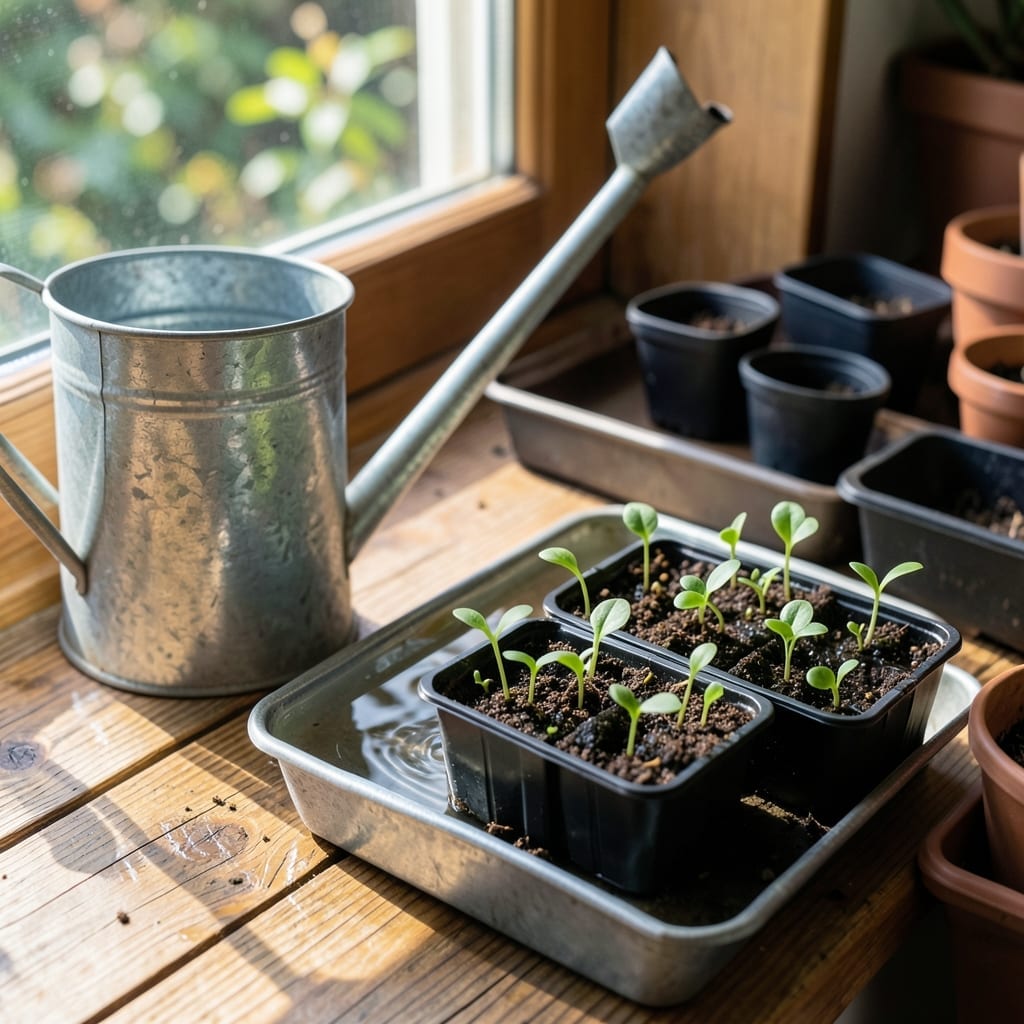
Bottom watering your 🌱 seedlings can be a game-changer for their growth. It encourages strong roots and prevents common issues like overwatering.
But here’s the catch: getting the frequency right is crucial. Too little, and your seedlings suffer from drought stress. Too much, and you risk damping off.
I’ll walk you through the optimal schedule and signs to watch for. Let’s ensure your seedlings thrive with this simple yet effective method.
I’ve found that bottom watering seedlings works best when tailored to their growth stage. Newly sown seeds need consistent moisture, while established seedlings can handle slightly drier conditions.
The key is observing the soil moisture and adjusting based on environmental factors like humidity and temperature. Let’s break it down by stage.🌱
| Stage | Frequency | Notes |
|---|---|---|
| Germination | Daily | Keep soil moist but not soggy |
| Early Seedling | Every 2-3 days | Check soil top inch for dryness |
| Transplant-Ready | Every 4-5 days | Reduce frequency as roots develop |
| Mature Seedling | Every 5-7 days | Let soil dry slightly between waterings |
During germination, I check the soil daily. The soil must stay evenly moist to support the delicate sprouting process. A dry environment here can halt growth entirely.
Once the first true leaves appear, I switch to watering every 2-3 days. At this stage, seedlings are more resilient but still need consistent moisture to avoid stress.
As seedlings grow and develop stronger roots, I reduce watering to every 4-5 days. This encourages the roots to seek out water, promoting deeper and more robust growth.
For transplant-ready seedlings, I extend the interval to every 5-7 days. This mimics natural conditions and prepares them for life in the garden, where water may not always be abundant.
Environmental factors play a big role. In hot, dry climates, I water more frequently. In cool, humid conditions, I ease off to prevent waterlogging and fungal issues.
Always use room-temperature water to avoid shocking the roots. Cold water can slow growth, while warm water may encourage bacterial growth in the soil.
Finally, ensure your seedling trays have good drainage. Without it, bottom watering can lead to soggy soil and root rot, even if you’re careful with frequency.🌿
I always watch for visual cues that my seedlings are thirsty. Wilting leaves and dry soil pulling away from the tray edges are classic signs of underwatering. A gentle touch test works too.
Conversely, yellowing leaves or a musty smell often signal overwatering. Damping off, where seedlings topple over, is a serious red flag I never ignore.🌱
One common mistake I see is inconsistent watering. Seedlings thrive on routine, so I stick to a regular schedule based on their growth stage and environmental conditions.
Another pitfall is using cold water straight from the tap. I always let it sit to room temperature first to avoid shocking the roots. This small step makes a big difference in root health.🌿
I also avoid letting seedlings sit in standing water for too long. After bottom watering, I remove excess water from the tray after 20-30 minutes to prevent root rot.
Lastly, I recommend using distilled or filtered water if your tap water is high in minerals. This prevents salt buildup in the soil that can harm young roots over time.