
Beautiful Plants For Your Interior
Beautiful Plants For Your Interior
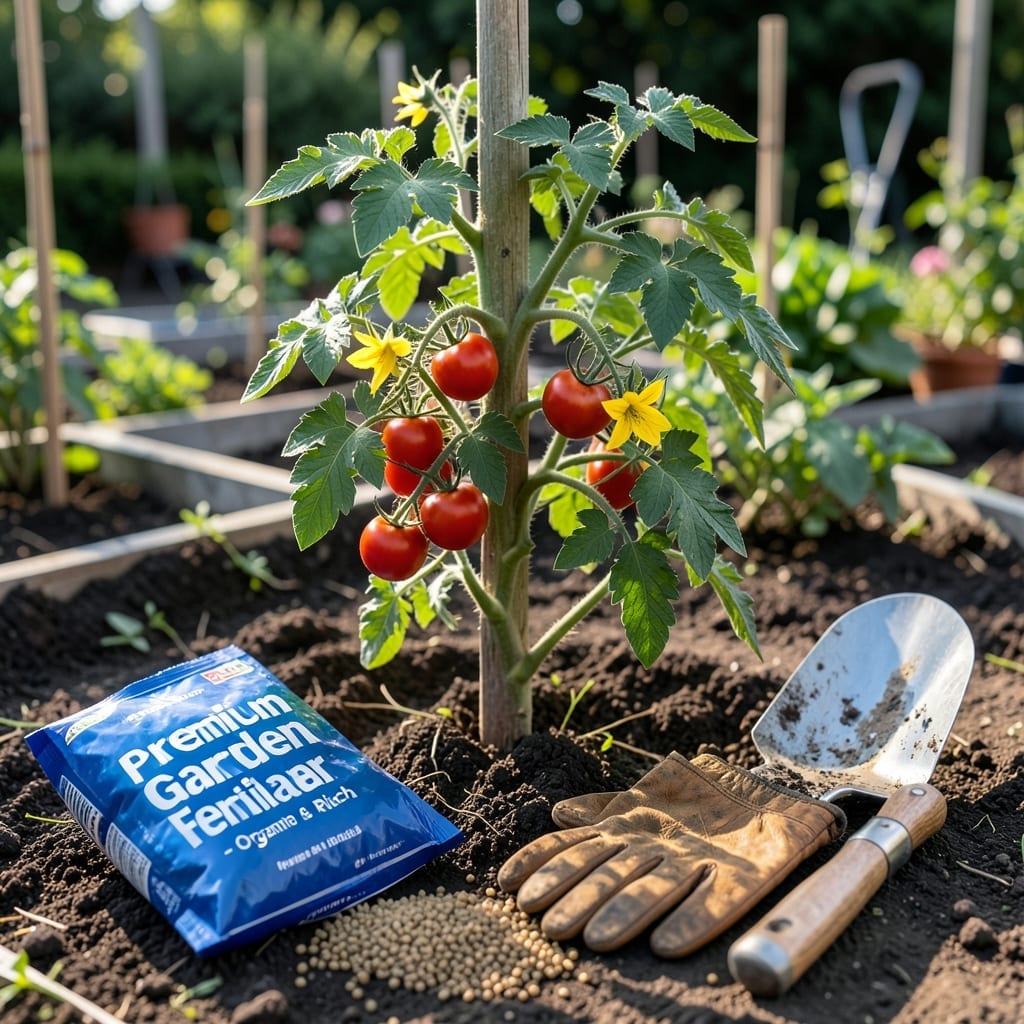
Over-fertilizing your 🍅 Tomato plants can do more harm than good, burning roots and wasting resources. Yet skipping feedings leaves you with weak, underperforming vines that struggle to produce.
Getting the timing right is the key to lush, productive plants all season long. I’ve tested various schedules to find what works best for healthy growth and abundant harvests.
Discover the simple, science-backed approach to fertilizing Tomatoes that balances vigor with yield—without the guesswork.
I’ve found that tomato plants have different nutrient needs at each growth stage. Getting the timing right ensures strong roots, lush foliage, and plentiful fruit without overdoing it.
From seedlings to harvest, the frequency and type of fertilizer change. Early on, focus on root development, then shift to fruit production as the season progresses.
| Growth Stage | Fertilizer Type | Frequency | Key Nutrients |
|---|---|---|---|
| Seedling | Balanced liquid | Every 2 weeks | 5-5-5 NPK |
| Transplanting | Slow-release | At planting | 10-10-10 NPK |
| Flowering | High phosphorus | Every 3 weeks | 5-10-10 NPK |
| Fruiting | Potassium-rich | Every 2 weeks | 3-4-6 NPK |
At seedling stage, use a balanced fertilizer like 5-5-5 NPK every 2 weeks. This encourages strong root growth and healthy stems early on.
When transplanting, I add a slow-release fertilizer like 10-10-10 to the soil. This gives steady nutrients as the plant establishes itself in its new home.
Once flowering begins, switch to a high-phosphorus feed such as 5-10-10. Apply every 3 weeks to support bloom development and future fruit set.
During fruiting, potassium becomes key. I use a 3-4-6 NPK every 2 weeks to boost fruit size and disease resistance in my plants.
Always water deeply after fertilizing to help nutrients reach roots. Avoid fertilizing dry soil, as this can burn plant roots and set back growth.
I’ve noticed that over-fertilizing leads to leafy growth but fewer tomatoes. Stick to the schedule, and your plants will reward you with bountiful harvests. 🌱
I’ve learned that tomato plants often signal their needs through visible changes. Watching for these signs helps me adjust my fertilization schedule without guesswork.
Both nutrient deficiencies and excess fertilizer show distinct symptoms. Recognizing them early prevents stunted growth or fertility burn in your garden.
When I see yellowing leaves at the bottom of the plant, I know it’s likely craving nitrogen. A balanced fertilizer can quickly restore its vigor.
Purple tint on stems or leaves during flowering tells me my plants need more phosphorus. I switch to a high-phosphorus feed to support blooms.
If the leaf edges curl or turn brown during fruiting, it’s usually a potassium issue. I apply a potassium-rich fertilizer to help fruit development.
However, if leaves turn dark green and growth slows, I pause fertilizing. Too much can burn roots and reduce yields, so I flush the soil with water. 🌱