
Beautiful Plants For Your Interior
Beautiful Plants For Your Interior
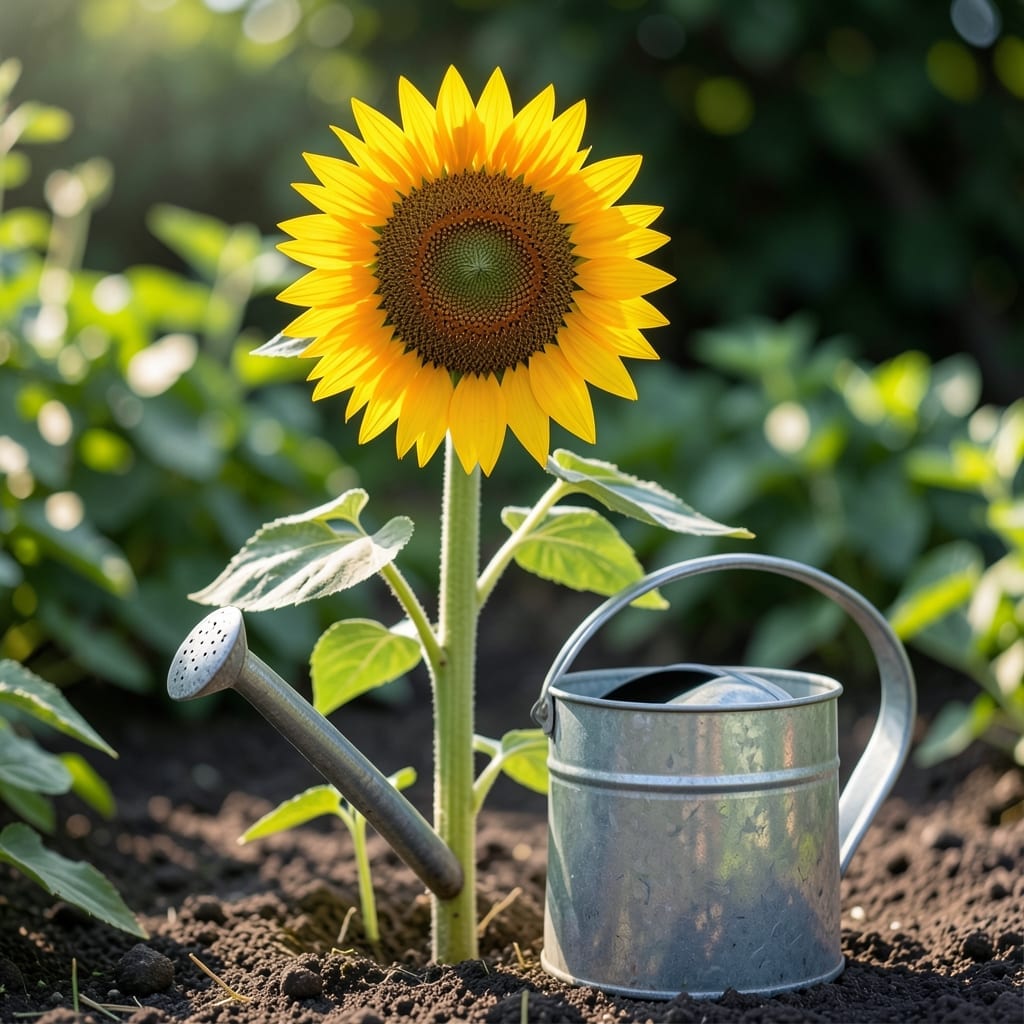
There’s nothing quite like watching 🌻 Sunflowers reach for the sky, their golden faces following the sun. But here’s the thing: even these hardy blooms need the right amount of water to truly thrive.
Too much or too little can leave your plants struggling. I’ve learned through trial and error that finding the sweet spot makes all the difference for strong stems and vibrant blooms.
What you’ll discover here isn’t just a generic schedule – it’s a practical approach tailored to your Sunflowers’ changing needs through each growth stage.
Let me walk you through the simple yet most important watering practices that will keep your garden heroes standing tall and proud all season long.
Getting the watering schedule right is key to growing tall, healthy sunflowers. Each stage of growth has unique moisture needs, from the delicate sprouting phase to full maturity.
The germination stage requires consistent moisture, while established plants need deeper, less frequent watering to encourage strong root systems.
| Growth Stage | Watering Frequency | Key Notes |
|---|---|---|
| Germination | Daily | Keep soil evenly moist |
| Seedling | Every 2-3 days | Avoid waterlogging roots |
| Vegetative | Every 5-7 days | Deep watering encourages roots |
| Flowering | Every 7-10 days | Reduce frequency as plants mature |
| Maturity | Every 10-14 days | Drought-tolerant at this stage |
During germination, I recommend using a spray bottle to gently mist the soil. This prevents disturbing the seeds while keeping the top inch consistently moist.
Once seedlings emerge, switch to a watering can with a gentle shower head. Water at soil level to avoid wetting the leaves, which can lead to disease.
For vegetative growth, I’ve found that deep watering once a week works best. This encourages the roots to grow downward, making the plants more resilient during dry spells.
When flower buds form, reduce watering slightly. At this stage, overwatering can cause the stems to weaken or the buds to rot before they open.
Mature sunflowers are surprisingly drought-resistant. I only water mine when the top 2-3 inches of soil feel completely dry, or if we’ve had a prolonged dry period.
Remember, soil type affects watering needs. Sandy soil drains quickly and may require more frequent watering, while clay soil retains moisture longer. 🌻
In hot climates, you might need to water more often. I check my sunflowers in the early morning and adjust based on how the soil feels and the day’s forecast.
I’ve found that sunflowers give clear signals when their watering needs aren’t met. Drooping leaves often mean they’re thirsty, while yellowing leaves can indicate overwatering.
Another sign is wilting during the day, which might recover in the evening if it’s just heat stress. But if it persists, your sunflowers likely need a deep drink. 🌻
⚠️ Watch Out!
Overwatering can lead to root rot or fungal diseases. Always check soil moisture 1-2 inches down before watering again.
If the soil feels dry at that depth, it’s time to water. But if it’s soggy or muddy, hold off for a few days. Sunflowers are drought-tolerant once established, but consistency is key.
For young seedlings, keep the soil evenly moist but not waterlogged. As they mature, you can reduce frequency but water deeply to encourage strong root growth.
Brown leaf edges often signal underwatering, while mushy stems are a red flag for too much water. Adjust your routine based on these cues.
I recommend morning watering to reduce evaporation and fungal risks. This gives your sunflowers a healthy start to the day. 🌿