
Beautiful Plants For Your Interior
Beautiful Plants For Your Interior
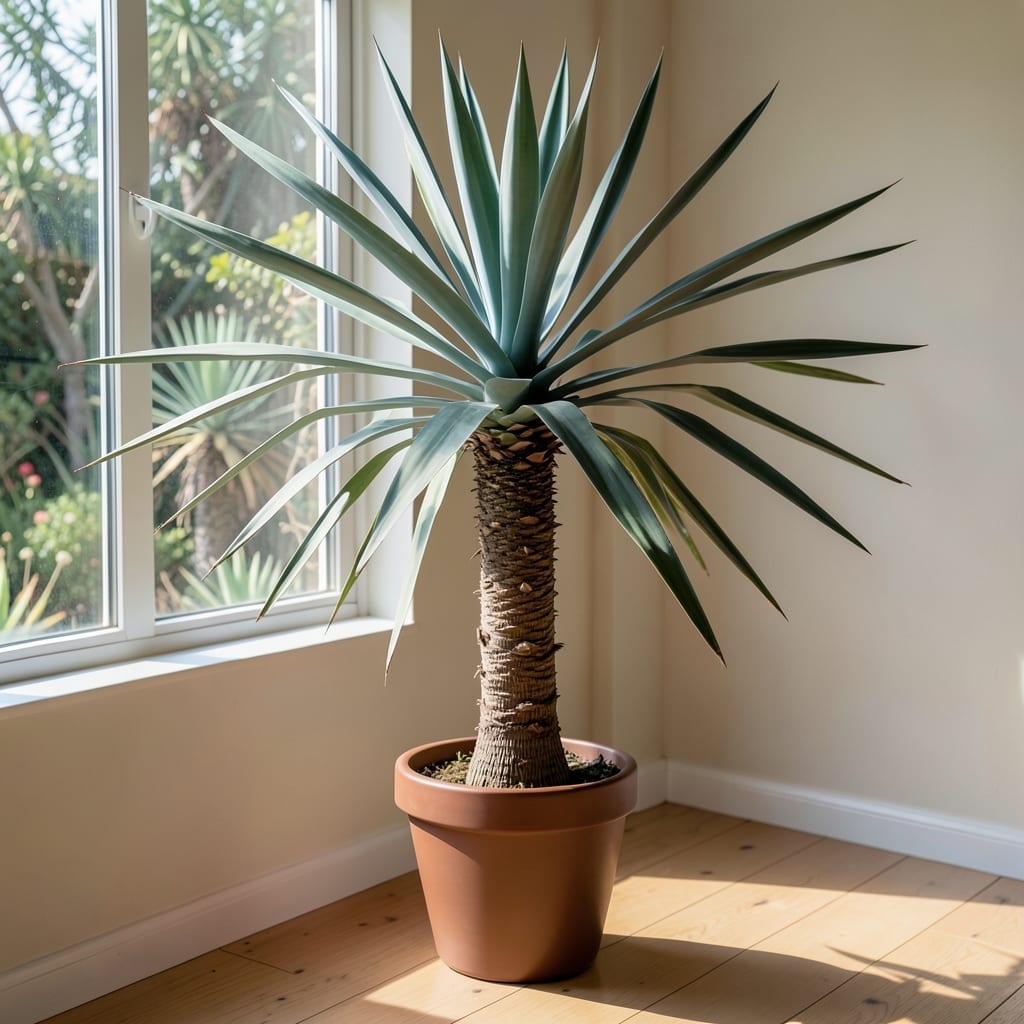
That moment when you spot a towering yucca flower spike is pure magic. But if you’re waiting for your 🌵 Yucca to bloom, you might be in for a longer wait than expected.
Unlike annuals that flower yearly, yuccas march to their own unique rhythm. Some varieties surprise you with blooms every 2-3 years, while others take a decade to show off.
I’ll walk you through what influences this cycle and how to give your Yucca the best shot at those stunning white flowers. Let’s dig in.

If you’ve ever admired a yucca’s dramatic flower stalk and wondered why yours hasn’t bloomed, you’re not alone. Yuccas are famously unpredictable bloomers, with some species taking years to flower.
Most yucca plants won’t produce their first bloom until they’re mature, which can take 3 to 10 years, depending on the variety and growing conditions.
Yucca Blooming Frequency by Species
| Yucca Species | Blooming Frequency | Maturity Age |
|---|---|---|
| Yucca filamentosa | Every 2-3 years | 3-5 years |
| Yucca gloriosa | Every 3-5 years | 5-7 years |
| Yucca elephantipes | Rarely flowers indoors | 10+ years |
The Adam’s Needle or Yucca filamentosa is one of the most reliable bloomers, often producing flowers every 2-3 years once established. Its hardy nature makes it a favorite for gardeners in colder climates.
For Yucca gloriosa, also known as Spanish Bayonet, expect blooms every 3-5 years. This species thrives in coastal areas and prefers well-drained, sandy soil. Its striking blue-green leaves add year-round interest.
The Spineless Yucca or Yucca elephantipes is a popular houseplant but rarely flowers indoors. Outdoors in USDA zones 9-11, it may bloom after 10 or more years, producing a spectacular display.
Climate plays a huge role in blooming frequency. Yuccas in warmer regions with long growing seasons tend to flower more often. In contrast, those in cooler climates may take longer to mature and bloom less frequently.
Soil conditions also impact flowering. Yuccas need excellent drainage to prevent root rot. Amending heavy soil with sand or gravel can encourage healthier growth and more frequent blooms.
Light is another critical factor. Most yuccas require full sun to produce flowers. If your plant isn’t blooming, check if it’s getting at least 6-8 hours of direct sunlight daily.
Patience is key with yuccas. Even in ideal conditions, some may take a decade to flower. But when they do, the tall flower spikes with their fragrant white blooms are worth the wait. 🌵
If your yucca isn’t blooming, don’t panic—it’s likely just not mature enough. Most yuccas need 5-10 years of growth before producing their first flower stalk.
Even mature plants may skip blooms if conditions aren’t right. Insufficient light is a common culprit, as yuccas require full sun to trigger flowering. Poor drainage can also stress the plant.
⚠️ Warning: Over-Fertilizing Harms Blooms
Too much nitrogen promotes leafy growth but reduces flowers. Use a low-nitrogen fertilizer sparingly in spring.
To encourage blooming, ensure your yucca gets 6-8 hours of direct sunlight daily. Plant it in well-draining soil and avoid overwatering, as soggy roots can prevent flowering.
Another key factor is minimal disturbance. Yuccas dislike being moved, so transplanting can delay blooms. If your plant is potted, keep it in the same container for several years.
If you’ve ruled out light and soil issues, consider climate. Yuccas in cooler zones (below USDA Zone 7) may bloom less frequently or require winter protection to survive and thrive.
Finally, be patient. Some yuccas, like Yucca elephantipes, may take a decade or more to flower, especially indoors. When they do bloom, the reward is spectacular—tall spikes of fragrant white flowers. 🌵