
Beautiful Plants For Your Interior
Beautiful Plants For Your Interior
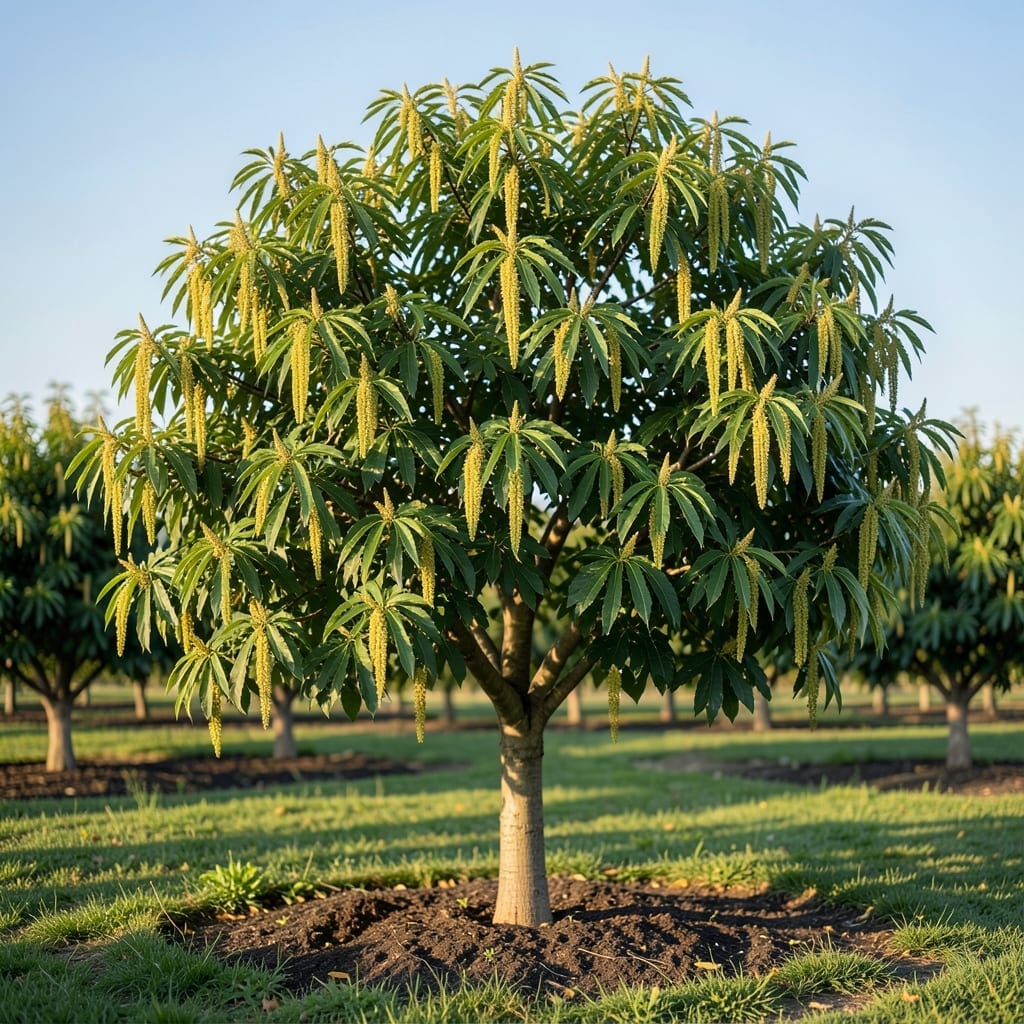
If you’ve ever stood under a towering 🌳 Pecan Tree wondering why it’s loaded with nuts one year and bare the next, you’re not alone. This natural rhythm leaves many growers scratching their heads and checking their gardening skills.
What looks like inconsistency is actually a well-documented pattern called alternate bearing. Some varieties defy this cycle, but most follow it to some degree, especially as they mature.
Let me show you exactly how often you can expect your Pecan Tree to produce and what you can do to encourage more reliable harvests year after year.
If you’ve noticed your pecan tree produces a heavy crop one year and almost nothing the next, you’re seeing alternate bearing in action. This natural cycle is common in many nut-bearing trees, including pecans.
Alternate bearing occurs because the tree exhausts its energy producing a large harvest one year, leaving fewer resources for the next. Environmental stress, like drought or poor nutrition, can make this pattern even more pronounced.
| Factor | Influence on Production |
|---|---|
| Tree Age | Young trees (under 10 years) often bear annually |
| Cultivar Type | Some varieties are bred for consistent production |
| Climate Conditions | Late frosts or drought can disrupt cycles |
| Nutrient Availability | Balanced fertilization helps stabilize yields |
| Pruning Practices | Proper pruning reduces stress and encourages annual bearing |
The biological reason behind alternate bearing involves hormonal signals. After a heavy crop year, the tree produces fewer flower buds, leading to a light harvest the following season.
I’ve seen this firsthand in my own orchard. One year, my Stuart pecan tree was so loaded with nuts that branches nearly touched the ground. The next year? Barely a handful. It’s frustrating, but understanding the cycle helps manage expectations.
Mature pecan trees (15+ years old) are the most likely to alternate bear. Younger trees often produce more consistently until they reach full nut-producing maturity.
Another key factor is cultivar selection. Some pecan varieties, like Desirable or Wichita, are known for heavier alternate bearing, while others, such as Cape Fear, tend to produce more reliably each year.
Environmental stressors play a huge role too. A late spring frost can damage new growth and flowers, reducing that year’s crop. Similarly, drought conditions during nut development can cause the tree to abort nuts, saving energy for the next season.
Soil health and nutrient balance are critical. Pecan trees need zinc and nitrogen in particular. Without these, the tree struggles to sustain heavy crops annually, making alternate bearing more extreme.
In my experience, the best way to minimize alternate bearing is through consistent care. This means regular watering, especially during dry spells, and annual soil testing to ensure your tree isn’t lacking essential nutrients.
Remember, even with perfect care, some alternate bearing is natural. But with the right approach, you can improve consistency and enjoy more bountiful harvests over time. 🌳
While alternate bearing is natural, I’ve found several proven techniques to help your pecan tree produce more consistently. The key is reducing stress and supporting steady growth throughout the year. 🌳
One of the most effective methods is proper pruning. I prune my trees in late winter to remove dead wood and open the canopy. This improves airflow and sunlight penetration, which helps the tree maintain energy for nut production.
Thinning the crop in early summer can make a big difference. When I see an excessive number of nuts forming, I remove some to prevent the tree from exhausting itself. This practice often leads to larger, higher-quality nuts and a better chance of production the following year.
Soil health cannot be overstated. I test my soil annually and amend it as needed. Pecan trees thrive in well-draining soil with a pH between 6.0 and 6.5. Adding organic matter like compost can improve both drainage and nutrient availability.
Consistent watering is crucial, especially during the nut development stage. I aim to provide about 1-2 inches of water per week during the growing season, adjusting for rainfall. Drought stress can trigger alternate bearing, so keeping the soil evenly moist is key.
Finally, consider planting multiple cultivars for cross-pollination. This not only improves nut set but can also lead to more consistent production across your orchard. With these strategies, you can minimize alternate bearing and enjoy more reliable harvests. ✂️