
Beautiful Plants For Your Interior
Beautiful Plants For Your Interior
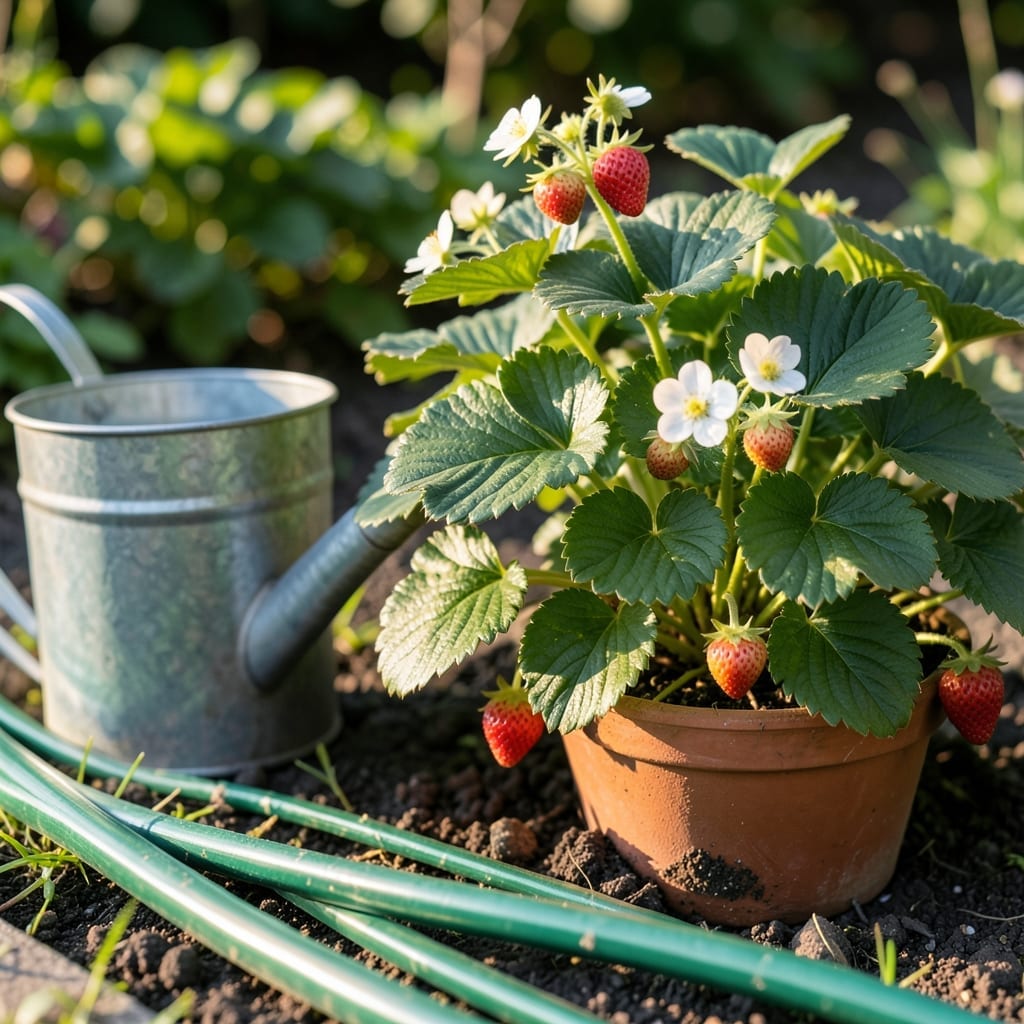
Mastering when to water your 🍓 Strawberry plants can transform your harvest from mediocre to mouthwatering. Too much or too little water can stress your plants and leave you with small, bland berries.
I’ve seen firsthand how a consistent watering schedule makes all the difference. Whether you’re new to gardening or a seasoned pro, getting this right is the key to sweet, plump fruit.
Discover the simple secrets to keeping your Strawberry plants perfectly hydrated throughout every growth stage. Your taste buds will thank you.
Getting the watering schedule right is crucial for thriving strawberry plants. The needs change dramatically through spring, summer, fall, and winter, as well as between bare-root and established plants. 🌱
I’ve found that newly planted strawberries need more frequent watering to help roots establish, while dormant plants in winter require very little. The key is consistent moisture without waterlogging. 🌿
| Stage | Frequency | Amount |
|---|---|---|
| Spring (New Plants) | Every 5-7 days | 1-2 inches per week |
| Summer (Fruiting) | Every 3-4 days | 1-2 inches per week |
| Fall | Every 5-7 days | 1 inch per week |
| Winter (Dormant) | Every 10-14 days | Light moisture |
In spring, your strawberry plants are establishing roots and preparing for growth. I recommend watering every 5-7 days to keep the soil evenly moist but not soggy. This encourages strong root development. ✂️
Once summer hits and your plants start fruiting, they’ll need more frequent watering. I’ve seen the best results with every 3-4 days, especially during hot spells. The goal is to prevent berry splitting from uneven moisture.
During fall, as temperatures cool, you can scale back to every 5-7 days. This helps your plants prepare for dormancy while still maintaining healthy growth. Keep an eye on rainfall to avoid overwatering.
In winter, your strawberry plants are dormant and need very little water. I suggest checking the soil and watering every 10-14 days only if it’s completely dry. Too much water now can lead to root rot.
For bare-root plants, the first week is critical. I always water daily for the first 3-4 days after planting, then taper off to every other day for the next week. This helps the roots settle into their new home.
If you’re growing in containers, remember that potted strawberries dry out faster. I check mine every 2-3 days in summer, ensuring the soil stays consistently moist but not waterlogged. 💧
Finally, always water in the early morning. This gives your plants time to absorb moisture before the heat of the day and reduces the risk of fungal diseases. I’ve found this simple step makes a big difference in plant health. ☀️
Your strawberry plants will often tell you when they’re thirsty or overwatered. I’ve learned to watch for subtle changes in leaves, fruit, and soil to adjust my watering routine. 🌱
Catching these signs early can prevent stress, disease, or poor fruit quality. Here’s what to look for and how to respond effectively.
When I see wilting leaves during hot afternoons, I know my plants need water right away. A deep soak at the base helps them recover quickly. This is especially important during fruit development. ☀️
On the other hand, yellowing leaves often mean I’ve been too generous with water. I’ve found that letting the top inch of soil dry out between waterings usually solves this issue. It’s all about finding that perfect balance.
Berry splitting is a common problem I’ve faced when watering is inconsistent. The solution is maintaining a regular schedule, especially during the fruiting stage. I use a moisture meter to help stay on track.
If you notice mold growth, it’s a clear sign of excess moisture. I immediately cut back on watering and ensure my plants have good air circulation. Sometimes, adjusting the watering method to avoid wetting the leaves helps too. 🌿