
Beautiful Plants For Your Interior
Beautiful Plants For Your Interior
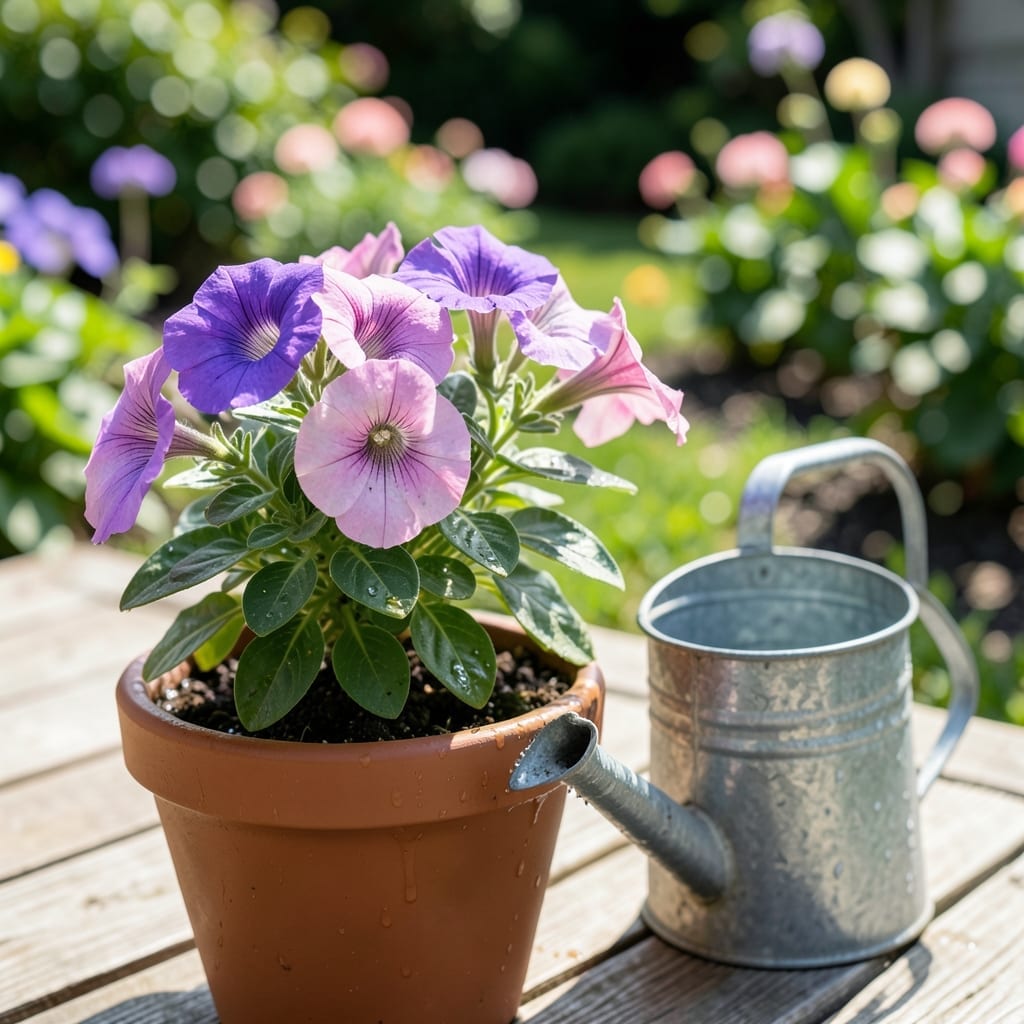
Petunias burst with vibrant color all season long—if they get the right amount of water. Overwater or underwater these beauties, and you’ll end up with wilted blooms and stunted growth instead of a lush, flower-filled garden.
I’ve seen Petunia 🌸 gardens thrive with the simplest of care, and the difference often comes down to watering habits. The key is finding that sweet spot where your plants are neither drowning nor parched.
Whether you’re growing them in containers or in the ground, understanding their needs can transform your garden. Discover how to keep your Petunias happy and blooming from spring to fall.
Let me walk you through the easiest ways to ensure your Petunias get just the right amount of hydration. It’s simpler than you might think.
Getting the watering schedule right is key to vibrant petunias. These flowers thrive with consistent moisture but hate soggy roots. I’ve found that 1 inch of water per week works well in most climates.
For container petunias, you’ll need to water more often—every 3-5 days in hot weather. In-ground plants can go 7-10 days between waterings if the soil drains well.
| Requirement | Specification |
|---|---|
| Weekly Water Amount | 1 inch |
| Container Frequency | Every 3-5 days |
| In-Ground Frequency | Every 7-10 days |
| Best Time to Water | Early morning |
| Summer Adjustment | Increase by 20% |
In hot summer months, I increase watering by 20% to prevent wilting. Always check the top inch of soil—if it’s dry, it’s time to water. This simple test keeps my petunias happy.
Morning watering is ideal because it allows foliage to dry before evening, reducing disease risk. I avoid overhead watering to prevent fungal issues on leaves.
For clay soil, water less frequently but deeply to encourage root growth. In sandy soil, water more often since it drains quickly. Adjust based on your garden’s conditions.
If you notice yellowing leaves, you might be overwatering. Drooping blooms often signal thirst. I’ve saved many petunias by catching these signs early.
Drip irrigation is my go-to for even watering. It delivers moisture directly to roots and conserves water. A soaker hose works well too for larger beds.
In drought-prone areas, mulch around petunias to retain moisture. I use organic mulch like straw or shredded bark for best results.
Remember, newly planted petunias need more frequent watering to establish roots. Once settled, they’re fairly drought-tolerant but bloom best with steady moisture. 🌸
Once you know how much water petunias need, the next step is mastering how to water them properly. Timing and method matter just as much as quantity for vibrant, long-lasting blooms.
Early morning watering is ideal—it reduces evaporation and prevents fungal diseases. I always aim to water before 10 AM to give my petunias a hydrated start to the day.
I’ve found that drip irrigation systems work wonders for petunias, delivering water directly to the roots. This method also helps prevent wasted water and keeps leaves dry, reducing the risk of mildew.
Mulching is another game-changer. A 2-inch layer of organic mulch like straw or bark helps retain moisture, especially during hot summer days. Just be sure to keep mulch away from the stems to avoid rot.
If you’re watering by hand, use a watering can with a narrow spout to target the soil. I prefer this for container petunias, as it gives me better control over the amount and placement of water.
Finally, always check the soil before watering. Stick your finger about 1 inch deep—if it feels dry, it’s time to water. This simple test prevents both overwatering and underwatering issues. 🌸