
Beautiful Plants For Your Interior
Beautiful Plants For Your Interior
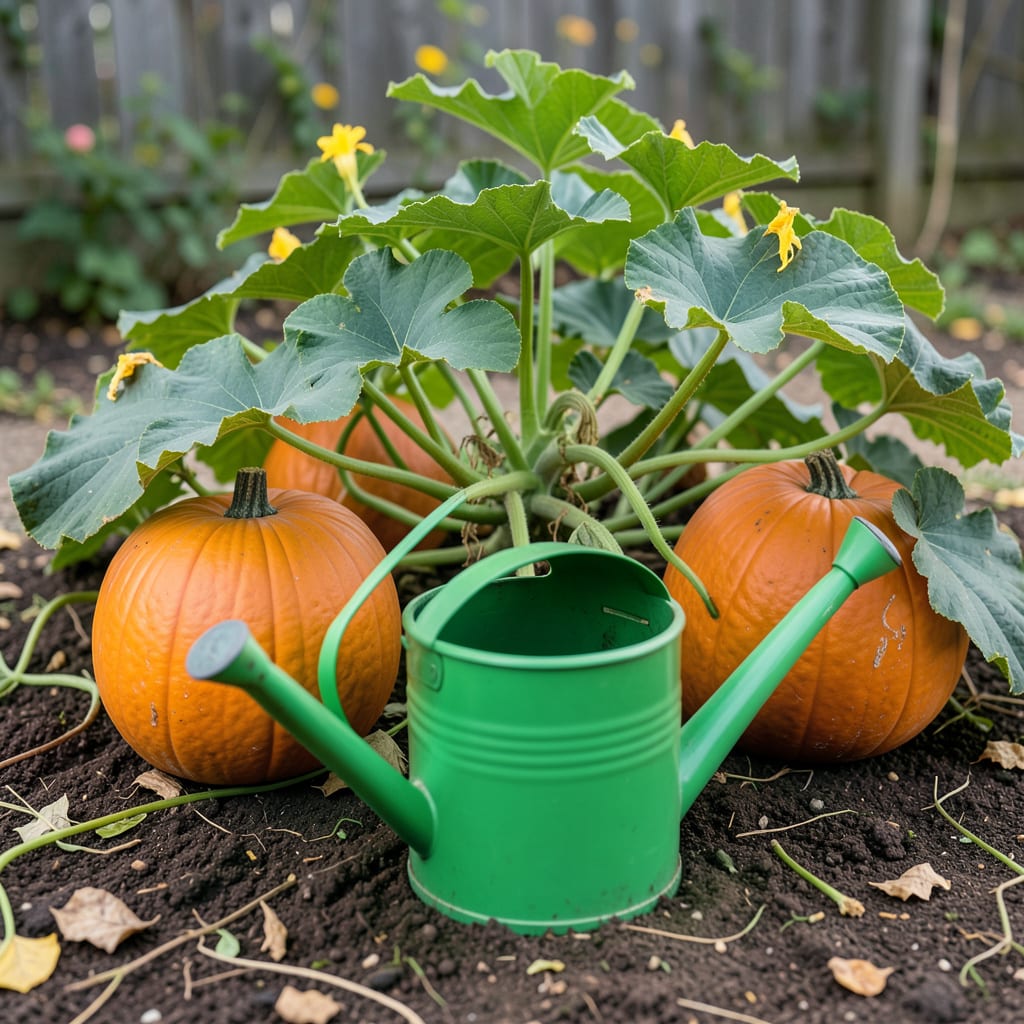
Growing a healthy pumpkin 🎃 requires careful watering – too little can stunt growth, while too much can cause rot. In USDA Zone 6, understanding the right balance is crucial for a bountiful harvest.
I’ll guide you through the essential watering needs of your pumpkin plant, from germination to harvest, helping you achieve those perfect, plump pumpkins in the fall.
Understanding the water needs of pumpkin plants at various growth stages is crucial for a successful harvest. Pumpkins require consistent moisture, especially when they’re producing fruit 🎃.
The water requirements change as the plant grows from a seedling to a mature plant. I’ll break down these needs by growth stage to help you provide the right amount of water.
During the seedling stage, it’s essential to keep the soil consistently moist but not waterlogged. This encourages healthy root development without risking rot.
As the plant enters the vining stage, it requires more water to support its rapid growth. Ensure the soil is moist to a depth of 2-3 inches every 2-3 days.
When the plant reaches the fruiting stage, adequate watering is critical for fruit development. Aim to provide about 1 inch** of water per week, either from rainfall or irrigation.
It’s also important to monitor soil moisture by inserting your finger into the soil up to the knuckle. If the soil feels dry, it’s time to water 🔥.
Adjusting watering based on weather conditions is also vital. During hot, dry spells, pumpkin plants may need more frequent watering, while during cooler, rainy periods, they may require less.
To avoid overwatering, ensure the soil has good drainage and avoid getting water on the leaves to prevent fungal diseases 🌿.
By understanding and meeting the water needs of your pumpkin plants at different growth stages, you’ll be well on your way to growing healthy, productive plants.
For more specific guidance on watering pumpkin plants, consider factors like your local climate, soil type, and the specific variety of pumpkin you’re growing.
Proper watering is just one aspect of growing great pumpkins; other factors like sunlight, fertilization, and pest management also play crucial roles in your overall success.
By combining proper watering with these other best practices, you’ll be able to enjoy a bountiful harvest of delicious, healthy pumpkins 🎃.
Watering pumpkin plants effectively is crucial for their growth and fruit production. I’ll share some best practices to help you water your pumpkin plants correctly.
The key to effective watering is to monitor soil moisture and water at the right time. This helps prevent overwatering and underwatering, both of which can harm your plants.
Water your pumpkin plants in the morning to allow the plants to absorb the water throughout the day. Avoid getting water on the leaves to prevent fungal diseases 🌿.
To check soil moisture, insert your finger into the soil up to the knuckle. If the soil feels dry, it’s time to water. If it’s already moist, wait another day or two before watering again 🔍.
Optimal watering timing is also important. Watering in the morning helps reduce evaporation and allows the plants to make the most of the water.
Avoid common mistakes like overwatering, which can lead to root rot and other problems. Make sure the soil has good drainage to prevent waterlogged soil 🌟.
By following these best practices, you’ll be able to water your pumpkin plants effectively and support their growth and fruit production.
Effective watering is just one aspect of growing great pumpkins. Combine it with other best practices like providing enough sunlight and fertilization for optimal results 🎃.
For more specific guidance on watering pumpkin plants, consider factors like your local climate, soil type, and the specific variety of pumpkin you’re growing.
Recognizing the signs of overwatering and underwatering is crucial for maintaining healthy pumpkin plants. Both conditions can lead to significant problems if not addressed promptly.
I’ll outline the key symptoms to watch for and provide guidance on how to adjust your watering practices accordingly.
Underwatering can cause wilting leaves, slow growth, and dry soil. If you notice these symptoms, increase the frequency or amount of watering to provide your plants with sufficient moisture 🌿.
On the other hand, overwatering can lead to yellowing leaves, root rot, and fungal diseases. If you observe these issues, reduce the frequency or amount of watering to prevent further damage 🔥.
Adjusting your watering schedule based on weather conditions is also vital. During hot, dry spells, pumpkin plants may need more frequent watering, while during cooler, rainy periods, they may require less.
By monitoring your plants for these signs and adjusting your watering practices accordingly, you can help ensure a healthy and productive pumpkin harvest 🎃.
For more specific guidance on watering pumpkin plants, consider factors like your local climate, soil type, and the specific variety of pumpkin you’re growing.
Proper watering is just one aspect of growing great pumpkins; other factors like sunlight, fertilization, and pest management also play crucial roles in your overall success.
Water your pumpkin plant every 2-3 days, making sure the soil is moist to a depth of 2-3 inches. Adjust based on weather conditions to prevent overwatering or underwatering.
Water your pumpkin plants in the morning, before 10 AM, to allow for optimal water absorption throughout the day. This timing helps reduce evaporation and prevents fungal diseases.
Check soil moisture by inserting your finger into the soil up to the knuckle. If the soil feels dry, it’s time to water. If it’s already moist, wait another day or two before watering again.
Overwatering can cause yellowing leaves, root rot, and fungal diseases. If you notice these symptoms, reduce the frequency or amount of watering to prevent further damage.
