
Beautiful Plants For Your Interior
Beautiful Plants For Your Interior
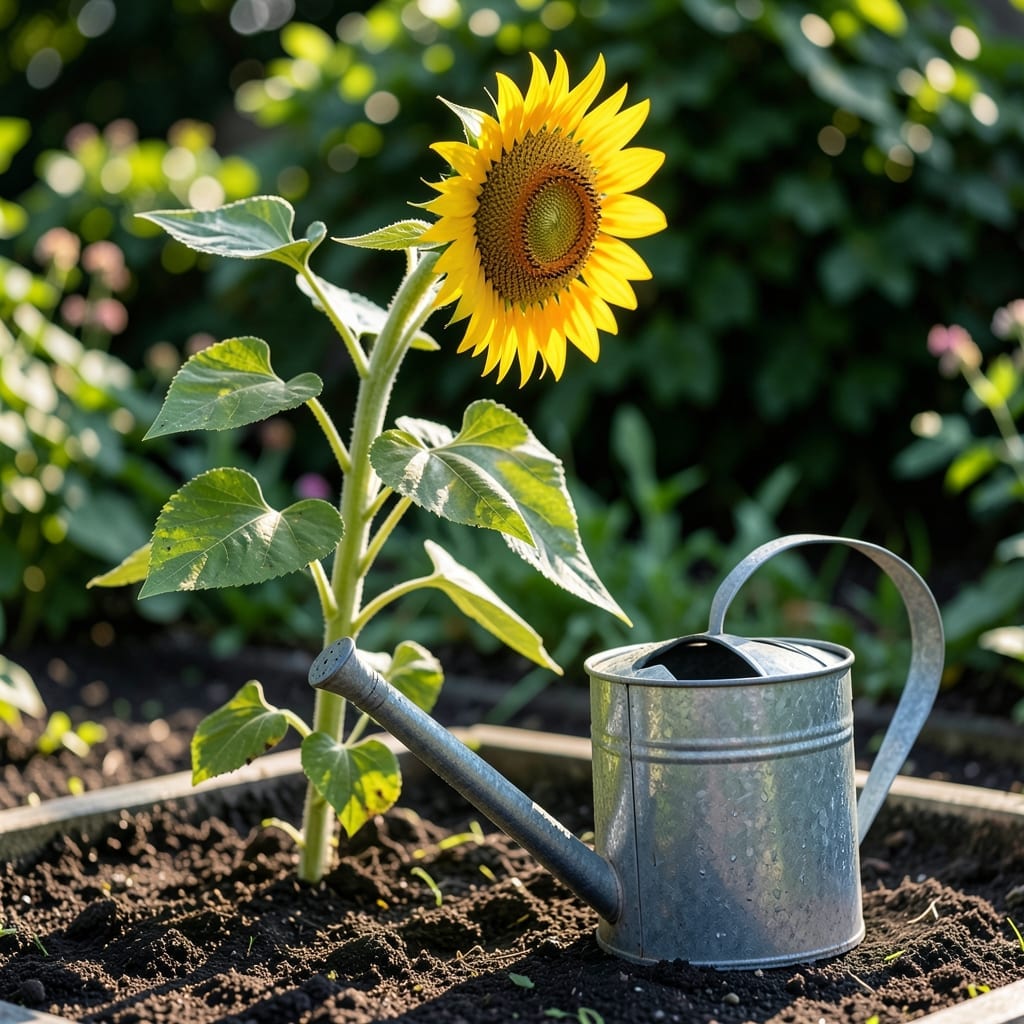
Sunflowers are hardy, but their water needs shift dramatically from tiny seedling to towering bloom. Get it wrong, and you risk stunted growth or root rot for your 🌻 Sunflower.
I’ve seen too many gardeners struggle with wilting stalks or yellowing leaves – usually from over or under-watering. The good news? It’s easier to master than you think.
Discover the simple weekly watering schedule that keeps your Sunflower thriving through every growth stage. Let’s break it down together.
Getting your sunflower watering right starts with understanding their changing needs. As a gardener, I’ve learned that what works for seedlings won’t suit mature plants. The key is adapting your approach as they grow.
Each stage from germination to full bloom demands different moisture levels. This isn’t just about quantity – it’s about consistency and timing too.
| Growth Stage | Water Frequency | Amount per Week |
|---|---|---|
| Seedling | Daily | 0.5 inches |
| Vegetative | Every 2-3 days | 1 inch |
| Flowering | Every 3-4 days | 1.5 inches |
| Maturity | Weekly | 2 inches |
During the seedling stage, I keep the soil consistently moist but not soggy. At this point, the roots are shallow and need frequent, light watering to establish themselves.
As my sunflowers enter the vegetative stage, I water more deeply but less often. This encourages the roots to grow downward, creating a stronger root system that can access moisture further below.
The flowering stage is when your sunflowers are most thirsty. I increase the amount slightly to support the massive blooms, but I’m careful not to overdo it. Overwatering now can lead to weak stems.
Once mature, your sunflowers become quite drought-tolerant. I water deeply once a week, allowing the soil to dry slightly between waterings. This mimics their natural growing conditions.
Remember, these are guidelines. I always check the soil moisture by sticking my finger 2 inches into the ground. If it’s dry, it’s time to water.
Environmental factors change everything. In hot climates, I might water daily during peak summer. In cooler areas, I can often get away with watering every 5-7 days. 🌻
Container-grown sunflowers need more frequent attention. The soil dries out faster in pots, so I check them daily and water when the top inch feels dry.
Your sunflowers will tell you when they’re thirsty—or drowning. I’ve learned to watch for subtle changes that signal it’s time to adjust my watering schedule. Catching these early prevents stress and keeps blooms vibrant.
The most obvious sign is drooping leaves, especially in the afternoon. While some wilting is normal in heat, persistent drooping means your plant needs more water immediately.
Yellowing leaves often indicate overwatering, especially if they feel soft. I check the soil moisture first—if it’s soggy, I hold off on watering until it dries slightly.
For dry soil, I use the finger test: if the top 2 inches are dry, it’s watering time. This simple check prevents both underwatering and overwatering in my garden.
Wilting flowers are a late sign of moisture stress. If I see this, I water deeply at the base of the plant to revive it quickly. Evening watering helps recovery overnight.
Finally, mushy stems signal root rot from too much water. If I catch this early, I improve drainage and reduce watering frequency. Prevention is always better than cure. 🌻