
Beautiful Plants For Your Interior
Beautiful Plants For Your Interior
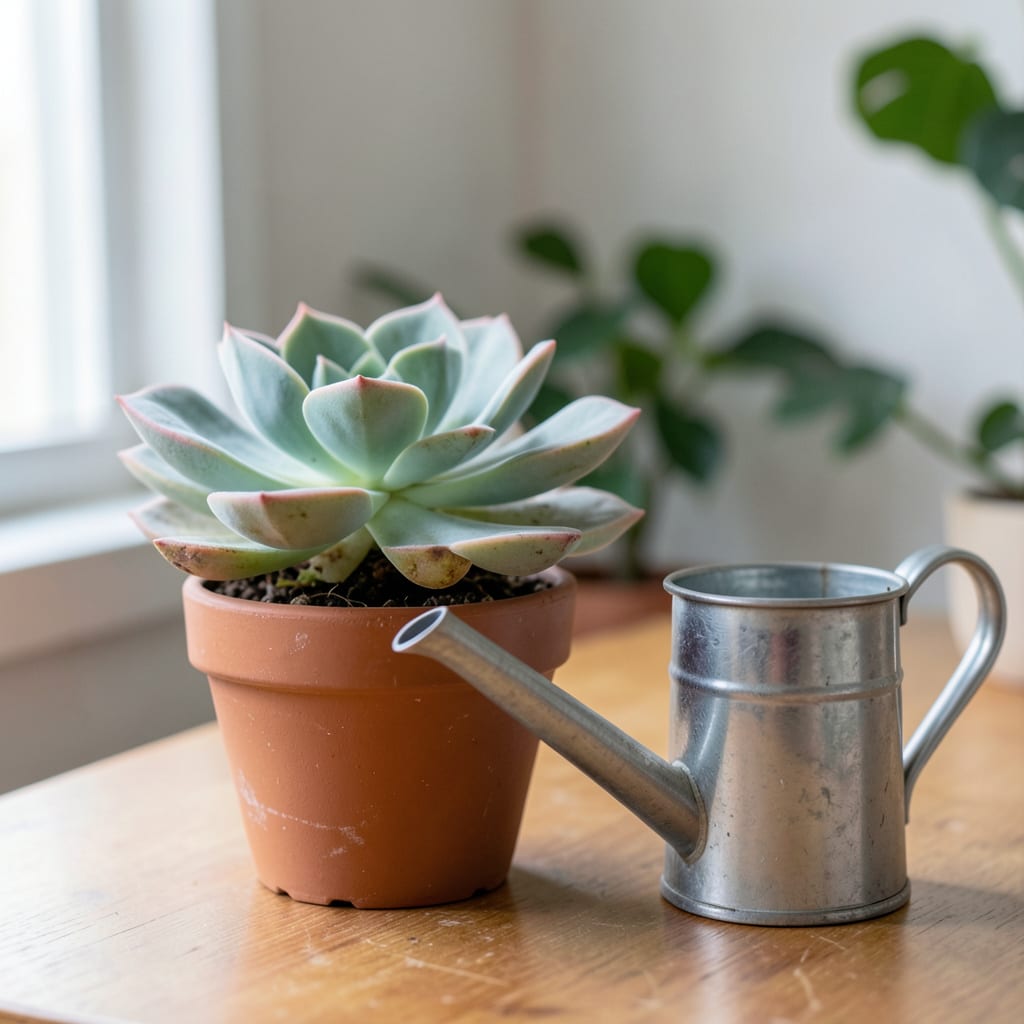
As a succulent enthusiast, I’ve learned that these beautiful plants 🌵 require careful watering to thrive. Too little water can cause shriveling, while too much can lead to root rot – a common mistake many gardeners make.
Let’s explore the watering needs of succulents in different conditions, helping you keep your plants healthy whether you’re in USDA Zone 6a or other regions.
Succulents have become incredibly popular houseplants due to their unique appearance and low maintenance requirements. However, one of the most critical aspects of succulent care is proper watering. Too much or too little water can be detrimental to these plants, making it essential to understand their specific water needs.
The amount of water a succulent needs depends on various factors, including the type of succulent, climate conditions, soil type, and pot size. Different succulent species have varying water requirements, with some needing more frequent watering than others 🌵.
Understanding these factors is crucial for developing an effective watering schedule. For example, during the growing season (spring and summer), succulents generally require more frequent watering than during their dormant period (fall and winter).
In spring, when succulents are actively growing, they typically need watering every 7-10 days. As temperatures rise in summer, the frequency may increase to every 5-7 days, depending on the heat and humidity 🌡️.
During fall, as growth slows down, watering can be reduced to every 2-3 weeks. In winter, when most succulents are dormant, watering can be further reduced to once a month or even less frequently, depending on the specific conditions ❄️.
The soil moisture is another critical factor to consider. Succulents prefer soil that is moist but not waterlogged. A good rule of thumb is to water when the top 1-2 inches of soil feel dry to the touch.
Pot size and drainage also play a significant role in determining watering frequency. Smaller pots dry out faster than larger ones, and pots with good drainage holes prevent water from accumulating at the roots, reducing the risk of root rot.
To ensure your succulents receive the right amount of water, it’s essential to monitor their condition closely. Look for signs of underwatering (shriveling leaves) or overwatering (soft, mushy leaves), and adjust your watering schedule accordingly.
By considering these factors and adjusting your watering practices, you can help your succulents thrive and enjoy their beautiful, unique forms for years to come 🌱.
For more specific guidance, it’s always a good idea to research the particular needs of your succulent species, as some may have more specific requirements than others.
Remember, it’s better to underwater slightly than to overwater, as succulents are more tolerant of dry conditions than excessive moisture.
By following these guidelines and being mindful of your succulents’ needs, you can create a healthy watering routine that supports their growth and well-being.
Understanding whether your succulent is receiving the right amount of water is crucial for its health and longevity. Both overwatering and underwatering can have detrimental effects on these plants 🌱.
One of the primary indicators of proper watering is the condition of the leaves. Healthy succulents typically have firm, plump leaves that are free from signs of shriveling or softness. If the leaves are too soft or mushy, it may be a sign of overwatering, while shriveled leaves can indicate underwatering.
Monitor your succulent’s leaves for signs of proper hydration: firm and plump leaves indicate optimal watering, while soft or shriveled leaves signal issues.
Another important sign is the color of the succulent. A well-watered succulent will typically have vibrant, healthy colors, while underwatered plants may appear dull or faded. Overwatered succulents, on the other hand, may develop yellowing or browning leaves.
The growth pattern of your succulent can also provide clues about its watering needs. A succulent that is receiving adequate water will typically exhibit healthy growth, producing new leaves and stems. If growth is stunted or the plant appears stressed, it may be a sign that the watering schedule needs adjustment.
It’s also essential to check the soil moisture regularly. You can do this by inserting a finger into the soil up to the first knuckle. If the soil feels dry, it’s time to water 🌿.
By paying attention to these signs and adjusting your watering practices accordingly, you can ensure that your succulents remain healthy and thrive. Remember, the key is to find the right balance and be consistent in your care.
For succulents, it’s generally better to err on the side of underwatering rather than overwatering, as they are more tolerant of dry conditions. However, completely neglecting to water them can also be harmful, so a balanced approach is necessary 💧.
Watering succulents correctly is crucial for their survival and thriving. I recommend checking the soil moisture regularly to determine if it’s time to water. A simple method is to insert your finger into the soil up to the first knuckle; if it feels dry, it’s time to water 🌿.
Water your succulents in the morning to give them the entire day to absorb the water. Avoid getting water on the leaves to prevent rot.
The frequency of watering depends on several factors, including the season, climate, and pot size. During the growing season (spring and summer), succulents generally need more frequent watering, while during their dormant period (fall and winter), they require less water ❄️.
In spring and summer, water your succulents every 7-14 days, depending on the weather conditions. If it’s particularly hot and dry, you may need to water more frequently ⛅️.
During fall and winter, reduce the watering frequency to once every 3-4 weeks, as the plants are dormant and require less moisture.
It’s also essential to use the right watering technique. Water thoroughly until you see water coming out of the drainage holes, ensuring that the soil is moist but not waterlogged 💧.
By following these watering practices and being mindful of your succulents’ needs, you can create a healthy watering routine that supports their growth and well-being 🌱.
During spring and summer, water your succulents every 7-14 days, depending on weather conditions. Check soil moisture by inserting your finger into the soil up to the first knuckle. Water when it feels dry .
Check the soil moisture by inserting your finger into the soil. If the top 1-2 inches feel dry, it’s time to water. You can also look for signs like shriveling or soft leaves to determine if your succulent needs water .
Water your succulent from the top, thoroughly until water comes out of the drainage holes. This ensures the soil is moist but not waterlogged. Avoid getting water on the leaves to prevent rot .
Signs of overwatering include soft, mushy leaves and root rot. If you notice these symptoms, stop watering immediately and repot your succulent in fresh, dry soil. Monitor your plant’s condition closely to adjust your watering schedule .
