
Beautiful Plants For Your Interior
Beautiful Plants For Your Interior
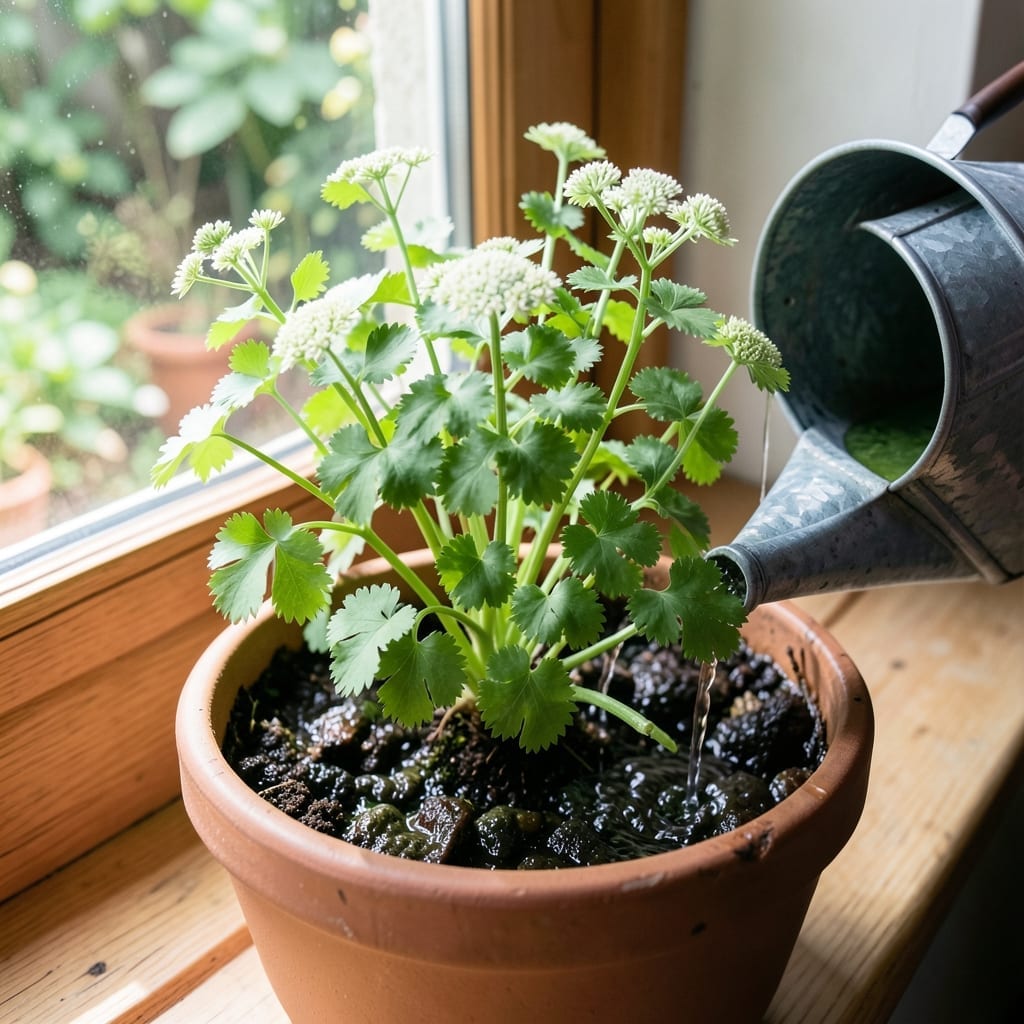
Nothing ruins fresh 🌿 Cilantro faster than the wrong watering routine. Too much leaves you with soggy stems, while too little turns those vibrant leaves crispy and bitter.
I’ve seen both extremes in my own garden, and the difference is night and day. Getting the balance right means more flavorful harvests and healthier plants.
What if you could master this simple but crucial part of growing? The good news is that it’s easier than you think once you know the basics.
Let me walk you through exactly what your Cilantro needs to thrive, without the guesswork. You’ll be enjoying fresh leaves in no time.


Getting the watering schedule right is key for healthy cilantro. This herb prefers consistent moisture but hates soggy roots. I’ve found that 1 inch of water per week works best for most climates.
In my garden, I water every 3-5 days during hot summer months, reducing to weekly watering in spring and fall. The goal is to keep the soil evenly moist without waterlogging.
| Growth Stage | Water Frequency | Water Amount |
|---|---|---|
| Seedlings | Every 2-3 days | 1/2 inch |
| Mature Plants | Every 3-5 days | 1 inch per week |
| Hot Climate | Every 2-3 days | 1.5 inches |
For container-grown cilantro, I check the top inch of soil daily. If it feels dry, I water until it drains from the bottom of the pot. This prevents root rot while ensuring hydration.
Morning watering is ideal because it allows foliage to dry before evening, reducing fungal disease risk. I always water at the base of the plant to keep leaves dry and healthy.
In sandy soil, cilantro may need more frequent watering since it drains quickly. For clay soil, I reduce frequency but ensure good drainage to avoid waterlogging.
During rainy seasons, I skip watering unless the soil feels dry. Overwatering is a common mistake—yellow leaves often signal too much water, while drooping stems indicate thirst.
For best results, use a soil moisture meter to monitor levels. I’ve found this tool takes the guesswork out of watering and helps maintain optimal conditions for growth.
Remember, cilantro bolts quickly in heat. Consistent watering helps delay bolting and keeps your harvest flavorful and fresh longer.
Finally, mulching around plants retains moisture and reduces evaporation. I use organic mulch like straw or compost for the best results.
🌿I’ve found that cilantro plants are quite vocal about their water needs—if you know what to look for. Yellowing leaves often signal overwatering, while dry, crispy edges scream for more hydration.
Another clear sign is wilting during the hottest part of the day. If your cilantro perks up after a drink, it’s thirsty. But if it stays limp, you might be drowning it.
I always check the soil moisture about 1 inch deep. If it’s bone dry, it’s time to water. If it’s soggy, hold off for a day or two.
In hot climates, cilantro may need daily checks, while in cooler weather, every 3-4 days works fine. Adjust based on your local conditions.
Morning watering is ideal—it gives the plant time to absorb moisture before the heat of the day. Avoid evening watering to prevent fungal issues.
If you see brown spots on leaves, it could be inconsistent watering. Aim for consistent moisture, not extremes. Your cilantro will thank you with lush growth! 🌱