
Beautiful Plants For Your Interior
Beautiful Plants For Your Interior
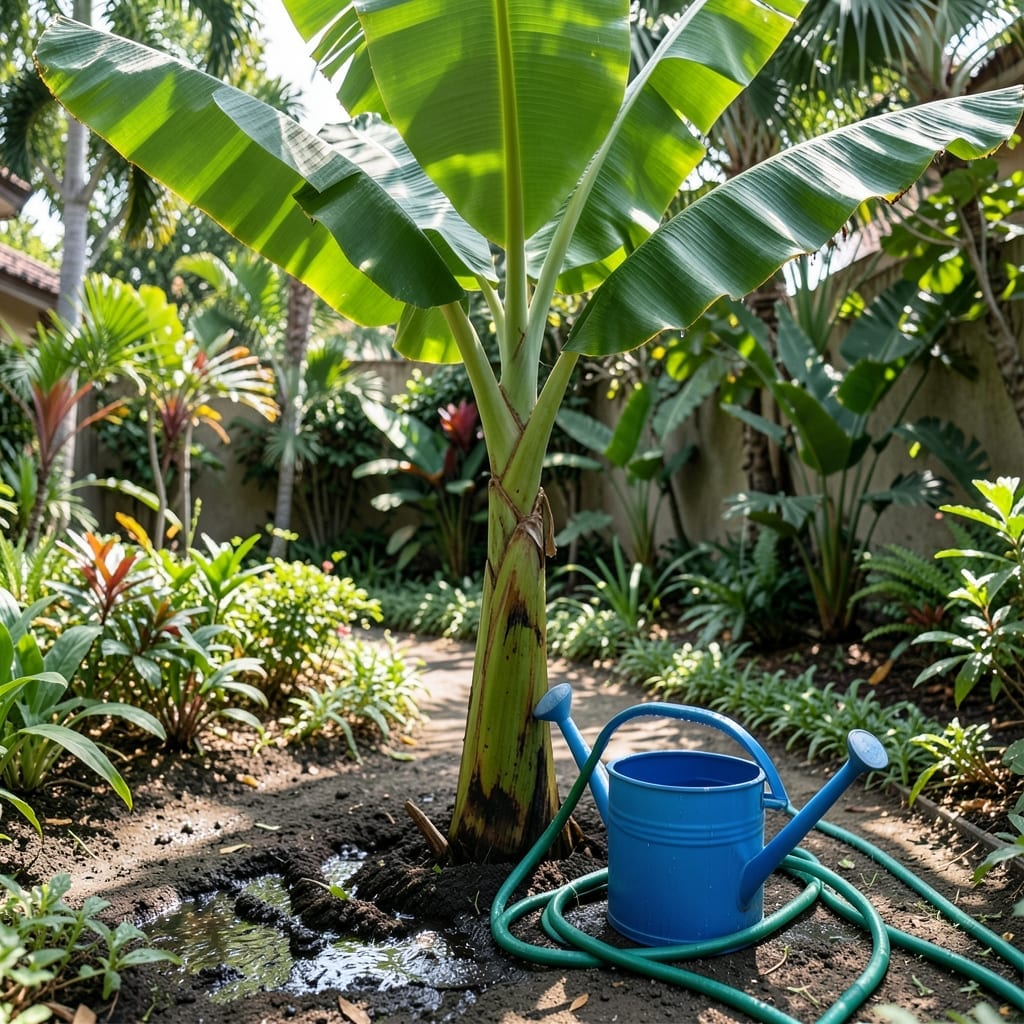
Banana trees thrive with consistent moisture, but overwatering can be just as harmful as drought. Knowing the exact water needs of your 🍌 Banana Tree each day can mean the difference between a lush, fruit-bearing plant and a struggling one.
I’ve seen too many gardeners lose their trees to simple watering mistakes. The key lies in understanding how climate, soil, and growth stage affect hydration.
What if you could give your Banana Tree the perfect amount of water every time? The good news is, it’s easier than you think once you know the signs to watch for.
Let me walk you through the most important factors that determine your tree’s daily water needs and how to spot when you’re getting it right.
As a tropical plant, banana trees demand consistent moisture to thrive. Their water needs shift dramatically from young saplings to mature trees, with climate playing a huge role.
I’ve found that newly planted banana trees need daily watering for the first 2-3 weeks to establish roots. After that, the frequency adjusts based on growth stage and seasonal changes. 🌱
| Growth Stage | Water Frequency | Amount per Session |
|---|---|---|
| Young Plants | Daily | 1-2 gallons |
| Established Trees | Every 2-3 days | 5-10 gallons |
| Mature Trees | Every 3-4 days | 15-25 gallons |
| Drought Conditions | Daily | 20+ gallons |
In hot climates, I recommend morning watering to reduce evaporation. The soil should stay moist but not soggy—bananas hate waterlogged roots as much as drought.
For potted banana trees, check the top inch of soil daily. If it’s dry, give it a deep watering until water drains from the bottom. These need more frequent attention than in-ground plants. 🪴
During summer months, your banana tree might need twice-daily watering, especially in USDA zones 10-11. The heat stress can quickly dehydrate the plant if you’re not vigilant.
In winter or cooler seasons, you can scale back to every 2-3 days. The metabolic rate slows, so the tree won’t need as much hydration to maintain health.
Mulching is a game-changer for banana trees. I use a 3-inch layer of organic mulch to retain soil moisture and regulate temperature. This can reduce your watering frequency by up to 30%.
Remember, banana trees are heavy drinkers but dislike standing water. If you notice yellowing leaves, it might be a sign of overwatering, while brown edges often indicate underwatering.
For optimal growth, pair your watering schedule with well-draining soil. I mix in compost and perlite to improve both moisture retention and drainage.
Finally, always adjust based on rainfall. If your area gets regular precipitation, you can skip watering days. But in dry spells, stick to your schedule to keep your banana tree happy and healthy. 💧
I’ve learned that banana trees are quite vocal about their water needs—if you know what to look for. Yellowing leaves or drooping fronds often signal trouble, but the cause isn’t always obvious. 🌿
Overwatering can lead to root rot, which shows up as blackened stems or a foul odor from the soil. On the flip side, crispy leaf edges or slow growth usually mean the tree is thirsty. 🌱
If you spot root rot, stop watering immediately and check soil drainage. For underwatered trees, a deep soak in the early morning can revive them quickly. 💧
I always recommend using the finger test: stick your finger 2 inches into the soil. If it’s dry, it’s time to water. If it’s soggy, hold off for a day or two.
Remember, banana trees love consistent moisture but hate standing water. A well-draining soil mix with organic compost can prevent most issues before they start. ☀️
Finally, mulching around the base helps retain moisture without waterlogging. I use straw or wood chips for best results. Keep an eye on your tree, and it’ll reward you with lush growth and plenty of fruit.