
Beautiful Plants For Your Interior
Beautiful Plants For Your Interior
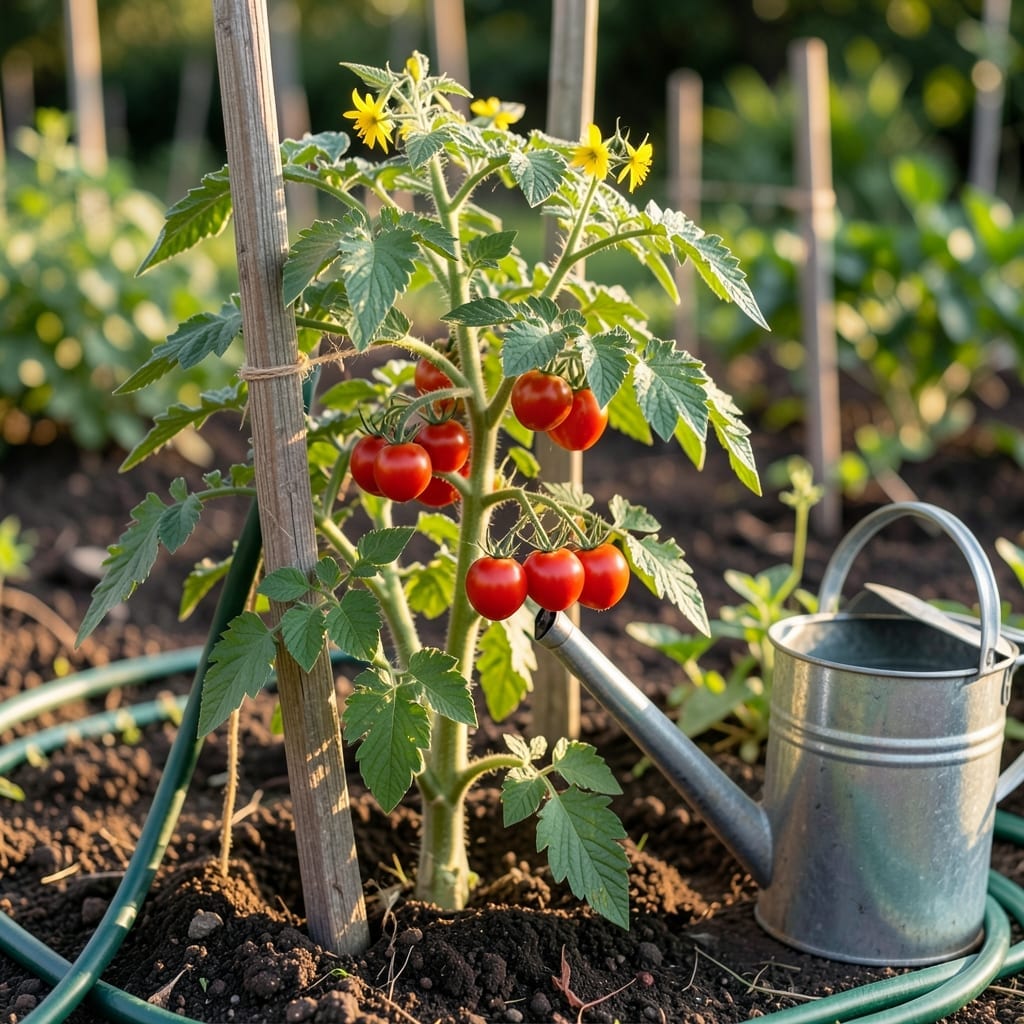
Tomato plants are thirsty but finicky—too much water drowns them, too little leaves you with cracked, flavorless fruit. Mastering their water needs is the key to a bountiful harvest.
I’ve seen gardeners struggle with wilting 🍅 or split skins, not realizing the issue starts with inconsistent watering. The solution is simpler than you think.
Discover the perfect balance to keep your plants happy and productive. Let’s break down exactly what your tomatoes crave to thrive.
Getting your tomato watering schedule right means understanding each growth phase. Seedlings need gentle moisture while roots establish, but too much water can rot them.
As plants mature, their water demands increase, especially during flowering and fruiting. The key is consistent soil moisture, not soggy conditions.
| Growth Stage | Water Frequency | Amount per Week | Key Notes |
|---|---|---|---|
| Seedlings | Daily | 0.5 inches | Keep soil evenly moist |
| Vegetative | Every 2-3 days | 1 inch | Water deeply at base |
| Flowering | Every 2 days | 1-1.5 inches | Critical for fruit set |
| Fruiting | Every 1-2 days | 1.5-2 inches | Prevents blossom end rot |
During hot summer days, I check soil moisture daily. If the top 1-2 inches feel dry, it’s time to water. Morning watering is ideal to reduce evaporation.
For container-grown tomatoes, water needs are higher. Potted plants dry out faster, so I water them every 1-2 days in peak summer.
Clay soil holds moisture longer than sandy soil. Adjust your schedule accordingly. In clay, I water less often but deeply. In sand, more frequent shallow watering works better.
Watch for wilting leaves in the afternoon—that’s normal. But if they’re still wilted in the morning, your plants need water immediately.
I use the finger test: stick your finger 2 inches into the soil. If it’s dry, water. If it’s damp, wait. This simple method prevents both overwatering and underwatering.
Remember, consistency is key. Fluctuating moisture causes cracked fruit and blossom drop. Stick to a routine, and your tomatoes will thank you with a bountiful harvest 🌱
Even experienced gardeners make critical watering errors that sabotage their tomato crop. I’ve seen blossom end rot and split fruits ruin harvests because of simple missteps.
The most common mistake is watering from above. Wet leaves invite fungal diseases like early blight. Always water at the soil level to keep foliage dry.
⚠️ Warning: These watering mistakes can destroy your tomato harvest before it even begins!
Another big issue is inconsistent watering. Tomatoes need steady moisture to develop properly. Let soil dry slightly between waterings, but never completely.
I’ve learned that watering at night is a no-no. It creates the perfect damp environment for fungi to thrive. Morning watering allows foliage to dry quickly in the sun.
Shallow watering encourages weak roots. Always water deeply and infrequently to promote strong, deep root growth. Aim for 1-2 inches per week total.
Lastly, ignoring your soil type can lead to problems. Clay soil holds water longer, while sandy soil drains quickly. Adjust your schedule based on what you’re working with.
Fix these mistakes, and you’ll see healthier plants and bigger harvests 🌱