
Beautiful Plants For Your Interior
Beautiful Plants For Your Interior
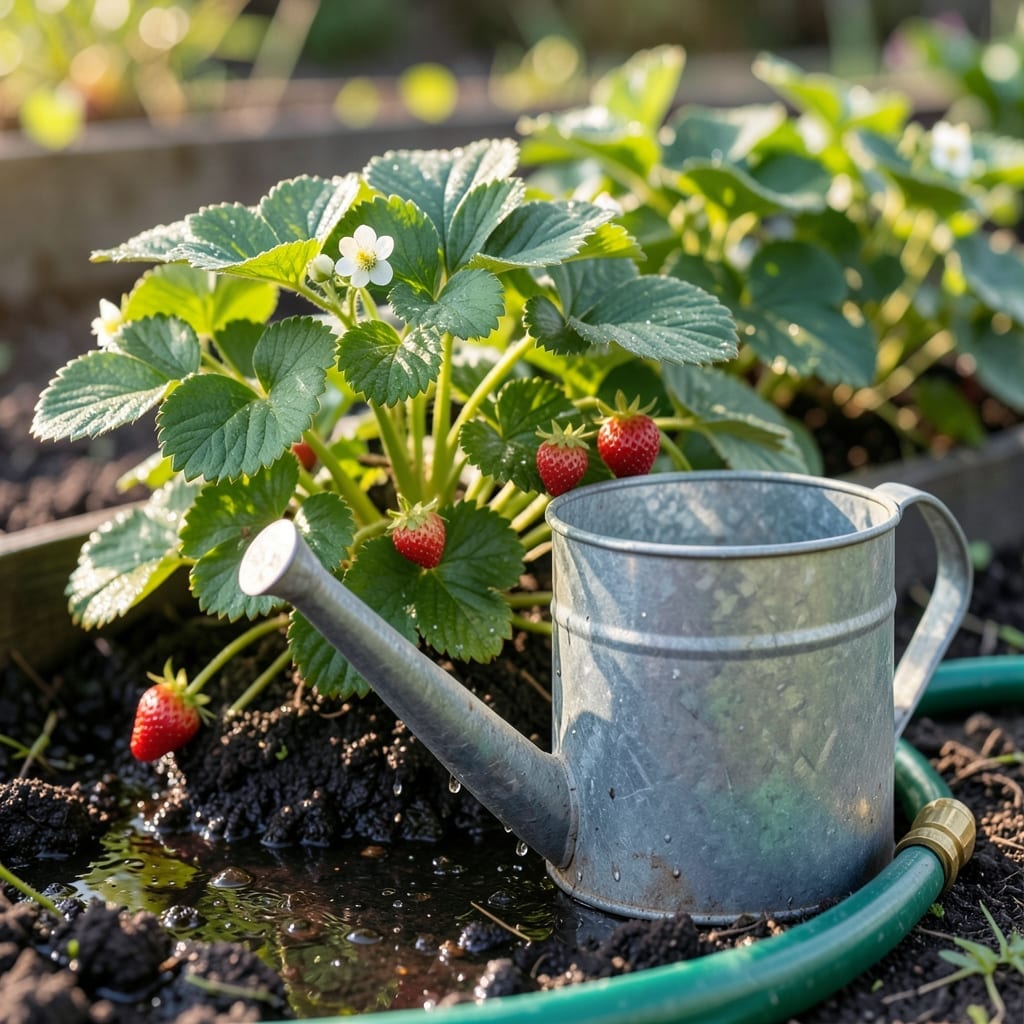
Nothing ruins a 🍓 Strawberry harvest faster than inconsistent watering. Those sweet, juicy berries you dream of depend on getting the moisture balance just right.
I’ve seen too many gardeners struggle with wilted plants or bland fruit because they didn’t know the most important watering rules. The good news? It’s simpler than you think.
Let me walk you through the exact approach that’ll give your Strawberries the steady hydration they crave. You’ll be picking faster, tastier berries in no time.
Getting the watering schedule right is what separates mediocre strawberries from juicy, flavorful harvests. The key is understanding that their needs change dramatically as they grow.
I’ve found that most gardeners either drown their plants or let them dry out by following generic advice. But strawberries have specific requirements at each stage of development.
| Growth Stage | Water Needs | Soil Moisture Tip |
| Establishment | 1-1.5 inches weekly | Keep consistently moist but not soggy |
| Flowering | 1.5 inches weekly | Increase slightly to support blooms |
| Fruiting | 1.5-2 inches weekly | Critical period for plump berries |
| Dormancy | 0.5 inches weekly | Reduce water but don’t let dry out |
During the establishment phase, your strawberries are building their root system. I recommend 1-1.5 inches of water per week, ensuring the soil stays evenly moist but never waterlogged.
Once flowering begins, bump that up to 1.5 inches weekly. This is when the plant starts working hard to produce fruit, and consistent moisture prevents blossom drop.
The fruiting stage is where most gardeners fall short. Your plants need 1.5-2 inches per week here. I’ve seen berries double in size with proper hydration during this critical period.
As the season winds down and plants enter dormancy, you can scale back to 0.5 inches weekly. But don’t abandon them completely—root health depends on some moisture year-round.
Remember, these are general guidelines. Your soil type and climate conditions will affect needs. Sandy soil drains faster, while clay holds moisture longer.
I always check the top inch of soil before watering. If it’s dry, it’s time to water. If it’s damp, wait a day. This simple test prevents both overwatering and underwatering issues. 💧
Your strawberry plants will tell you when they’re thirsty or drowning. I’ve learned to watch for subtle signals that reveal their watering needs before problems escalate.
Wilting leaves during the hottest part of the day often mean underwatering, while yellowing leaves usually indicate too much water. But there are more clues to look for.
The finger test is my go-to method. Stick your finger 1-2 inches into the soil near the base. If it feels dry, it’s time to water. If it’s damp, wait another day.
Another trick is checking the leaf color and texture. Dark green with slight wilting in morning may mean too much water. Dull, blue-green leaves often signal thirsty plants.
I’ve found that morning observations work best. Check your plants early, before the heat of the day sets in, and you’ll catch problems before they affect your harvest. 🌱