
Beautiful Plants For Your Interior
Beautiful Plants For Your Interior
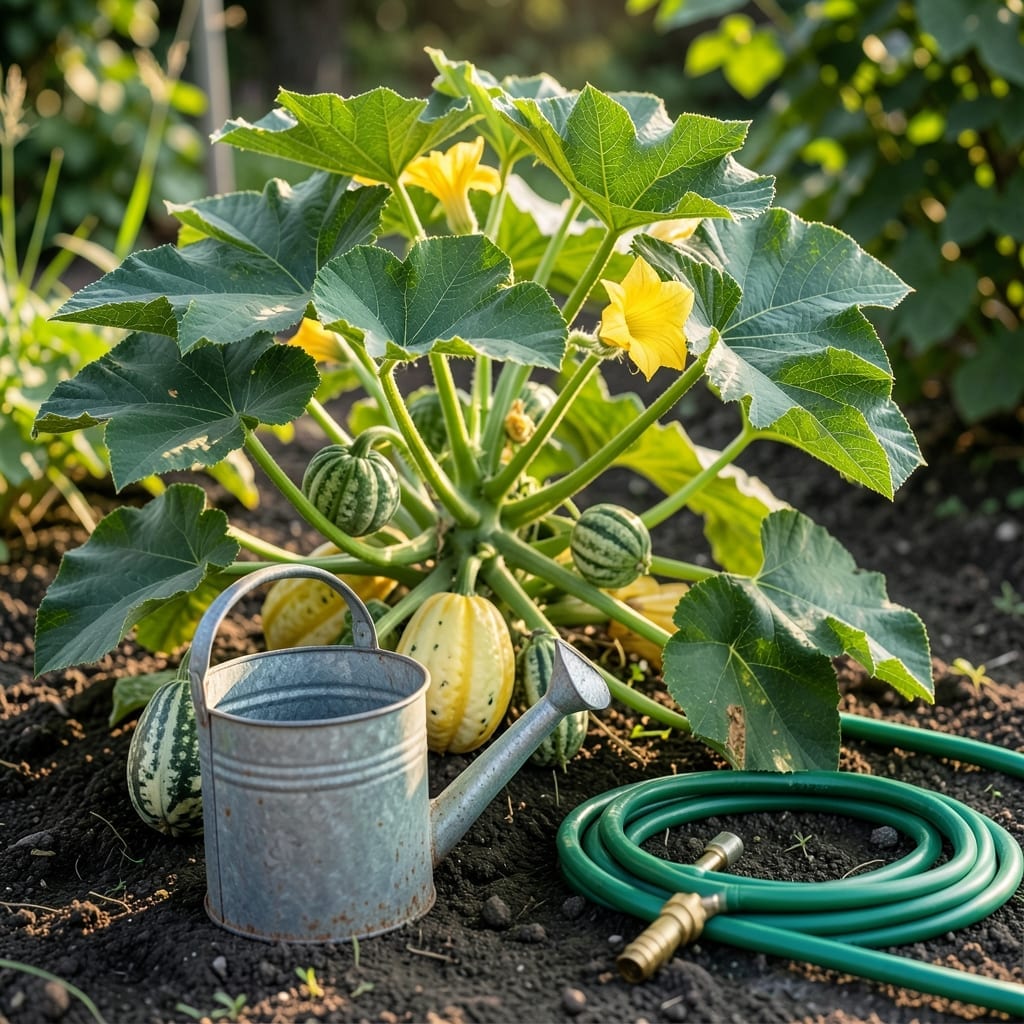
Proper watering is the key to growing healthy, productive squash plants. Too little water stunts growth, while too much can drown your crop—so getting the balance right is crucial.
I’ve seen 🎃 Squash thrive with consistent moisture, especially during those hot summer months in zone 6. But how do you know when you’re giving them just enough?
Whether you’re a beginner or a seasoned gardener, understanding the watering needs of squash can make or break your harvest. The good news is, it’s easier than you think once you know the signs to look for.
Let me walk you through exactly how to keep your plants happy and hydrated without the guesswork. You’ll discover the simple secrets to vibrant, fruit-bearing vines.
Getting your squash watering schedule right is key to strong plants and bountiful harvests. Squash are thirsty plants, but their needs change as they grow.
From seedlings to harvest, I’ll break down exactly how much water squash need and when to adjust for weather conditions. Consistency prevents blossom-end rot and cracked fruit. 🌱
In the seedling stage, squash plants need gentle but frequent watering. Aim for ½ inch of water every 2-3 days to keep soil evenly moist without waterlogging.
Once flowers appear, increase to 1 inch per session every 3-4 days. This supports pollination and fruit development. Always water at the base of the plant to avoid wetting leaves.
During fruiting, squash are most demanding. I water my plants every 2-3 days with 1-2 inches each time. Drip irrigation works best here to prevent fungal diseases.
As harvest nears, reduce watering to once weekly. This helps harden the rind and improve flavor. Check soil by sticking your finger 1 inch deep—if dry, it’s time to water.
Adjust for hot or dry weather by watering more frequently. In cool, rainy periods, scale back to prevent root rot. Mulching with straw or compost helps retain moisture.
Morning watering is ideal—it gives plants time to absorb moisture before the hottest part of the day. Avoid watering in the evening, as damp leaves can attract pests and diseases. 💧
For container-grown squash, check soil daily. Potted plants dry out faster and may need daily watering in peak summer. Use well-draining soil to avoid soggy roots.
Knowing how much water squash need helps me catch problems early. Yellowing leaves often signal overwatering, while wilting in heat may mean underwatering needs fixing.
I watch for mushy stems or root rot when soil stays soggy. Dry, crispy edges on leaves scream for more water, especially during fruit development.
I check soil moisture by sticking my finger 2 inches deep. If it feels bone dry, it’s time to water. Soggy soil means I should hold off.
For summer squash, I water daily in extreme heat, but always in the early morning to prevent evaporation loss.
Mulching helps retain moisture and reduces watering frequency. I use straw or wood chips around the base, keeping it 3 inches thick.
When I see blossom end rot, it’s often a calcium deficiency caused by inconsistent watering. I adjust my schedule immediately to save the crop.
Consistent moisture levels keep my squash plants thriving. I aim for 1-2 inches of water weekly, adjusting for rainfall and heat 🌱