
Beautiful Plants For Your Interior
Beautiful Plants For Your Interior
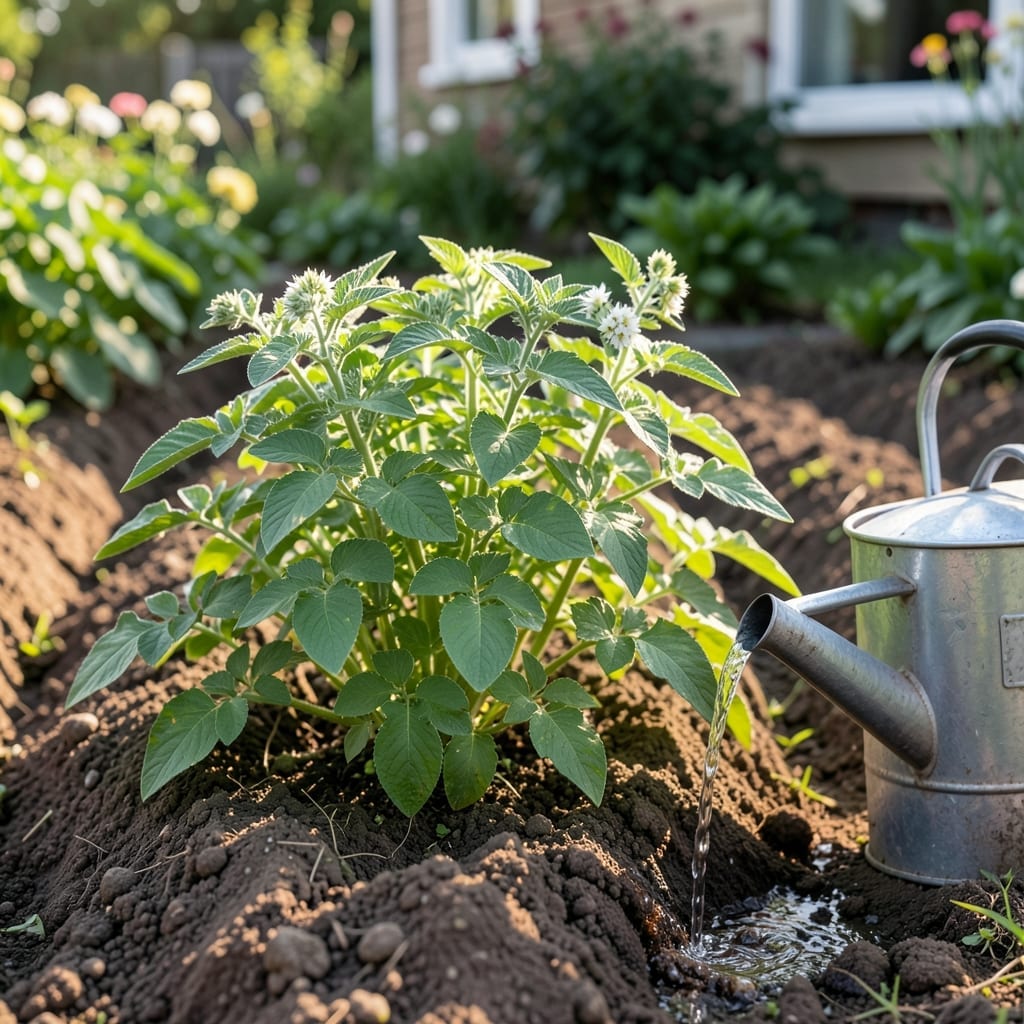
Potatoes are hardy crops, but getting their watering right is the key to a bountiful harvest. Too little water stunts growth, while too much can lead to rot and disease.
I’ve learned that 🥔 Potato plants need consistent moisture, especially during tuber formation. The trick is finding that perfect balance between dry soil and waterlogged roots.
Let me show you exactly how to water your potatoes at each growth stage. You’ll discover simple techniques to keep your plants thriving from spring planting to summer harvest.
Getting your potato watering schedule right means understanding each growth phase. I’ve found that seed potatoes need minimal water at planting, but demands increase as the plant grows.
The key is consistent moisture without waterlogging. Potato plants are particularly thirsty during tuber formation, which is when most gardeners see issues arise.
| Growth Stage | Water Needs | Frequency |
| Planting | 0.5 inches | Once |
| Sprouting | 1 inch | Weekly |
| Vegetative Growth | 1-1.5 inches | Weekly |
| Flowering | 1.5-2 inches | Weekly |
| Tuber Formation | 2 inches | Every 5-7 days |
| Maturity | 1 inch | Every 7-10 days |
During the first 2 weeks after planting, I recommend just light moisture to encourage root development. The soil should feel damp but never soggy at this stage.
Once sprouts emerge, increase to 1 inch per week. This is when the plant starts building its foliage and needs more consistent hydration to support growth.
The vegetative stage is when your potato plants will grow rapidly. I’ve seen the best results with 1-1.5 inches weekly, making sure the top 6-8 inches of soil stay moist.
When flowers appear, this signals the start of tuber formation. This is the most critical watering period – I increase to 2 inches per week during this phase.
As the plant matures and the tops begin to die back, you can reduce watering. At this point, I switch to 1 inch every 7-10 days to prevent splitting.
Remember that sandy soils will need more frequent watering, while clay soils hold moisture longer. I always check the soil before watering – if it’s dry 2 inches down, it’s time to water.
🌱Recognizing watering problems early can save your potato crop. I’ve seen many gardeners struggle with yellowing leaves or cracked soil, not realizing these are clear distress signals from their plants.
Overwatered potatoes often show yellowing leaves and wilting foliage despite wet soil. The stems may appear soft or mushy at the base, which is a sure sign of root rot.
Underwatered potatoes tell a different story. The soil will pull away from the plant base, creating visible cracks in the earth. Leaves become brown and crispy at the edges, and growth slows dramatically.
I always check the soil moisture 2 inches deep before watering. If it feels dry at this depth, it’s time to water. If it’s damp, I wait another day or two, especially in clay-heavy soils.
Another telltale sign is leaf rolling. Potato leaves naturally curl slightly during the hottest part of the day, but if they stay rolled overnight, this often indicates water stress.
Remember that morning watering is best. It allows foliage to dry during the day, reducing disease risk. I’ve found that drip irrigation works wonders for maintaining consistent moisture without wetting the leaves.
🌱