
Beautiful Plants For Your Interior
Beautiful Plants For Your Interior
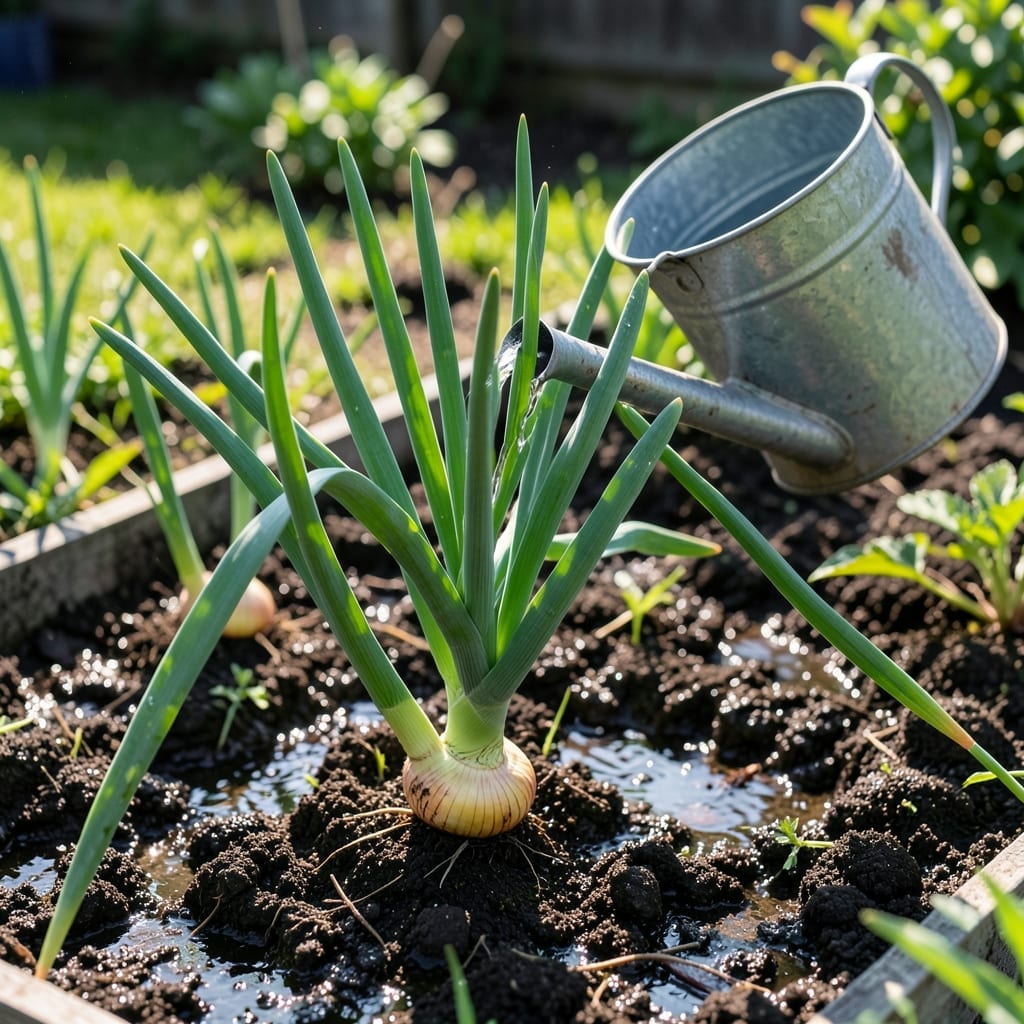
Proper watering is the key to growing plump, flavorful 🧅 onions, but too much or too little can ruin your harvest.
This guide reveals the exact weekly watering schedule your Onion needs for optimal growth. You’ll learn how to keep soil consistently moist without waterlogging.
Discover how to adjust for different growth stages, from seedlings to bulb formation, and ensure a bountiful harvest in Zone 6.
Getting onion watering right is crucial for healthy bulb development. Each growth stage has unique moisture needs that impact your final harvest quality.
From seedling establishment to bulb maturation, I’ll break down exactly how much water your onions need weekly, with adjustments for climate and soil conditions.
| Growth Stage | Water Amount | Frequency |
|---|---|---|
| Seedling | 1 inch per week | Every 5-7 days |
| Bulb Formation | 1-2 inches per week | Every 3-5 days |
| Maturation | 0.5 inch per week | Every 7-10 days |
During the seedling stage, focus on keeping the top inch of soil consistently moist. This encourages strong root development before bulb formation begins.
As bulbs start forming, increase water to 1-2 inches weekly. This is when onions need the most moisture to develop their size and flavor.
I recommend using the finger test: stick your finger 2 inches deep into the soil. If it feels dry, it’s time to water.
When onions approach maturity, gradually reduce watering. This helps the outer layers dry properly for storage. Stop watering completely when tops begin yellowing.
For sandy soils, you may need to water more frequently as they drain quickly. Clay soils hold moisture longer, so adjust accordingly.
Morning watering is ideal as it allows foliage to dry before evening, reducing disease risk. Always water at the base of plants to keep leaves dry.
In hot climates, you might need to water every 2-3 days during bulb formation. Watch for wilting leaves as a sign of thirst.
💧Recognizing water stress in onions early can save your crop. Both overwatering and underwatering show distinct symptoms that are easy to spot if you know what to look for.
I’ve found that onions are quite forgiving, but they do have limits. Catching these signs quickly means you can adjust your watering before permanent damage occurs.
The most common overwatering mistake I see is keeping soil soggy after heavy rains. Onions need consistent moisture, not standing water which can rot bulbs.
For underwatered onions, the soil often pulls away from the bulb, creating gaps. A deep watering once a week is better than frequent shallow watering for established plants.
If you notice yellow leaves, check your drainage first. Onions in poorly draining soil often show overwatering symptoms even with moderate watering.
Remember that container-grown onions dry out faster than in-ground plants. They often need daily checking during hot weather to prevent underwatering stress.
💧