
Beautiful Plants For Your Interior
Beautiful Plants For Your Interior
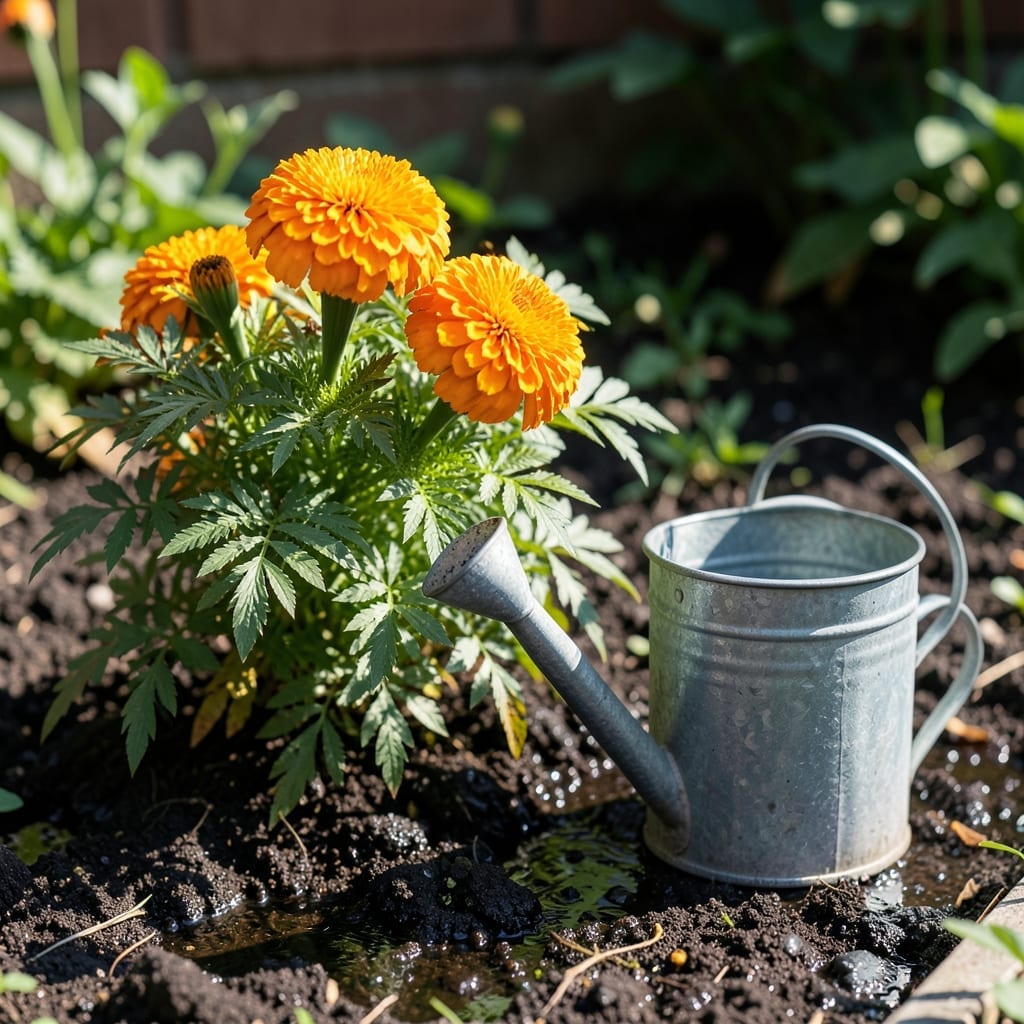
Marigolds bring cheerful 🌼 color to any garden, but their beauty depends on getting the watering just right. Too much or too little can spell trouble for these vibrant blooms.
I’ve learned through trial and error that consistency is the key to thriving marigolds. The good news is that with a simple weekly approach, you can maintain that perfect balance.
Discover the straightforward watering schedule that keeps your marigolds flourishing without the guesswork. Let’s make it effortless.


Getting the watering right is the secret to vibrant marigold blooms. These hardy flowers thrive with consistent moisture but despise soggy roots. I’ve found that a weekly watering schedule works best for most climates.
As a rule of thumb, marigolds need 1 inch of water per week. This includes rainfall, so adjust if Mother Nature lends a hand. The key is to water deeply but infrequently to encourage strong root growth.
| Requirement | Specification |
|---|---|
| Water Amount | 1 inch per week |
| Frequency | Weekly (2x in hot climates) |
| Best Time | Early morning (before 10 AM) |
| Soil Preference | Well-draining soil |
| Seedling Care | Keep soil moist (not soggy) |
In hotter months, I increase watering to twice a week, especially if the soil feels dry an inch below the surface. Always water at the base of the plant to avoid wetting the foliage, which can lead to fungal issues.
For container-grown marigolds, they’ll need more frequent watering—often every 5-7 days—since pots dry out faster. Check the soil daily in summer, and water when the top inch feels dry.
Mature marigolds are quite drought-tolerant once established. In cooler months, I scale back to bi-weekly watering or let rainfall handle it. Overwatering in fall can lead to root rot, so err on the side of caution.
If your soil is sandy or fast-draining, you may need to water more often. Conversely, clay-heavy soil retains moisture longer, so reduce frequency. A simple finger test in the soil tells me all I need to know.
I always use a soaker hose or drip irrigation for even watering. This method delivers moisture directly to the roots while keeping the foliage dry, which is crucial for preventing disease.
Finally, mulching around your marigolds helps retain moisture and regulate soil temperature. A 2-inch layer of organic mulch like straw or shredded leaves works wonders in my garden.
With these tips, your marigolds will stay lush and blooming all season long 🌼
Even with the best intentions, it’s easy to misjudge your marigold’s water needs. I’ve seen both overwatering and underwatering cause serious issues, but the symptoms are easy to spot once you know what to look for.
Your marigolds will tell you exactly what they need through their leaves and blooms. The key is learning to read these visual cues before they cause lasting damage to your plants.
Solution: Water deeply and add mulch to retain moisture
Solution: Stop watering, improve drainage, check roots
I always check my marigolds in the early morning when they should be at their perkiest. If they’re still drooping at this time, it’s a sure sign they need more water.
For overwatered marigolds, I immediately stop watering and let the soil dry out. If the roots look brown and mushy, I trim away the affected parts and repot in fresh, well-draining soil.
Remember that container marigolds are more prone to both issues. Pots can dry out quickly in heat or become waterlogged after heavy rain. I always ensure my containers have drainage holes to prevent overwatering.
With a little attention to these signs, you can adjust your watering routine before any serious damage occurs. Your marigolds will reward you with vibrant, healthy blooms all season long 🌼