
Beautiful Plants For Your Interior
Beautiful Plants For Your Interior
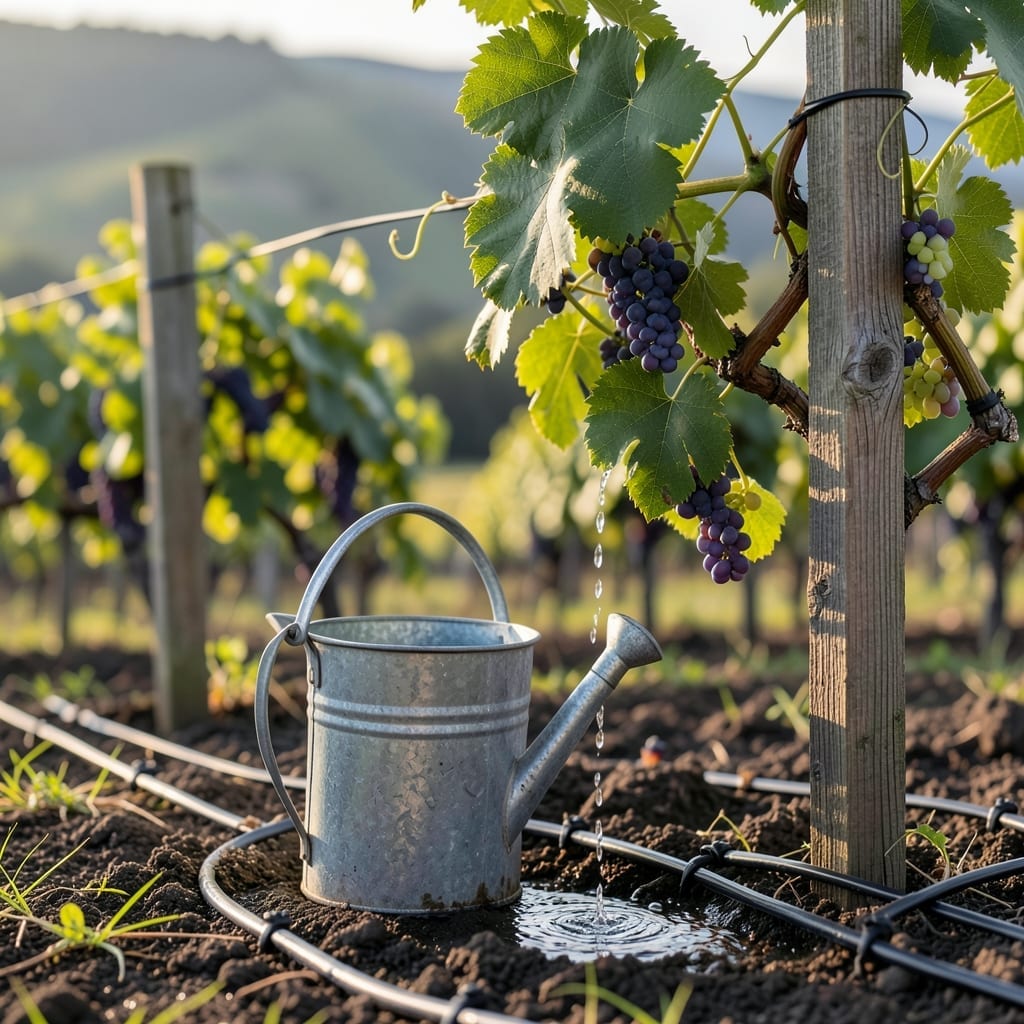
Proper watering can make or break your 🍇 Grape harvest. Too much and you risk rot, too little and your vines will struggle to produce those juicy clusters we all love.
What many growers don’t realize is that Grape water needs change dramatically through the season. The difference between a mediocre crop and an abundant one often comes down to timing.
Discover the easier way to give your vines exactly what they need, when they need it, for the most productive harvest yet.
Getting your grape watering schedule right is crucial for healthy vines and a great harvest. I’ve seen too many gardeners struggle because they either drown their plants or leave them parched at the wrong time.
The truth is, grape water needs shift dramatically from budbreak to harvest. Young vines need consistent moisture, while established plants can handle some drought. The key is adjusting as your vines grow.
| header-cell” style=”background-color:#6fd544;color:#fff;”>Amount per Vine |
|---|
| body-cell”>1-2 gallons |
| body-cell”>2-3 gallons |
| body-cell”>1-2 gallons |
| Deep soak only |
During budbreak and early leaf development, your vines need 1-2 gallons per plant every week. This stage sets the foundation for the entire growing season, so don’t skimp on water.
As flower clusters appear, increase to 2-3 gallons weekly. This is when your vines are working hardest to produce fruit. I always check the soil moisture 2 inches down—it should feel damp, not soggy.
Once grapes start forming, you’ll need to water every 3-5 days. The rule of thumb is 2-3 gallons per vine during this critical period. Reduce slightly as harvest nears to concentrate sugars in the fruit.
In hot climates, you might need to water more frequently. I’ve found that drip irrigation works best because it delivers water directly to the roots without wetting the leaves, which can prevent fungal diseases.
For established vines, you can cut back a bit. These plants have deeper root systems and can handle less frequent watering. Still, aim for 1-2 gallons weekly during the growing season.
During dormancy in winter, your vines need very little water. A deep soak once a month is usually enough, unless you’re in an extremely dry climate. Overwatering now can lead to root rot.
Remember, these are general guidelines. Always check your soil type and local rainfall. Sandy soil drains quickly, while clay holds moisture longer. Adjust your schedule accordingly for the best results 🌿
Recognizing water stress in grapes early can save your harvest. I’ve learned that yellowing leaves and wilting vines often signal trouble, but the causes differ for too much or too little water.
Overwatering shows up as soft, mushy stems and blackened roots. The leaves may turn bright yellow and feel soggy. In severe cases, you’ll notice mold growth on the soil surface.
Underwatered vines have dry, crispy leaves that curl at the edges. The soil will pull away from the vine base, and growth slows dramatically. In extreme cases, fruit may shrivel or drop prematurely.
I check my vines weekly by digging 4 inches deep. If the soil feels bone dry, it’s time to water. If it’s sodden, hold off for a few days. This simple test prevents most watering mistakes.
For overwatered plants, stop watering immediately and improve drainage. Add compost or sand to heavy clay soils. For underwatered vines, give a deep soak and mulch to retain moisture.
Remember, morning watering is best. It allows foliage to dry during the day, reducing disease risk. I’ve found this timing helps prevent both fungal issues and evaporation loss 🌿