
Beautiful Plants For Your Interior
Beautiful Plants For Your Interior
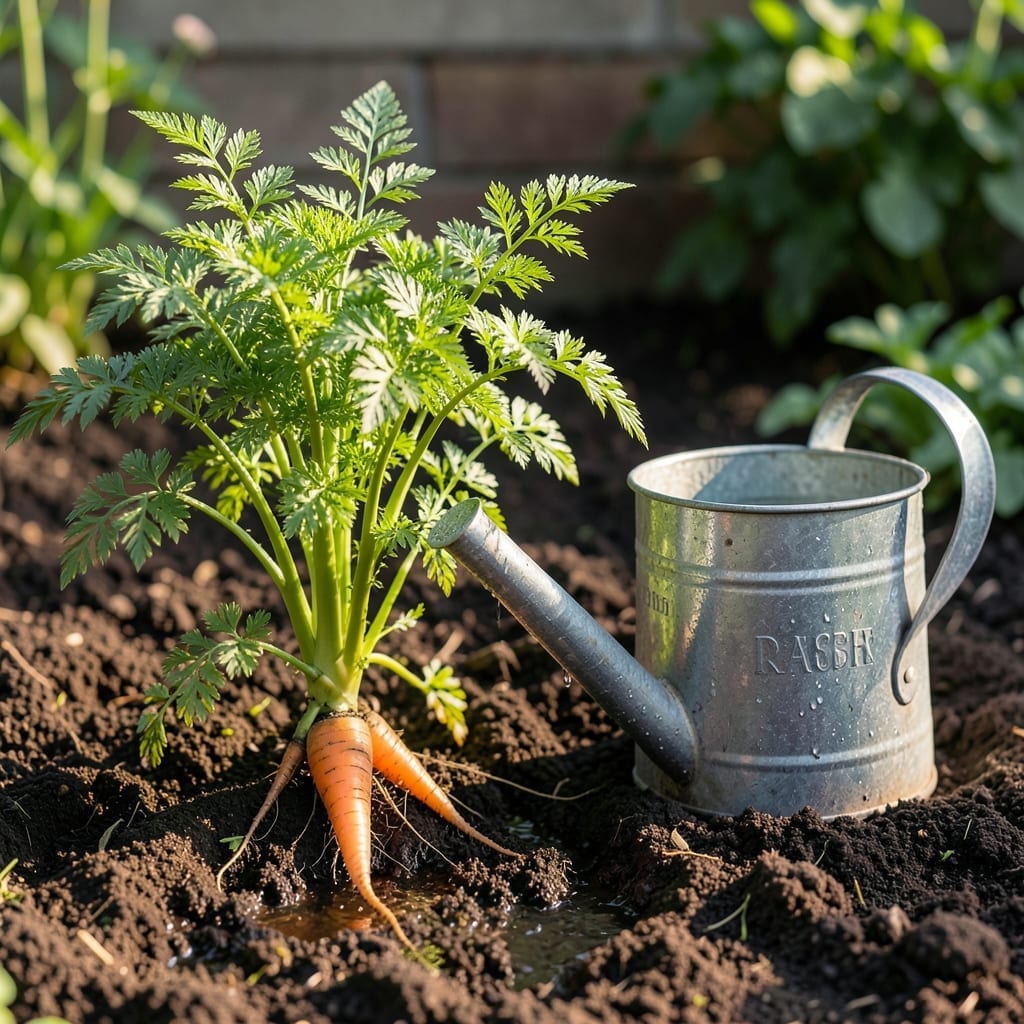
Getting your 🥕 Carrot watering right can make or break your harvest. Too much leads to split roots, while too little results in stunted growth.
I’ve learned the hard way that consistency matters most. These simple adjustments transformed my patch from struggling to thriving.
Discover the perfect balance to grow sweet, straight carrots every time. Let me show you exactly how to nail it.
Carrots need consistent moisture to develop straight, sweet roots. I’ve found that 1 inch of water weekly is the golden rule, but this varies by growth stage. Seedlings require gentle, frequent watering to prevent crusting.
As plants mature, deep watering encourages strong root growth. The key is maintaining even soil moisture without waterlogging, which can cause splitting or disease.
| Growth Stage | Water Requirement | Frequency |
|---|---|---|
| Seedling | Keep soil moist | Daily, light |
| Vegetative | 1 inch weekly | 2-3 times |
| Maturity | Reduce to 0.5 inch | 1-2 times |
| Harvest | Taper off 1 week prior | Minimal |
During the seedling stage, I use a fine mist nozzle to avoid disturbing delicate roots. The soil should feel like a damp sponge, never soggy or dry.
For vegetative growth, I switch to deep watering every 3-4 days. This encourages roots to grow downward, resulting in straighter carrots. A soil moisture meter helps me stay precise.
As carrots near maturity, I reduce water to 0.5 inch weekly. This prevents cracking and enhances sweetness. I stop watering 1 week before harvest for the best flavor.
In hot climates, I water in the early morning to reduce evaporation. In cooler areas, I adjust to every 5-7 days. Mulching with straw helps retain moisture.
Watch for yellowing leaves (overwatering) or wilting (underwatering). I check soil 2 inches deep—if it’s dry, it’s time to water. This simple habit keeps my carrots thriving.
I’ve noticed that sandy soil drains quickly, so I water more frequently. For clay soil, I water less often but deeply to prevent waterlogging. A rain gauge helps me track natural precipitation.
Consistency is key. By following these stage-specific guidelines, I’ve grown sweet, crack-free carrots every season. Try it and see the difference in your harvest!
🌱Proper watering prevents splitting, forking, and woody textures in carrots. I’ve learned that uneven moisture is the main culprit behind these issues.
By maintaining steady soil moisture, I avoid the stress that causes carrots to crack or grow misshapen. The key is consistency—not too much, not too little.
The most common mistake I see is inconsistent watering. Carrots need 1 inch of water weekly, but this must be evenly distributed. A sudden flood after drought leads to split roots.
I use drip irrigation on a timer to ensure my carrots get steady moisture without effort. This method also reduces waste and keeps foliage dry, preventing disease.
In hot weather, I water every 3-4 days instead of weekly. For cool climates, I stretch it to 5-7 days. A rain gauge helps me adjust for natural rainfall.
If your carrots are forked or stunted, check your watering habits. Compacted soil and uneven moisture are often to blame. Loosen the soil and stay consistent with watering.
🌱