
Beautiful Plants For Your Interior
Beautiful Plants For Your Interior
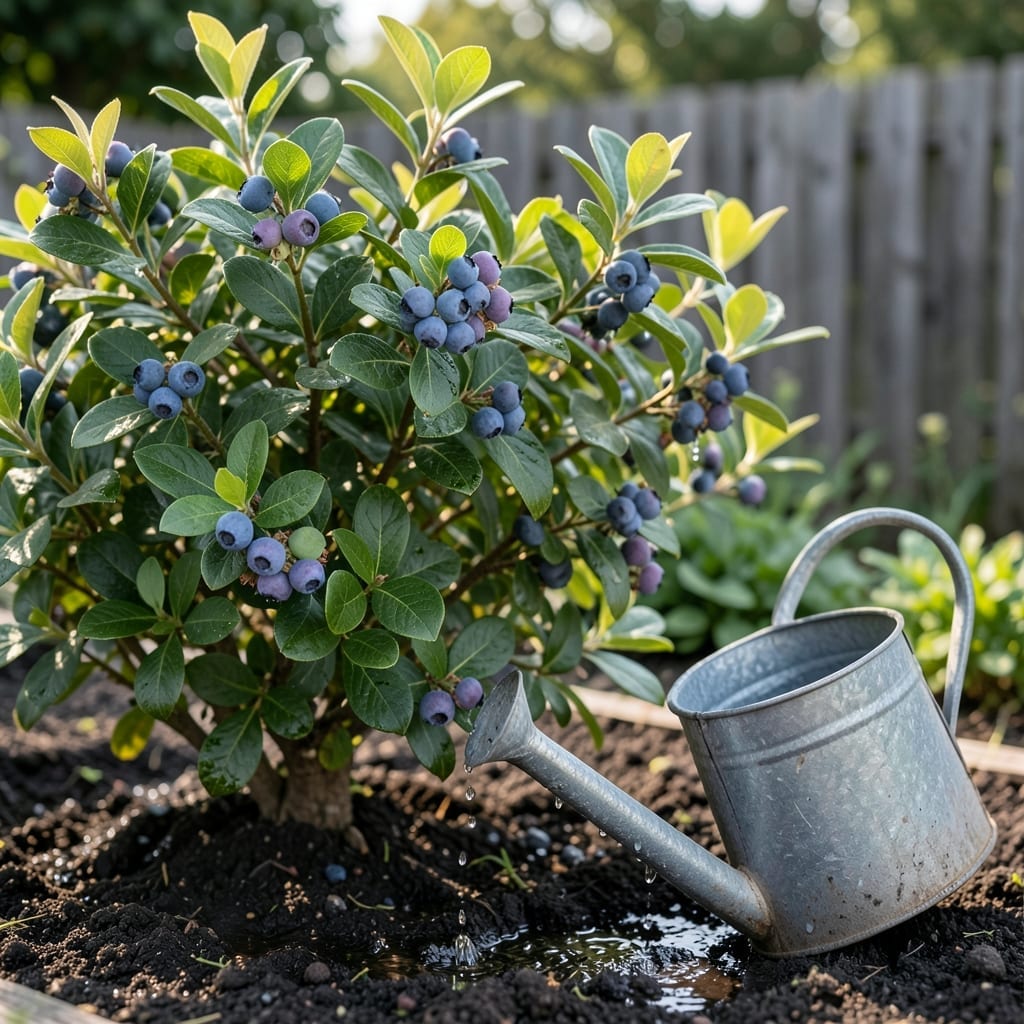
Getting the watering right is the key to plump, sweet 🫐 Blueberry harvests. Too little and your bushes struggle, too much and you risk root rot.
I’ve seen both extremes ruin promising plants. The good news? There’s a simple, science-backed approach that keeps your Blueberries thriving without the guesswork.
Discover how to nail the perfect balance for every growth stage, from planting to picking. Your bushes—and your taste buds—will thank you.
Blueberries need consistent moisture but hate soggy roots. I’ve found that 1-2 inches of water per week works best for most established plants. The exact amount depends on your growth stage and soil type. 🌱
Newly planted bushes require more frequent watering to establish roots, while mature plants can tolerate slightly drier conditions. Always check the top inch of soil before adding more water. 💧
| Stage | Water Frequency | Amount | Notes |
|---|---|---|---|
| Newly Planted | 2-3x per week | 1-1.5 inches | Keep soil evenly moist |
| Established | Weekly | 1-2 inches | Drought: increase to 2x |
| Fruiting | Every 3-4 days | 1.5 inches | Critical for berry development |
| Dormant | Bi-weekly | 0.5-1 inch | Reduce in winter |
During the first year, I water my blueberries every 2-3 days for the first month, then taper off. This helps the root system establish properly. In hot climates, you might need to water daily during peak summer. ☀️
For mature plants, I switch to deep watering once a week. This encourages deeper root growth and better drought resistance. Remember that sandy soils drain faster and may need more frequent watering.
When fruits appear, I increase water to every 3-4 days. Blueberries are 90% water, so consistent moisture is key for plump berries. A drip irrigation system can help maintain even moisture levels. 🌿
In winter, I cut back to bi-weekly watering unless we have a dry spell. Dormant plants need less water, but don’t let the root zone dry out completely. Mulching helps retain moisture.
Always water in the early morning to reduce evaporation and prevent fungal diseases. I’ve found that soaker hoses work better than sprinklers for blueberries, as they keep the foliage dry. ✂️
If you’re growing in containers, check daily during hot weather. Potted blueberries dry out faster than in-ground plants. I use a moisture meter to be precise with my container bushes.
Remember that acidic soil (pH 4.5-5.5) helps blueberries absorb water more efficiently. If your soil is alkaline, amending with peat moss or pine bark can improve water retention and root health.
Spotting watering problems early can save your blueberries. I look for yellowing leaves or drooping stems as the first red flags. These often indicate overwatering, which suffocates the roots. 🌱
Underwatered plants show dry, crispy leaves and premature fruit drop. The soil will feel bone dry an inch below the surface. Both conditions stress the plant and reduce your harvest.
I’ve learned that blueberry leaves turn bright yellow when overwatered, while brown edges signal underwatering. The berry quality also suffers—overwatered fruits may split, while underwatered ones stay small and tart. 💧
Another telltale sign is root health. If you gently dig near the base and find mushy, dark roots, you’re overwatering. Healthy roots should be firm and white. For underwatering, roots often appear dry and brittle.
I always adjust my watering based on the season. In summer heat, I might water every other day, but in cool spring, weekly is often enough. A simple soil moisture meter takes the guesswork out of it. ☀️
Remember that container-grown blueberries dry out faster than in-ground plants. I check my pots daily in hot weather, as the limited soil volume can’t hold moisture as long. Mulching with pine bark helps maintain consistent moisture levels.