
Beautiful Plants For Your Interior
Beautiful Plants For Your Interior
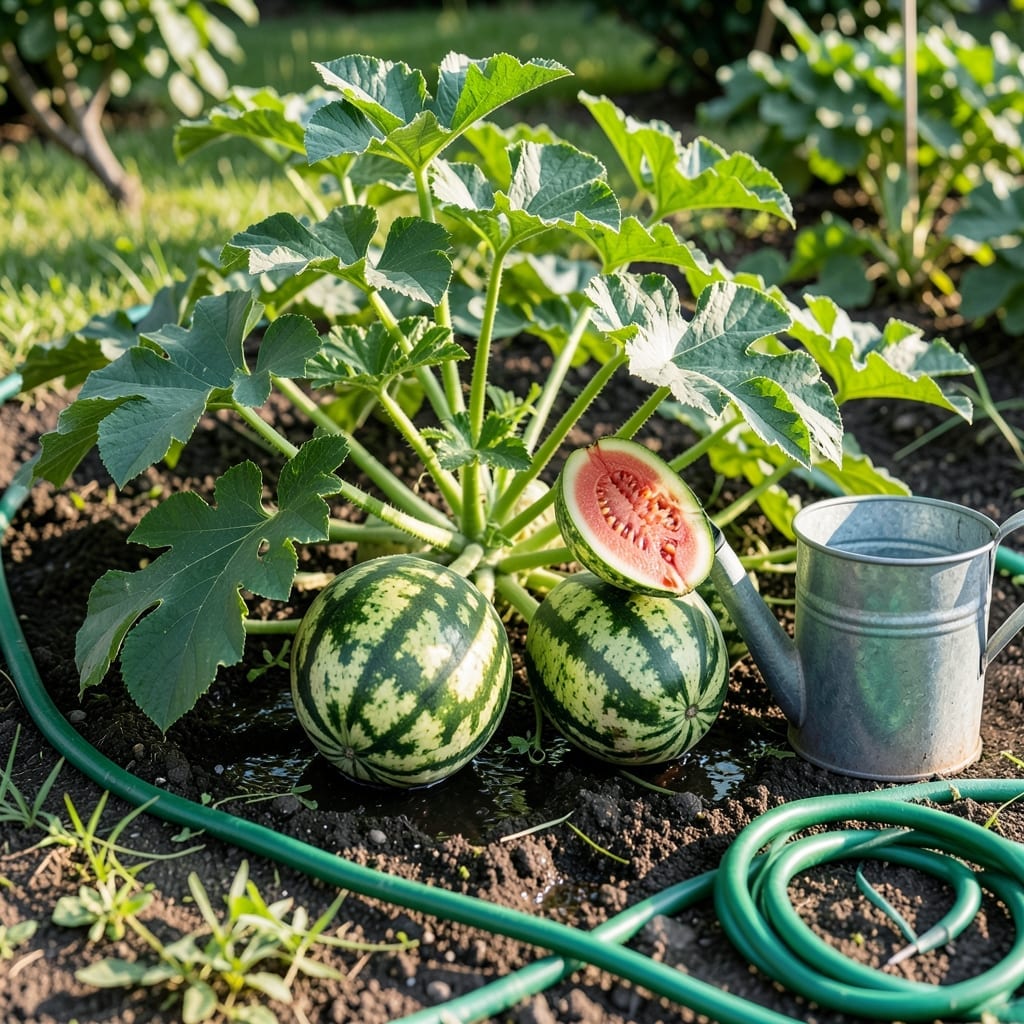
Watering Watermelon 🍉 correctly is the secret to growing sweet, juicy fruits that burst with flavor. Get it wrong, and you’ll end up with bland, cracked, or rotten melons.
I’ve seen too many gardeners struggle with this simple but critical step. The difference between a thriving plant and a disappointing harvest often comes down to how much water it gets and when.
Whether you’re new to gardening or have been at it for years, understanding the needs of Watermelon at each growth stage can transform your results. The right approach ensures your plants stay healthy and productive.
Let me show you exactly how to nail the watering routine for perfect results every time. You’ll be amazed at the difference it makes in your harvest.


I’ve found that watermelons need consistent moisture but hate soggy roots. The key is adjusting watering frequency as they grow, from seedlings to harvest-ready fruits. Each stage has unique needs to prevent stress or rot. 🌱
For young seedlings, I recommend daily light watering to keep soil moist but not waterlogged. Once vines form, shift to deep watering every 5-7 days. This encourages strong root development before fruits appear.
| Growth Stage | Frequency | Amount |
|---|---|---|
| Seedlings | Daily | 0.5 inches |
| Vine Growth | Every 5-7 days | 1-1.5 inches |
| Fruit Development | Every 3-5 days | 1.5-2 inches |
| Harvest Week | Reduce gradually | 0.5 inches |
During fruit development, I water more often—every 3-5 days. The melons are 90% water, so consistent moisture is critical. But stop watering 3-5 days before harvest to concentrate sugars for sweeter fruit.
In hot climates, I check soil daily. If the top inch feels dry, I water deeply. Drip irrigation works best, delivering water directly to roots while keeping leaves dry to prevent disease.
For sandy soil, I water more frequently since it drains fast. With clay soil, I space out watering to avoid waterlogging. Always water in the early morning to reduce evaporation and fungal risks.
Mulching helps retain moisture. I use straw or black plastic to keep soil warm and reduce water loss. This also prevents weeds from competing for water and nutrients.
If you’re growing in containers, watermelons need more attention. Potted plants dry out faster, so I check them daily and water when the top 2 inches of soil are dry. Use large containers—at least 5 gallons per plant.
Remember, overwatering is just as bad as underwatering. Yellow leaves or mushy stems signal too much water. If leaves wilt in hot afternoons but recover by morning, that’s normal—don’t overreact with extra water.
By following this stage-specific schedule, you’ll give your watermelons exactly what they need for optimal growth and maximum sweetness. 🌿
I’ve seen too many gardeners struggle with watermelon watering—either giving too much or too little. The result? Split fruits, wilting vines, or bland-tasting melons. Spotting the signs early saves your harvest. 🌱
Overwatering often shows as yellowing leaves or mushy stems, while underwatering leads to dry, crispy foliage and stunted growth. Both can ruin your crop if ignored.
If your watermelon leaves look limp in the morning, it’s a red flag. Healthy plants should be perky by sunrise. Check soil moisture 2 inches deep—if dry, it’s time to water.
For overwatered plants, hold off on watering and let the soil dry slightly. Improve drainage by mixing in compost or sand. Underwatered plants need a deep soak—not just a surface sprinkle.
Remember, consistency is key. Watermelons need 1-2 inches of water weekly, but adjust based on rainfall and heat. Hot, dry spells may require extra watering to keep vines thriving.
Finally, always water at the base of the plant to avoid wetting leaves, which can invite disease. Early morning is ideal, giving foliage time to dry before evening. 💧