
Beautiful Plants For Your Interior
Beautiful Plants For Your Interior
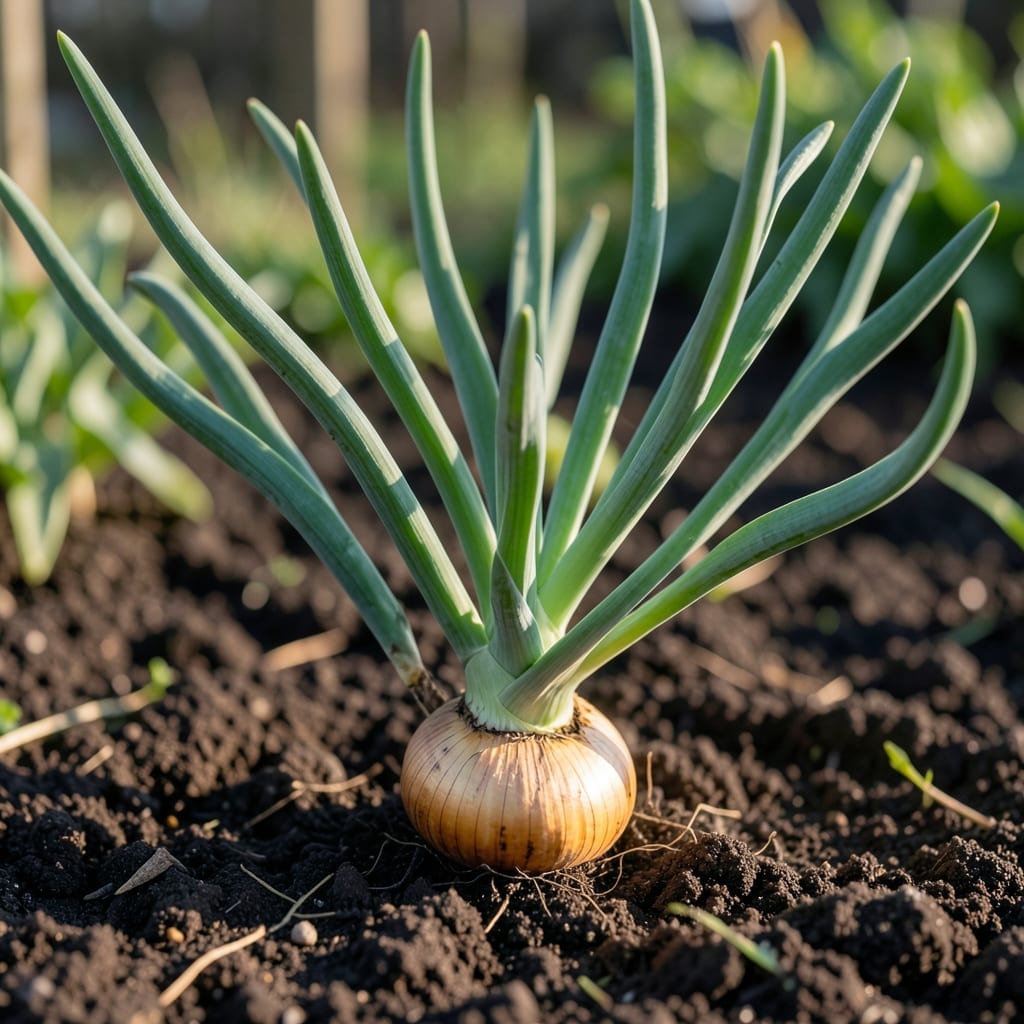
Onions are a garden staple, but their sunlight needs can make or break your harvest. I’ve learned the hard way that even a small mistake in sun exposure can leave you with tiny bulbs instead of a bountiful crop.
The 🧅 Onion thrives best with consistent light, but the exact amount depends on your climate and variety. Whether you’re planting in Zone 6 or a sunnier region, getting this right is the key to success.
Discover how to provide the perfect conditions for your onions to grow strong, healthy, and ready for harvest. Let’s dig in.

Getting the sunlight requirements right is critical for growing onions. Most varieties thrive with 6-8 hours of direct sunlight daily, but this can vary slightly depending on the type.
I’ve found that bulb onions need the most light, while green onions can tolerate slightly less. Sweet onions, like Vidalia, also demand plenty of sun to develop their characteristic flavor.
| Onion Variety | Daily Sun Needs | Notes |
|---|---|---|
| Bulb Onions | 6-8 hours | Full sun for best bulb formation |
| Green Onions | 4-6 hours | Tolerates partial shade |
| Red Onions | 6-8 hours | Needs sun for deep color |
| Sweet Onions | 8+ hours | More sun = sweeter flavor |
In cooler climates, you might need to maximize sunlight exposure. I always plant my onions in the sunnier spots of the garden to ensure they get enough light, even on cloudy days.
For southern regions, where the sun is intense, onions can handle the heat but may need consistent watering to prevent stress. The key is balancing sun exposure with proper hydration.
If you’re growing onions in containers, place them where they can get at least 6 hours of sun. A south-facing balcony or patio works well for this.
Sweet onions like Vidalia or Walla Walla need the most sun—8+ hours—to develop their signature mild taste. Without enough light, they may end up more pungent than sweet.
Green onions are more forgiving and can grow in partial shade, but they’ll still produce better with at least 4-6 hours of sunlight daily.
I’ve noticed that onions grown in less than ideal light tend to have thinner stems and smaller bulbs. If you’re short on sunny spots, prioritize them for your bulb onions.
For the best results, aim for morning sun, which is less harsh than afternoon rays. This helps prevent sunscald on the leaves while still providing the energy needed for growth.
Remember, consistent sunlight is more important than occasional long exposure. Onions do best with a steady 6-8 hours every day rather than sporadic bursts of light.
By matching your onion variety to the right sunlight conditions, you’ll set yourself up for a bountiful harvest come summer. ☀️
Even with the best intentions, onions can struggle if they don’t get enough light. I’ve seen yellowing leaves and stunted growth in my own garden when sunlight was lacking.
Small bulbs are another red flag. If your onions aren’t sizing up, they might be begging for more sun. Thin, weak stems are also a common sign of insufficient light.
Yellowing leaves, small bulbs, and slow growth often mean your onions need more light. Adjust their placement to a sunnier spot immediately.
If you notice your onions leaning toward the light, they’re literally reaching for more sun. This is a clear indicator that they need a better location in your garden.
Another sign is pale green or yellow leaves. Healthy onion leaves should be a vibrant green. If they’re fading, it’s time to check your sunlight conditions.
I once planted onions in a partially shaded area and ended up with thin, underdeveloped bulbs. Moving them to a full-sun spot the next season made a world of difference.
Slow maturity is another clue. If your onions are taking forever to size up, they might not be getting the 6-8 hours of sun they need daily.
By keeping an eye on these signs, you can adjust your garden layout before it’s too late. A simple relocation can save your harvest. ☀️