
Beautiful Plants For Your Interior
Beautiful Plants For Your Interior
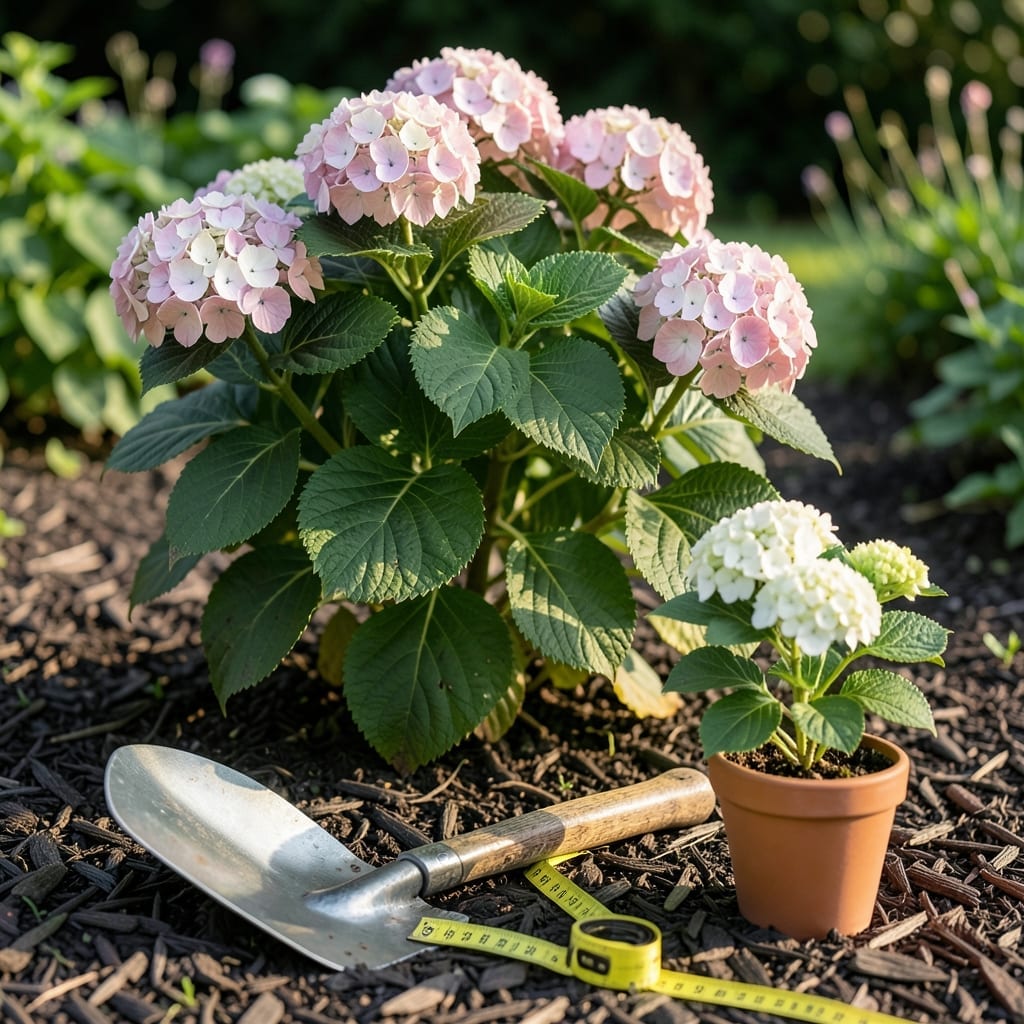
Hydrangeas can transform any garden with their vibrant blooms, but proper spacing is the key to their health and beauty. Crowding these shrubs leads to poor air circulation, disease, and stunted growth.
I’ve seen too many gardens where 🌸 Hydrangea plants struggle simply because they were planted too close together. Giving them room to breathe makes all the difference in their long-term success.
Whether you’re planting in zone 6a or elsewhere, understanding the mature size of your variety is most important. This ensures they thrive without competing for resources.
Discover how to calculate the perfect distance between plants, and watch your garden flourish like never before.
If you’re wondering how much space does a hydrangea need, the answer depends on the variety. Each type has unique mature size and growth habits that dictate spacing. I always check the plant tag for specific guidance before digging.
For bigleaf hydrangeas, the most popular variety, I recommend 3 to 4 feet apart. These can spread 4 to 6 feet wide at maturity. Panicle hydrangeas, being larger, need 4 to 6 feet between plants to thrive.
| cell” style=”background-color:#6fd544; color:#fff; font-weight:bold;”>Mature Width | row”> | cell”>4-6 ft | row”> | cell”>6-8 ft | row”> | cell”>6-8 ft | row”> | cell”>3-5 ft | 2-3 ft apart |
Oakleaf hydrangeas are another story—they can grow quite large. I space these 5 to 6 feet apart to accommodate their 6 to 8-foot spread. Their white blooms and oak-shaped leaves make them worth the extra room.
For smooth hydrangeas, which are more compact, 2 to 3 feet apart is usually sufficient. These are great for smaller gardens or border plantings where space is limited. I love their round flower heads that bloom in summer.
Remember, these spacing recommendations are for in-ground planting. If you’re using hydrangeas in containers, the rules change. Each pot should be at least 24 inches wide to give roots room to grow.
I always consider the mature height too. Most hydrangeas reach 3 to 8 feet tall, so planting them too close to fences or buildings can cause problems. Leave at least 3 feet between the plant and any structure.
Soil type also plays a role in spacing. In rich, well-draining soil, hydrangeas may grow larger than expected. In poor soil, they might stay smaller. I always amend my soil with compost before planting.
If you’re planting a hedge with hydrangeas, you can space them a bit closer—about 2 to 3 feet apart. This creates a dense, flowering barrier. Just be prepared to prune regularly to maintain shape.
Finally, think about air circulation. Proper spacing helps prevent fungal diseases like powdery mildew. I’ve found that hydrangeas with good airflow have healthier foliage and more abundant blooms. 🌿
Proper spacing is the secret to thriving hydrangeas that burst with color each season. When I plant them too close, I notice fewer blooms and weaker stems struggling for light. Airflow restriction invites fungal diseases like powdery mildew.
Each hydrangea needs room to reach its mature size without competing for resources. I’ve seen crowded plants produce smaller flowers and stunted growth compared to well-spaced ones. Sunlight access becomes uneven in dense groupings.
I always recommend measuring from the center of one plant to the next. This ensures the entire canopy has space to expand. Panicle hydrangeas can spread 6-8 feet wide, so they need more room than dwarf varieties.
In my experience, 3-5 feet apart works for most hydrangeas, but I adjust based on the mature width listed on the plant tag. Soil quality also plays a role—rich, loose soil supports better growth in tighter spaces.
Don’t forget to consider nearby structures or fences. I’ve made the mistake of planting too close to a wall, only to watch the hydrangea grow lopsided as it reached for light. Always plan for the plant’s full mature size.
With the right spacing, your hydrangeas will reward you with lush foliage and abundant blooms year after year. It’s one of the simplest ways to ensure long-term success in your garden 🌸