
Beautiful Plants For Your Interior
Beautiful Plants For Your Interior
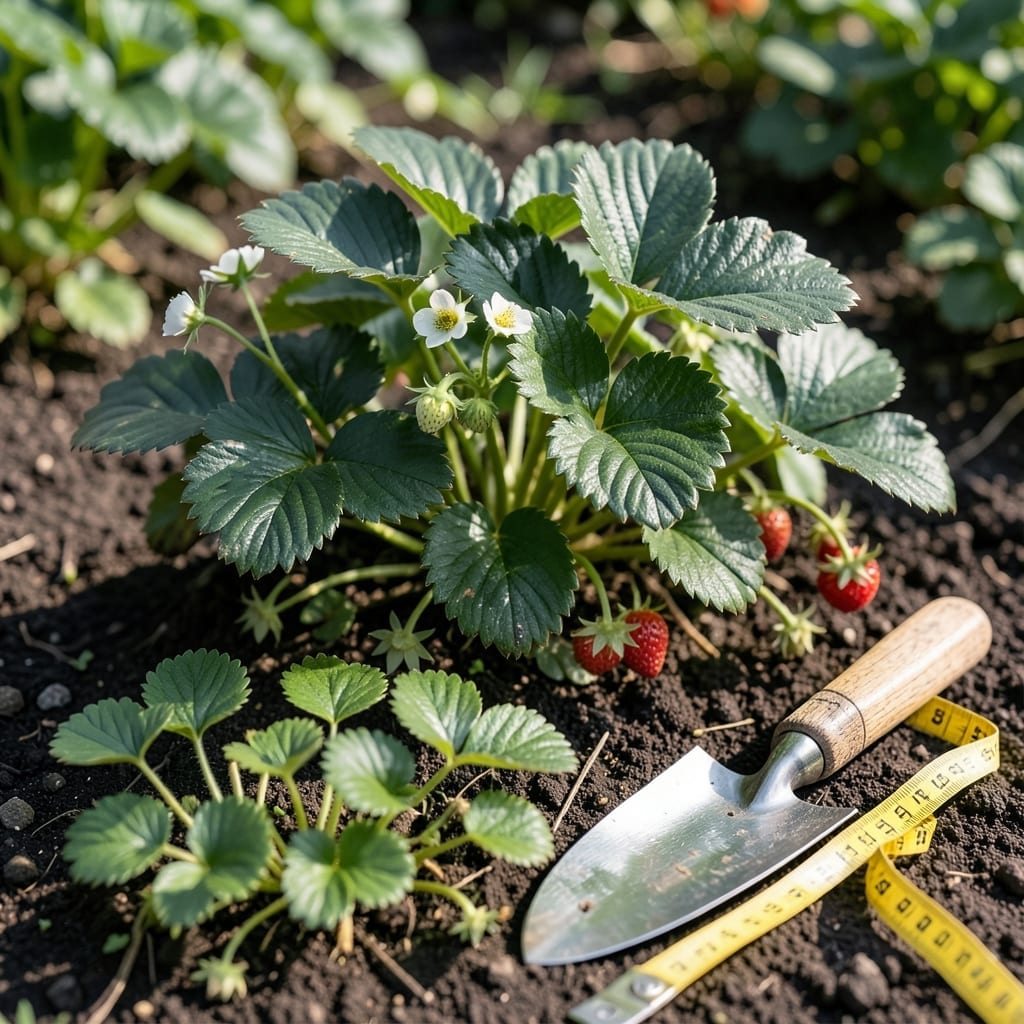
Proper spacing is the key to lush, productive 🍓 Strawberry plants. Whether you’re planting in garden rows or containers, giving your strawberries the right amount of space prevents disease, improves air circulation, and boosts your harvest.
I’ve seen firsthand how crowding can stunt growth and reduce yields. The good news? It’s an easy fix once you know the ideal distances for your specific type.
Discover the simple spacing guidelines that will transform your strawberry patch from struggling to thriving this season.
Getting strawberry spacing right is the difference between a thriving patch and a struggling one. June-bearing strawberries need more room than everbearing or day-neutral types due to their vigorous runners.
In my garden, I’ve found that 12-18 inches between plants works best for most varieties, but container planting changes the game entirely. Let’s break it down by method and type.
| Variety | Plant Spacing | Row Spacing | Plants/Sq Ft |
|---|---|---|---|
| June-bearing | 18-24 inches | 3-4 feet | 1-2 |
| Everbearing | 12-18 inches | 2-3 feet | 2-3 |
| Day-neutral | 8-12 inches | 2 feet | 3-4 |
| Containers | 6-8 inches | N/A | 1 per 8″ pot |
For in-ground beds, I always recommend 3-4 feet between rows to allow for easy access and air circulation. This prevents fungal diseases like gray mold.
Raised beds can be slightly tighter since drainage is better. I’ve successfully grown everbearing strawberries with 12-inch spacing in my raised beds.
If you’re using the mat row system, plant strawberries 2 feet apart in all directions. The runners will fill in the gaps, creating a dense, productive mat.
For containers, stick to 1 plant per 8-inch pot or 3 plants in a 12-inch hanging basket. Crowding here leads to root competition and poor yields.
Remember that soil fertility plays a role too. Rich, well-draining soil lets you push spacing a bit tighter, while poorer soil needs more room per plant.
In my experience, mulching between plants helps maintain consistent moisture and reduces weed competition, which is especially important in tighter spacings.
Finally, don’t forget about vertical space. While strawberries stay low to the ground, proper spacing allows the foliage to spread and receive maximum sunlight. 🌱
Even experienced gardeners sometimes get strawberry spacing wrong. The most common mistake I see is overcrowding plants to maximize yield, which actually does the opposite.
When strawberries are too close, air circulation suffers, leading to fungal diseases like powdery mildew. I learned this the hard way with my first patch!
⚠️ Spacing Warning
Overcrowded strawberries compete for sunlight, water, and nutrients, resulting in smaller fruits and weaker plants. Always follow variety-specific guidelines.
Improper row orientation is another frequent error. Rows should run north to south for maximum sunlight exposure in both hemispheres. East-west rows create shading issues.
I’ve also seen gardeners ignore vertical space. While strawberries stay low, their foliage needs room to spread. Crowded plants develop long, leggy stems that flop over.
For container gardeners, the mistake is often using pots that are too small. A single strawberry plant needs at least an 8-inch diameter container to thrive.
Finally, don’t forget about future growth. Those tiny plants you set out will spread significantly. I now plant 20% farther apart than recommended to account for runner development.
By avoiding these common spacing mistakes, you’ll see healthier plants and bigger harvests with less effort. 🌿