
Beautiful Plants For Your Interior
Beautiful Plants For Your Interior
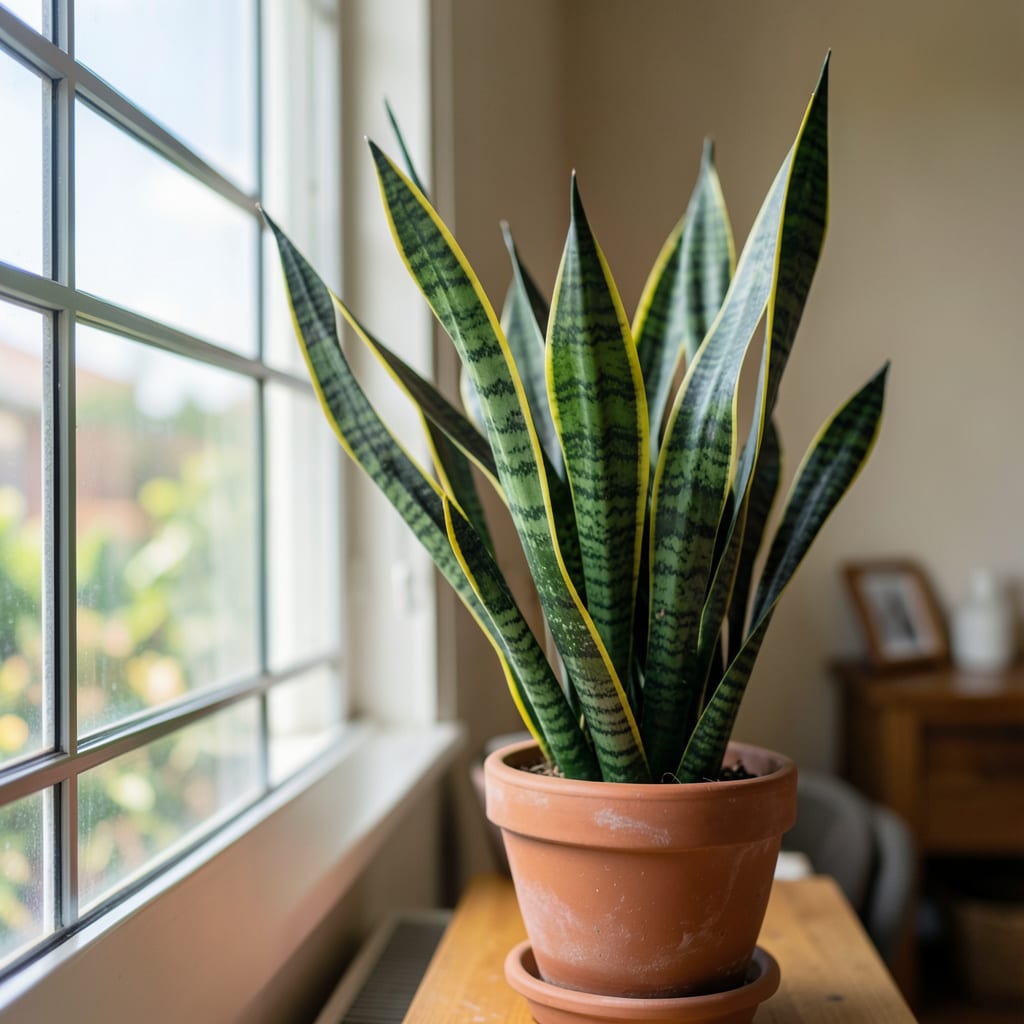
I’ve always been fascinated by the low-maintenance Snake Plant 🌿, known for thriving in various conditions. But understanding its light needs is crucial for optimal growth.
Let’s explore how much light your Snake Plant really needs to stay healthy and thrive in your home or office.

I’ve found that understanding the light requirements of Snake Plants is crucial for their optimal growth. These plants are known for their ability to thrive in various lighting conditions, making them a popular choice for indoor spaces 🌿.
Snake Plants can tolerate a wide range of light conditions, from low light to bright indirect light. However, their optimal growth occurs in medium to bright indirect light. Let’s explore the ideal light conditions for these versatile plants.
The ideal light for Snake Plants is indirect sunlight, especially during the peak sun hours. Placing them near a north-facing window is often recommended as it provides gentle, indirect light throughout the day 🌞.
In low-light conditions, Snake Plants can survive but their growth will be significantly slower. They are capable of photosynthesizing in low light, but their energy production is reduced, affecting their overall health and development 🌱.
When it comes to light duration, Snake Plants can benefit from 12-14 hours of light per day. This can be achieved by supplementing natural light with artificial grow lights during the shorter days of winter or in low-light environments 💡.
Too much direct sunlight can be harmful, causing the leaves to become scorched. If you notice the leaves turning yellow or brown, it might be a sign that the plant is receiving too much direct light 🔥.
On the other hand, insufficient light can lead to leggy growth and a loss of the plant’s vibrant color. If your Snake Plant is not getting enough light, consider moving it to a brighter location or supplementing with grow lights 🌟.
It’s also worth noting that variegated Snake Plants may require slightly more light than their non-variegated counterparts to maintain their striking color patterns. This is because the variegation can reduce the plant’s ability to photosynthesize efficiently 🌿.
To ensure your Snake Plant thrives, observe its response to the light it’s receiving. Adjust its position as needed to achieve the perfect balance for healthy growth and vibrant foliage 🌻.
By understanding and providing the right amount of light, you can enjoy a healthy and thriving Snake Plant that adds beauty and freshness to your indoor space. Happy planting! 🌱
I understand that determining the right amount of light for your Snake Plant can be challenging, especially with different environments and lighting conditions 🌿.
To provide the best care for your Snake Plant, it’s essential to consider the specific lighting needs based on your environment. Let’s explore some practical guidelines to help you make the right decision for your plant’s health 🌞.
For optimal growth, place your Snake Plant in medium to bright indirect light. A north-facing window is ideal as it provides gentle, indirect light throughout the day 🌞.
When it comes to the duration of light exposure, Snake Plants can benefit from 12-14 hours of light per day. This can be achieved by supplementing natural light with artificial grow lights, especially during the shorter days of winter or in low-light environments 💡.
If you’re unsure about the light intensity in your space, you can use a light meter to measure it. This tool can help you determine whether your Snake Plant is receiving the right amount of light 🌟.
Adjusting the plant’s position is key to ensuring it receives the appropriate amount of light. If you notice the leaves becoming yellow or brown, it may be a sign that the plant is getting too much direct light 🔥.
On the other hand, if your Snake Plant is not getting enough light, it may exhibit leggy growth or lose its vibrant color. In such cases, consider moving it to a brighter location or using grow lights to supplement the natural light 🌱.
By following these guidelines and being mindful of your Snake Plant’s response to its environment, you can provide the optimal lighting conditions for healthy growth and enjoy a thriving plant 🌻.
To summarize, understanding and providing the right amount of light is crucial for the health and well-being of your Snake Plant. By making informed decisions about its lighting, you can ensure it remains a beautiful and low-maintenance addition to your indoor space 🌿.
I’ve observed that Snake Plants are quite resilient, but they still require proper lighting to thrive. Too little or too much light can have negative consequences on their health and appearance 🌿.
Let’s explore the effects of improper lighting on Snake Plants and how to identify them. Understanding these consequences will help you provide the best care for your plant.
When Snake Plants receive insufficient light, they may become leggy and lose their vibrant color. This is because they are not able to undergo sufficient photosynthesis to maintain their health 🌱.
On the other hand, excessive direct sunlight can cause the leaves to become scorched, leading to yellow or brown discoloration. This can be detrimental to the plant’s overall health and appearance 🔥.
To ensure your Snake Plant thrives, it’s essential to find the right balance of light. By providing the optimal amount of indirect light, you can promote healthy growth and maintain the plant’s vibrant color 🌟.
Observing your plant’s response to its lighting conditions is key. If you notice any adverse effects, adjust its position accordingly to achieve the perfect balance for healthy growth 🌻.
By understanding the consequences of too little or too much light, you can take informed decisions to provide the best care for your Snake Plant and enjoy its beauty for years to come 🌿.
In conclusion, proper lighting is crucial for the health and well-being of your Snake Plant. By being mindful of its lighting needs, you can ensure it remains a thriving and low-maintenance addition to your indoor space 🌱.
Yes, Snake Plants can survive in low-light conditions, but their growth will be significantly slower. They are capable of photosynthesizing in low light, but their energy production is reduced, affecting their overall health and development .
Snake Plants can benefit from 12-14 hours of light per day. This can be achieved by supplementing natural light with artificial grow lights, especially during the shorter days of winter or in low-light environments .
Too much direct sunlight can be harmful, causing the leaves to become scorched. If you notice the leaves turning yellow or brown, it might be a sign that the plant is receiving too much direct light .
Yes, using a light meter can help you determine whether your Snake Plant is receiving the right amount of light. This tool measures light intensity, ensuring your plant gets optimal lighting conditions .
