
Beautiful Plants For Your Interior
Beautiful Plants For Your Interior
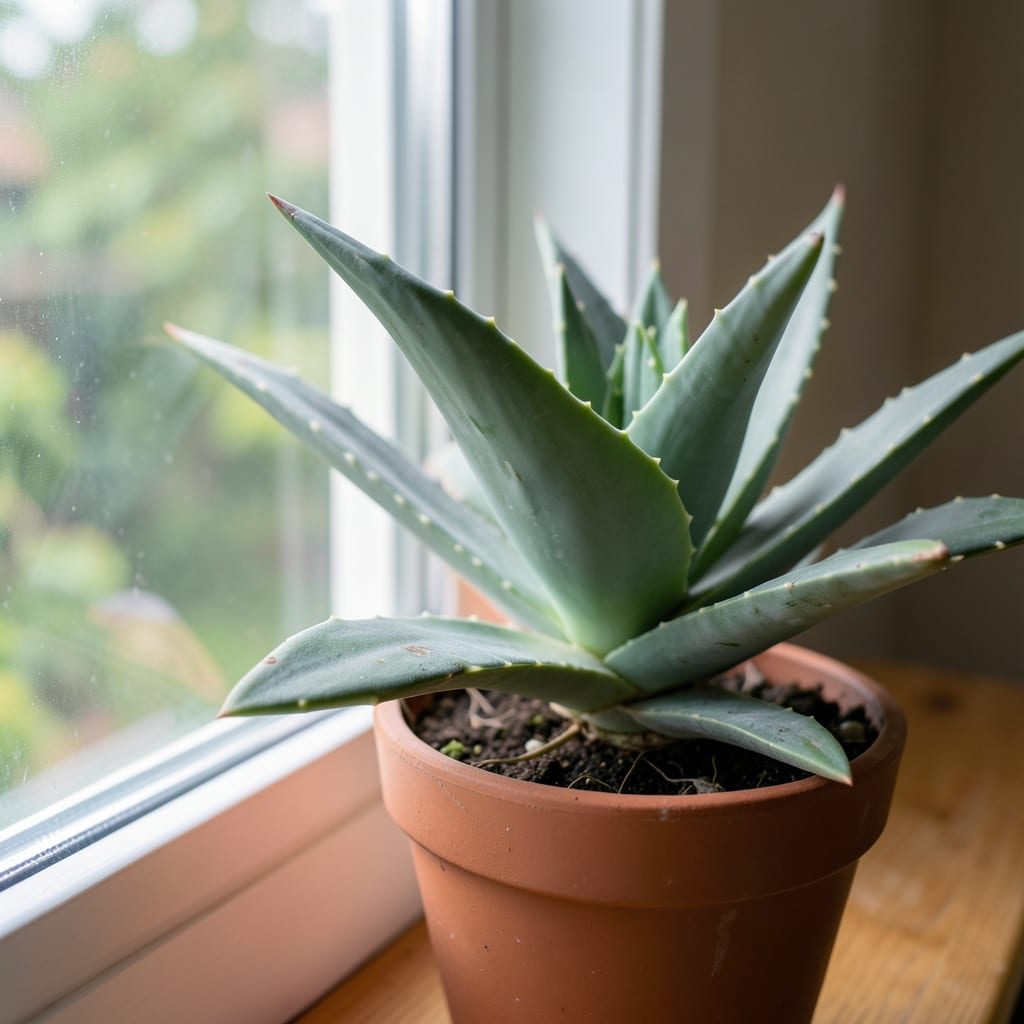
I’ve always been fascinated by the resilience of Aloe 🌵 plants, but getting their lighting right is crucial for their survival. Too little light, and they stretch; too much, and they burn.
So, how much light does your Aloe need to thrive? Let’s explore the ideal light conditions and practical tips to keep your succulent happy and healthy in your General location, where the USDA Zone is 9b.

Aloe plants are succulents that have adapted to thrive in environments with specific light conditions. To keep your aloe healthy, it’s essential to understand its light requirements. Aloe plants generally need bright, indirect light to photosynthesize and grow.
The ideal light condition for aloe plants is 4-6 hours of indirect sunlight per day. This can be achieved by placing them near a south-facing window with a sheer curtain to filter the direct sunlight. In areas with intense sunlight, it’s crucial to provide some shade to prevent scorching of the leaves 🌵.
Aloe plants can adapt to different light conditions, but their growth and health will vary accordingly. In low-light conditions, aloe plants may become leggy and weak, while too much direct sunlight can cause burning of the leaves.
To ensure optimal health, it’s recommended to provide aloe plants with bright, indirect light that mimics their natural habitat. This can be achieved through various means, including using grow lights or placing them in a location with filtered sunlight.
Understanding the light requirements of your aloe plant is the first step in providing the right conditions for it to thrive. By giving your aloe the appropriate amount and type of light, you can promote healthy growth and enjoy the many benefits of this versatile succulent 🌿.
Aloe plants are not just beautiful; they are also known for their healing properties. By providing the right light, you can ensure that your aloe plant remains healthy and continues to provide its benefits.
In summary, aloe plants need bright, indirect light to thrive. Providing the right light conditions is crucial for their health and growth. By understanding and meeting their light requirements, you can enjoy a healthy and thriving aloe plant.
It’s also important to note that aloe plants can be sensitive to extreme light conditions. Therefore, it’s essential to monitor their response to light and adjust their placement accordingly.
By following these guidelines and providing your aloe plant with the right amount of light, you can help it thrive and enjoy its many benefits for years to come.
In conclusion, understanding and providing the right light conditions is crucial for the health and growth of aloe plants. By giving them bright, indirect light, you can promote healthy growth and enjoy the many benefits of these versatile succulents.
I’ve found that providing the right amount of light for my aloe plant is crucial for its health and growth. Aloe plants need bright, indirect light to thrive, and there are several ways to achieve this 🌿.
When it comes to positioning your aloe plant, consider the following factors: the direction of the window, the time of day, and the intensity of the sunlight. A south-facing window is ideal, but it’s essential to filter the direct sunlight to prevent scorching the leaves.
To provide optimal light for your aloe plant, place it near a south-facing window with a sheer curtain to filter the direct sunlight. This will ensure that your plant receives the right amount of bright, indirect light 🔥.
In addition to window placement, you can also use grow lights to supplement the natural light. This is particularly useful during the winter months when the days are shorter, and the sunlight is weaker.
It’s also important to monitor your aloe plant’s response to light and adjust its placement accordingly. If you notice that your plant is becoming leggy or weak, it may be a sign that it’s not receiving enough light.
On the other hand, if your aloe plant is exposed to too much direct sunlight, it can cause burning of the leaves. To avoid this,
By providing the right amount of light for your aloe plant, you can promote healthy growth and enjoy the many benefits of this versatile succulent.
In my experience, aloe plants can thrive in a variety of lighting conditions, but bright, indirect light is always the best option. By following these tips, you can help your aloe plant thrive and enjoy its many benefits for years to come 🌟.
When it comes to caring for aloe plants, lighting is a critical factor that can make or break their health. I’ve seen many well-meaning gardeners make common mistakes that can harm their aloe plants. Let’s explore these mistakes and how to avoid them to keep your succulents thriving 🌵.
One of the most common mistakes is placing aloe plants in areas with insufficient light. Aloe plants need bright, indirect light to photosynthesize and grow. If they’re not getting enough light, they may become leggy and weak.
Avoid placing aloe plants in direct sunlight for extended periods, as this can cause scorching of the leaves. If you notice your aloe plant getting too much direct sun, consider moving it to a spot with filtered sunlight 🔥.
Another mistake is exposing aloe plants to too much direct sunlight. While aloe plants can tolerate some direct sun, too much can cause the leaves to become burned and discolored.
To avoid these mistakes, it’s essential to monitor your aloe plant’s response to light and adjust its placement accordingly. If you notice any signs of stress, such as yellowing or browning of the leaves, take action to adjust its lighting conditions.
By being aware of these common mistakes and taking steps to avoid them, you can help your aloe plant thrive and enjoy its many benefits for years to come 🌟.
In summary, aloe plants require careful consideration when it comes to lighting. By avoiding common mistakes and providing the right amount of bright, indirect light, you can promote healthy growth and enjoy the many benefits of these versatile succulents.
With a little practice and patience, you can become an expert in caring for your aloe plant and enjoy its many rewards 🌿.
Aloe plants need bright, indirect light to thrive. The ideal condition is 4-6 hours of indirect sunlight per day, which can be achieved by placing them near a south-facing window with a sheer curtain. This helps prevent scorching of the leaves .
Aloe plants can tolerate some direct sun, but too much can cause burning of the leaves. It’s best to provide filtered sunlight or shade during the intense midday sun to prevent damage .
You can use grow lights to supplement natural light, especially during winter months when sunlight is weaker. This helps maintain the bright, indirect light conditions that aloe plants prefer .
If aloe plants receive too little light, they may become leggy and weak. Too much direct sunlight can cause burning or browning of the leaves. Monitor your plant’s condition and adjust its lighting accordingly .
