
Beautiful Plants For Your Interior
Beautiful Plants For Your Interior
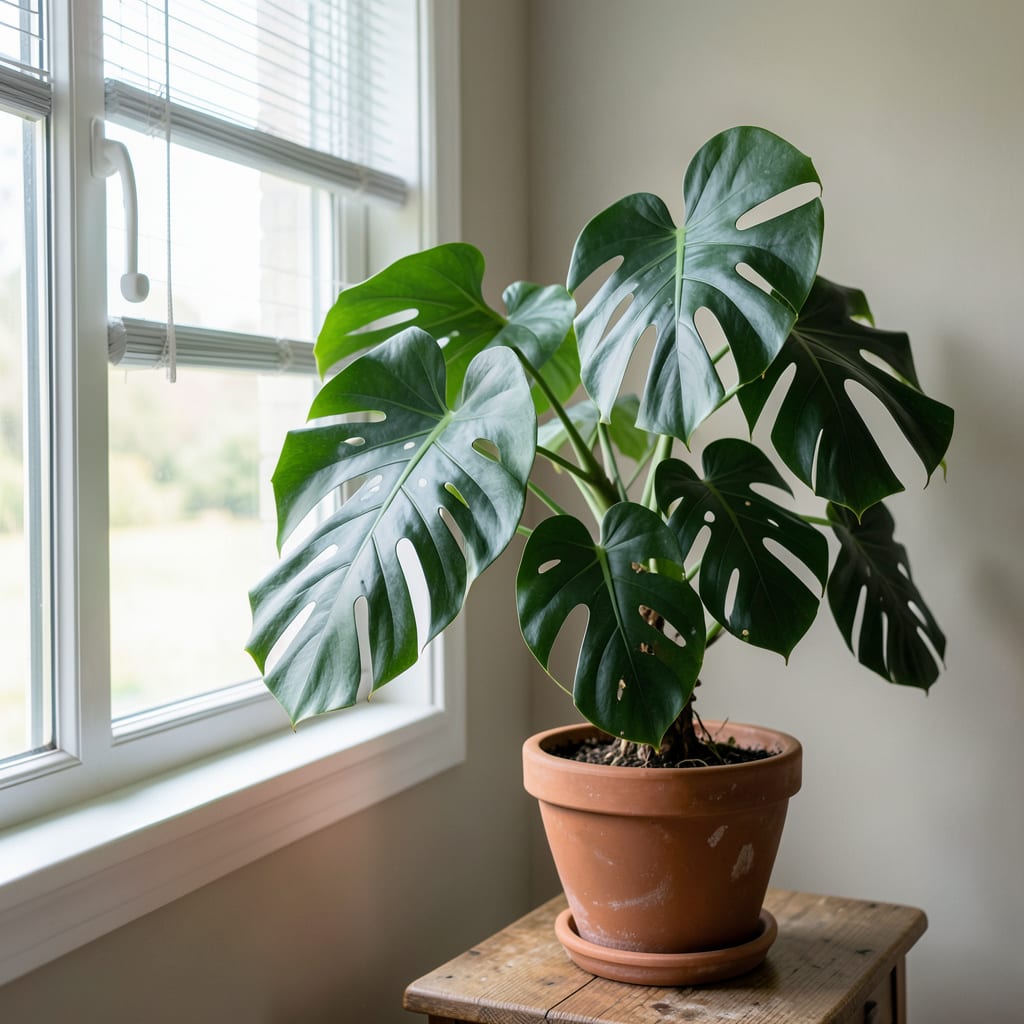
I’ve struggled with getting the lighting right for my Swiss Cheese Plant 🌱 in the past. Too little light, and it becomes leggy; too much, and its beautiful leaves get scorched.
Let’s explore the optimal lighting conditions for your Swiss Cheese Plant to thrive in USDA Zone 10. I’ll share practical tips on providing the right amount of light for healthy growth.

I’ve found that understanding the natural habitat of the Swiss Cheese Plant is crucial for providing the right lighting conditions. In their native tropical environments, these plants thrive under the canopy of larger trees, receiving bright, indirect light 🌳.
The ideal lighting conditions for Swiss Cheese Plants involve 4-6 hours of bright, indirect light daily. This can be achieved by placing them near an east- or west-facing window, where they can receive gentle, filtered sunlight ❤️.
When it comes to light intensity, Swiss Cheese Plants prefer bright, indirect light. Direct sunlight can be too intense and may cause the leaves to become scorched. On the other hand, too little light can lead to leggy growth and a lack of the characteristic fenestrations (holes) in the leaves 🔍.
To replicate the ideal lighting conditions indoors, you can use sheer curtains or blinds to filter the direct sunlight. This will help create a bright, indirect light environment that your Swiss Cheese Plant will thrive in 🌻
Key factors to consider when providing light for your Swiss Cheese Plant:
1. Window orientation: East or west-facing windows are ideal.
2. Light filtering: Use sheer curtains to soften direct sunlight.
3. Duration: Aim for 4-6 hours of bright, indirect light.
4. Intensity: Bright, indirect light is preferred over direct sunlight 🌟.
By understanding and replicating the natural lighting conditions of your Swiss Cheese Plant’s native habitat, you can create an optimal environment for it to grow and flourish 🌱.
Additional considerations for optimal lighting:
– Avoid placing your Swiss Cheese Plant in low-light areas, as this can lead to weak growth.
– Be cautious of direct sunlight, which can cause leaf scorch.
– Consider using grow lights if natural light is insufficient 💡.
Providing the right amount of light is just one aspect of caring for your Swiss Cheese Plant. By combining optimal lighting with proper watering and fertilization, you can enjoy a healthy, thriving plant 🌿.
In summary, Swiss Cheese Plants require bright, indirect light for 4-6 hours daily. By understanding their natural habitat and replicating these conditions indoors, you can create an ideal environment for your plant to grow and thrive 🌸.
I’ve found that providing the right amount of light for my Swiss Cheese Plant is crucial for its health and growth. To achieve this, I
One of the best ways to provide optimal light is by placing the plant near an east- or west-facing window. This allows it to receive gentle, filtered sunlight that promotes healthy growth 🌱.
Use sheer curtains or blinds to filter direct sunlight and create a bright, indirect light environment that your Swiss Cheese Plant will thrive in.
When it comes to using grow lights, I recommend opting for LED grow lights, which are energy-efficient and produce minimal heat. Position the grow lights 12-18 inches away from the plant to avoid burning the leaves 🔦.
Common lighting mistakes to avoid:
– Placing the plant in direct sunlight, which can cause leaf scorch.
– Positioning the plant in low-light areas, leading to weak growth.
– Not filtering direct sunlight, resulting in scorched leaves 🌿.
By following these practical tips and avoiding common mistakes, you can provide your Swiss Cheese Plant with the optimal light it needs to thrive.
Additional tips for optimal lighting:
– Rotate the plant regularly to ensure even light distribution.
– Keep the plant away from direct sunlight during peak hours.
– Consider using light-diffusing materials to soften direct sunlight 🌸.
In summary, providing optimal light for your Swiss Cheese Plant involves positioning it in a spot with bright, indirect light for 4-6 hours daily, using grow lights if necessary, and avoiding common lighting mistakes 🌱.
I’ve noticed that my Swiss Cheese Plant can be quite sensitive to light conditions. Too much or too little light can cause noticeable changes in its appearance 🌱.
One of the first signs of too little light is leggy growth. If your plant is stretching towards the light source, it’s likely not getting enough light. Other signs include pale or washed-out leaves and a lack of the characteristic fenestrations (holes) in the leaves 🔍.
Watch for signs of improper lighting, such as leggy growth or scorched leaves, and adjust your plant’s position accordingly.
On the other hand, too much light can cause the leaves to become scorched or develop brown spots. If you notice that your plant’s leaves are turning yellow or developing crispy edges, it’s likely getting too much direct sunlight ❗️.
To adjust the lighting for your Swiss Cheese Plant, you can try moving it to a spot with brighter, indirect light. If that’s not possible, consider using sheer curtains or blinds to filter the direct sunlight 🌻.
Tips for monitoring and adjusting light:
– Check your plant’s leaves regularly for signs of too much or too little light.
– Adjust the plant’s position seasonally to account for changes in sunlight 🌞.
– Consider using grow lights if natural light is insufficient 💡.
By paying attention to these signs and making adjustments as needed, you can ensure your Swiss Cheese Plant gets the right amount of light to thrive 🌱.
In summary, keeping an eye on your Swiss Cheese Plant’s response to light and making necessary adjustments will help it grow strong and healthy 🌸.
East- or west-facing windows are perfect for Swiss Cheese Plants as they provide gentle, indirect light that’s essential for their growth. This direction helps avoid direct sunlight that can scorch the leaves.
Yes, you can use grow lights, especially if natural light is insufficient. LED grow lights are recommended as they’re energy-efficient and produce minimal heat. Position them 12-18 inches away from the plant to prevent burning the leaves.
Watch for signs like leggy growth or pale leaves if it’s getting too little light. If it’s getting too much light, leaves may become scorched or develop brown spots. Adjust the plant’s position or use sheer curtains to filter the light accordingly.
Check your plant’s leaves regularly and adjust its position seasonally to account for changes in sunlight. This ensures your plant gets the right amount of light throughout the year.
