
Beautiful Plants For Your Interior
Beautiful Plants For Your Interior
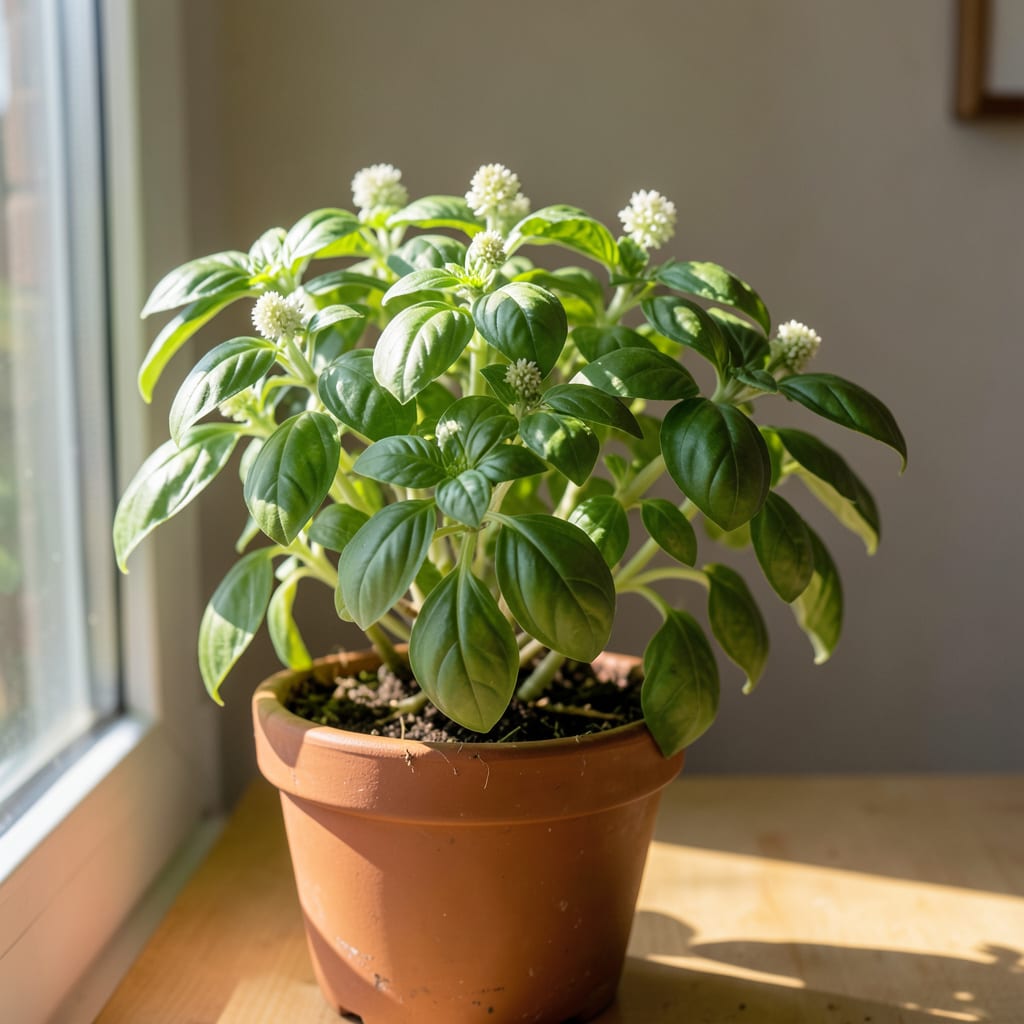
Growing Basil 🌿 can be a rewarding experience, but it requires the right conditions to thrive. One of the most critical factors is light – too little or too much can significantly impact your plant’s health and flavor.
Understanding the ideal light requirements for your Basil plant is essential for a bountiful harvest. Let’s explore how to provide the perfect lighting conditions for your Basil to flourish in your garden or indoor space.

Basil plants require ample sunlight to grow robustly and produce plenty of leaves. Ideally, they need 6+ hours of direct sunlight daily. This makes a south-facing window or a sunny outdoor spot perfect for their growth 🌱.
The amount of light your Basil plant receives directly impacts its health and productivity. While Basil can tolerate some shade, it thrives best in full sun conditions. Ensuring your plant gets enough light is crucial for its development and flavor 🌿.
When growing Basil indoors, it’s essential to replicate these light conditions as closely as possible. If natural light is insufficient, consider using grow lights to supplement the required light hours. This will help in maintaining the optimal light requirements for healthy Basil plants 💡.
To ensure your Basil plant gets the right amount of light, place it in a location that receives direct sunlight for at least 6 hours a day. If you’re using grow lights, position them 6-12 inches above the plant and keep them on for 12-14 hours daily to mimic natural daylight hours ⏰.
Monitoring your Basil plant’s response to light is crucial. If the leaves appear leggy or pale, it may be a sign that the plant is not getting enough light. Conversely, if the leaves are scorched, it might be getting too much direct sunlight. Adjust the lighting conditions accordingly to maintain optimal growth 🌟.
Understanding and providing the optimal light requirements for your Basil plant is key to enjoying a bountiful harvest of flavorful leaves. By ensuring your plant receives the right amount of light, you can promote healthy growth and maximize your yield 🌿.
For outdoor Basil plants, choose a spot that receives full sun for most of the day. If you’re growing Basil in a pot, you can move it around to catch the best sunlight throughout the day, ensuring it gets the necessary 6+ hours of direct sunlight ☀️.
In addition to the duration of light, the intensity of light also plays a significant role. Basil plants benefit from bright, direct light that promotes strong, healthy growth. Avoid placing your Basil in areas with filtered or indirect light for extended periods, as this can lead to weak and spindly growth 🔍.
By following these guidelines and ensuring your Basil plant receives the optimal amount of light, you can enjoy a thriving and productive herb garden. Whether you’re growing Basil indoors or outdoors, providing the right light conditions is crucial for success 🌟.
Summary: Basil plants need 6+ hours of direct sunlight daily for optimal growth. Use south-facing windows or grow lights to achieve this. Monitor your plant’s response and adjust lighting as needed to promote healthy growth and a bountiful harvest 📝.
To maximize Basil growth, it’s essential to provide the right light exposure. Basil plants require 6+ hours of direct sunlight daily to thrive. When growing indoors, placing them near a south-facing window is ideal. If natural light is limited, consider using grow lights to supplement the required light hours 💡.
For optimal Basil growth, ensure your plants receive consistent light. If using grow lights, position them 6-12 inches above the plants and keep them on for 12-14 hours daily ⏰.
When positioning your Basil plants outdoors, choose a location that receives full sun for most of the day. If you’re growing Basil in a pot, you can move it around to catch the best sunlight throughout the day, ensuring it gets the necessary 6+ hours of direct sunlight ☀️.
Monitoring your Basil plant’s response to light is crucial. If the leaves appear leggy or pale, it may be a sign that the plant is not getting enough light. Conversely, if the leaves are scorched, it might be getting too much direct sunlight. Adjust the lighting conditions accordingly to maintain optimal growth 🌟.
To avoid common lighting mistakes, ensure your Basil plants are not shaded by other plants or structures. Regularly rotate potted Basil plants to ensure even light distribution and prevent uneven growth 🔄.
By following these guidelines and providing the right light exposure, you can promote healthy Basil growth and maximize your yield. Whether you’re growing Basil indoors or outdoors, proper light management is key to a successful harvest 🌿.
Summary: To maximize Basil growth, provide 6+ hours of direct sunlight daily. Use grow lights if necessary, and monitor your plant’s response to adjust lighting conditions. Proper light exposure is crucial for healthy growth and a bountiful harvest 📝.
Basil plants are sensitive to light conditions, and both insufficient and excessive light can have significant consequences on their health and productivity. Understanding these effects is crucial for maintaining optimal growth 🌿.
When Basil plants receive insufficient light, they may become leggy as they stretch towards the light source, and their leaves may appear pale or yellowish. This can significantly reduce the plant’s overall health and productivity 🌱.
On the other hand, excessive light can cause the leaves to become scorched or burned, especially if the plant is exposed to direct sunlight during the hottest part of the day. This can lead to a reduction in the plant’s flavor and aroma 🔥.
To avoid these issues, it’s essential to monitor your Basil plant’s response to light and adjust its placement accordingly. If you notice any signs of stress or damage, consider relocating the plant to a spot with more suitable light conditions 🌟.
By understanding the consequences of too little or too much light on Basil, you can take steps to provide your plants with the optimal light conditions they need to thrive. This will help ensure a healthy and productive herb garden, providing you with an abundance of flavorful Basil leaves 🌿.
Summary: Proper light exposure is crucial for Basil health. Too little light causes leggy growth, while too much light can scorch leaves. Monitor your plant’s response and adjust lighting conditions to promote healthy growth and maximize yield 📝.
Basil plants require 6+ hours of direct sunlight daily for optimal growth. This can be achieved by placing them in a south-facing window or a sunny outdoor spot. Proper sunlight exposure promotes healthy growth and maximizes yield .
Yes, you can use grow lights to supplement natural light. Position them 6-12 inches above the Basil plants and keep them on for 12-14 hours daily to mimic natural daylight hours. This helps maintain optimal light conditions for healthy Basil plants .
Insufficient light can cause Basil plants to become leggy with pale leaves, while excessive light can scorch the leaves and reduce flavor. Monitor your plant’s response and adjust its placement to maintain optimal growth. Proper light exposure is crucial for Basil health .
Regularly rotate potted Basil plants to ensure even light distribution and prevent uneven growth. This simple practice helps maintain the plant’s overall health and promotes balanced growth .
