
Beautiful Plants For Your Interior
Beautiful Plants For Your Interior
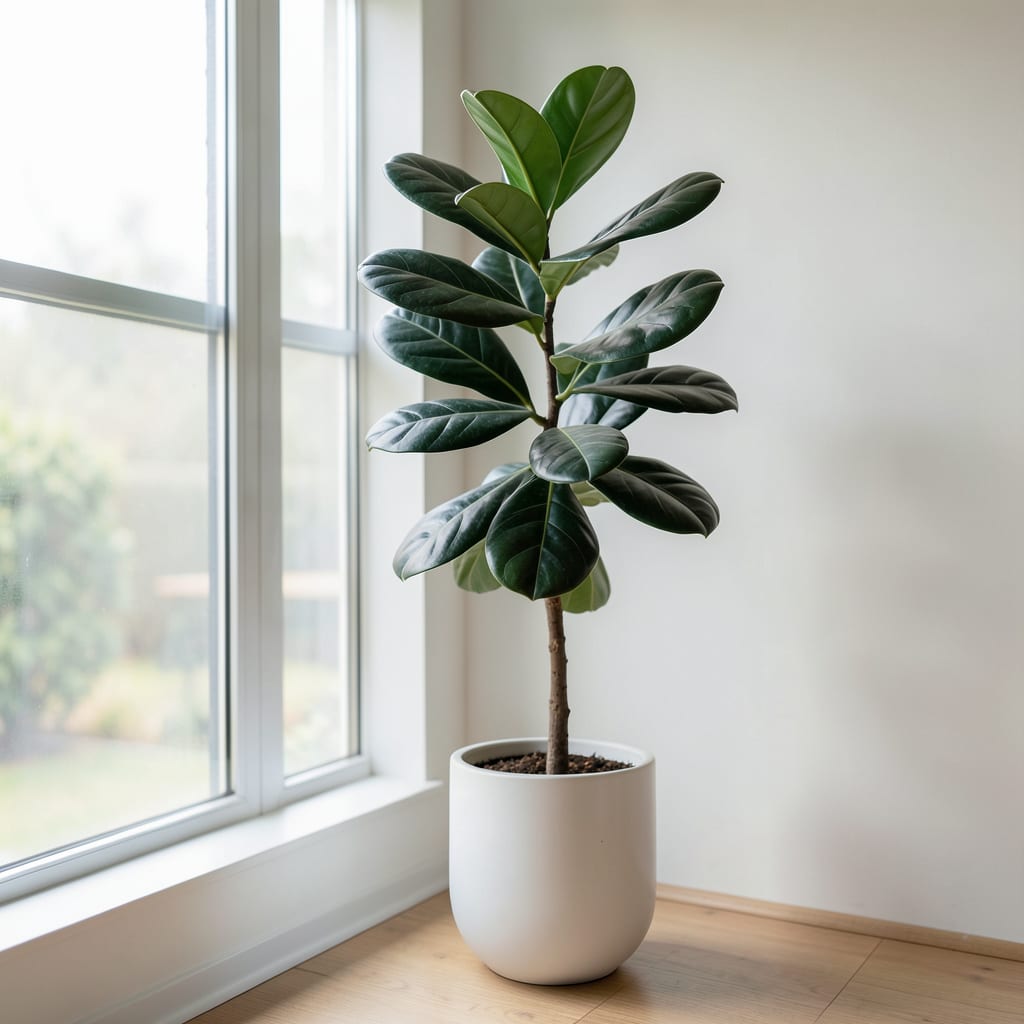
I’ve struggled to keep my Rubber Plant 🌿 thriving, only to realize that lighting was the key. Too little light leads to leggy growth, while too much can cause leaf burn – but getting it just right makes all the difference.
Let’s explore the optimal lighting conditions for a healthy Rubber Plant in USDA Zone 6, and I’ll share practical tips on how to provide the right amount of light for your plant to flourish.

Rubber plants are native to tropical regions where they grow under the canopy of larger trees, receiving filtered sunlight. This natural habitat indicates that they prefer bright indirect light rather than direct sunlight. In indoor settings, replicating these conditions is crucial for their health and growth 🌱.
The ideal light intensity for rubber plants is moderate to bright indirect light. They can tolerate low light conditions, but their growth may slow down, and the leaves may become less vibrant. On the other hand, exposing them to too much direct sunlight can cause leaf scorch and damage 🔥.
To understand rubber plant lighting requirements, it’s essential to consider their natural habitat. In their native environment, these plants grow under the canopy of larger trees, receiving dappled sunlight. This natural adaptation makes them well-suited for bright indirect light conditions in indoor settings 🌿.
The ideal daily light duration for rubber plants is between 4 to 6 hours. This duration supports healthy growth without causing stress to the plant. Placing them near east or west-facing windows can provide the right amount of filtered sunlight. It’s also important to note that while they can tolerate low light, their growth will be more vigorous in brighter conditions 🔆.
When it comes to light intensity, rubber plants prefer moderate levels. They are not suited for extremely bright or dim environments. In their natural habitat, the light filtering through the trees provides a gentle, diffused light that promotes healthy leaf development. Indoors, you can achieve similar conditions by using sheer curtains to filter direct sunlight 🌻.
One common mistake is placing rubber plants in direct sunlight, especially during peak hours. This can lead to leaf scorch, where the leaves develop brown patches or become crispy. To avoid this, ensure that any direct sunlight is filtered through a curtain or shade. Conversely, too little light can cause the plant to become leggy, with elongated stems and sparse foliage 🌿.
Another aspect to consider is the quality of light. Rubber plants respond well to natural light, but they can also adapt to artificial lighting. If you’re using grow lights, ensure they are not too intense and are kept at an appropriate distance from the plant. A balanced light spectrum that mimics natural daylight is ideal for promoting healthy growth 💡.
Seasonal changes also affect the lighting needs of rubber plants. During winter months, when natural light is scarce, you might need to adjust their placement or supplement with grow lights. In summer, be cautious of intense sunlight and consider using shades to protect the leaves ☀️.
Monitoring your plant’s response to light is crucial. If you notice signs of too much or too little light, such as leaf discoloration or leggy growth, adjust their positioning accordingly. By providing the right lighting conditions, you can ensure your rubber plant remains healthy and thrives 🌟.
In summary, understanding and meeting the lighting requirements of rubber plants is key to their care. By replicating their natural habitat and being mindful of light intensity and duration, you can create an optimal environment for your plant to flourish 🌿.
I’ve found that providing the right light for my rubber plant makes all the difference in its health and growth. To give your rubber plant optimal light, you need to consider its placement, window orientation, and seasonal changes 🌞.
First, let’s talk about window orientation. Rubber plants thrive in east or west-facing windows where they receive gentle, indirect sunlight. These windows provide the perfect amount of light without the harsh direct rays that can cause damage 🌻.
For optimal growth, place your rubber plant near an east or west-facing window to provide 4-6 hours of bright indirect light daily.
If you don’t have an east or west-facing window, don’t worry! You can still provide your rubber plant with the right light. Sheer curtains can help filter direct sunlight, making it more suitable for your plant. This is especially important during peak sun hours when the sun’s rays are strongest 🌟.
Another option is to use grow lights. These can be a great supplement, especially during the winter months when natural light is scarce. When using grow lights, make sure they are not too intense and are kept at a safe distance from the plant to avoid burning the leaves 🔦.
Seasonal changes also play a significant role in your rubber plant’s lighting needs. During summer, the sun is stronger, and you may need to adjust the plant’s position or use shades to protect it from intense sunlight. In winter, you might need to move it closer to a window or supplement with grow lights to ensure it gets enough light ❄️.
Monitoring your plant’s response to light is crucial. If you notice signs of too much or too little light, such as leaf discoloration or leggy growth, adjust its positioning accordingly. By being attentive to your plant’s needs, you can create an optimal environment for it to flourish 🌿.
In my experience, adjusting the lighting for my rubber plant has significantly improved its health. By following these tips, you can ensure your rubber plant gets the optimal light it needs to thrive 🌟.
To summarize, providing optimal light for your rubber plant involves careful consideration of its placement, using tools like sheer curtains or grow lights, and adjusting for seasonal changes. With the right approach, your rubber plant will remain healthy and continue to grow beautifully 🌱.
I’ve learned that monitoring my rubber plant’s response to light is crucial for its health. If you’re unsure whether your plant is getting the right amount of light, there are several signs to watch for that can indicate too much or too little light 🌞.
Watch for leaf discoloration, leaf drop, and growth patterns to determine if your rubber plant is getting too much or too little light.
One of the most common signs of too much light is leaf scorch, which appears as brown patches or crispy edges on the leaves. If you notice this, it’s likely that your rubber plant is receiving too much direct sunlight 🔥.
On the other hand, if your rubber plant is not getting enough light, it may become leggy, with elongated stems and sparse foliage. The leaves may also become pale or washed out, losing their vibrant color 🌿.
Another indicator of insufficient light is leaf drop. While rubber plants naturally shed older leaves, excessive leaf drop can be a sign that the plant is not receiving enough light. Adjusting the plant’s position to a brighter location can help mitigate this issue 🌱.
To ensure your rubber plant gets the right amount of light, it’s essential to be aware of these signs and adjust its placement accordingly. By providing the optimal lighting conditions, you can help your plant thrive and maintain its beautiful, glossy leaves 🌟.
In summary, keeping an eye out for signs of too much or too little light and making necessary adjustments will help your rubber plant stay healthy and flourish 🌿.
East or west-facing windows are ideal as they provide 4-6 hours of bright indirect light. This gentle morning or afternoon sun helps maintain healthy growth without causing leaf scorch.
Yes, you can use grow lights to supplement natural light, especially during winter months when daylight is limited. Keep the lights at a safe distance and use a balanced light spectrum that mimics natural daylight.
Watch for signs like leaf scorch (brown patches or crispy edges) which indicate too much direct sunlight. If you notice this, filter the sunlight with sheer curtains or move the plant to a shadier location.
If your rubber plant isn’t getting enough light, it may become leggy with elongated stems and sparse foliage. The leaves may also become pale or washed out. Move it to a brighter location or supplement with grow lights.
