
Beautiful Plants For Your Interior
Beautiful Plants For Your Interior
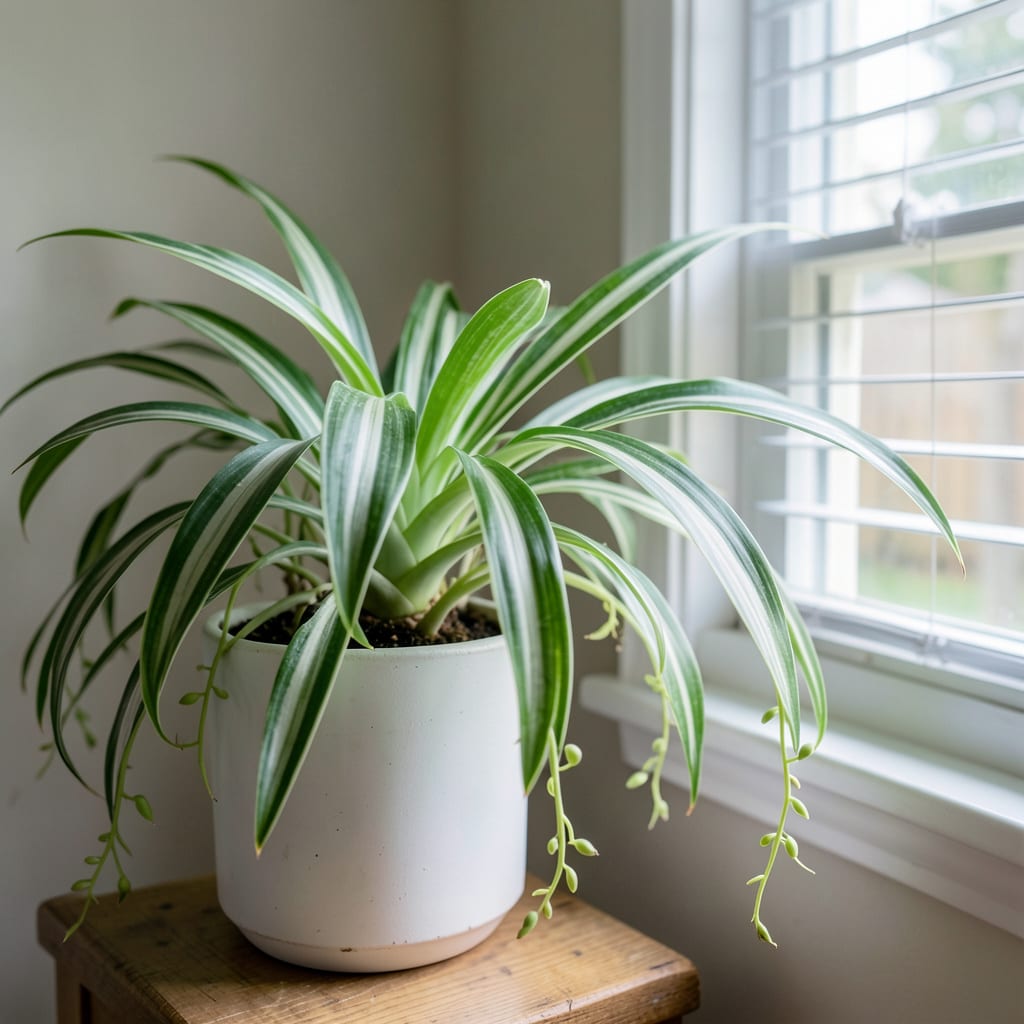
As a Spider Plant 🌿 owner, you might be wondering how to keep your plant thriving. The key to success lies in understanding its light requirements – too little or too much can affect its growth and overall health.
Let’s explore the ideal light conditions for your Spider Plant and discover how to provide the perfect amount of light for it to flourish in your home or office.


Spider plants are known for their adaptability to various light conditions, but they still have specific requirements for optimal growth. Understanding these needs is crucial for maintaining their health and encouraging their beautiful, trailing growth 🌿.
The ideal light for spider plants is bright, indirect light. This means they thrive best when placed near a window that receives plenty of natural light, but not directly in the sun’s rays. A spot with 4-6 hours of bright, indirect light per day is typically sufficient for these plants to flourish.
While spider plants can tolerate low light conditions, their growth will be slower, and they may lose some of their vibrant color. On the other hand, exposing them to direct sunlight can cause the leaves to become scorched, so it’s essential to find that perfect balance 🔥.
In terms of window placement, an east or west-facing window is ideal for spider plants. These orientations provide the right amount of indirect light without the harsh, direct sun that can damage the leaves.
If you’re unsure about the light conditions in your space, you can always observe your plant’s response. If it’s receiving too little light, it may appear leggy or lose its variegation. Conversely, if it’s getting too much light, the leaves may become pale or scorched 🌟.
Adjusting the light exposure based on your plant’s response is key to providing the best care. By paying attention to these signs and making necessary adjustments, you can ensure your spider plant remains healthy and continues to grow beautifully.
To summarize, the key to providing optimal light for your spider plant is understanding its preference for bright, indirect light and being mindful of the signs it gives you about its light needs. With the right care, your spider plant will continue to be a beautiful and thriving addition to your indoor space.
By following these guidelines and being attentive to your plant’s needs, you can enjoy the many benefits of having a spider plant, from its air-purifying qualities to its beautiful, cascading foliage 🌱.
The amount of light a spider plant receives significantly impacts its growth and overall appearance. Understanding this relationship is crucial for maintaining a healthy and visually appealing plant 🌿.
Spider plants grown in bright, indirect light tend to have more vibrant foliage and produce more offsets. The leaves are typically a deeper green with more pronounced variegation, making the plant more attractive 🔥.
Spider plants in bright, indirect light grow more vigorously and have better leaf color compared to those in low light conditions.
In low light conditions, spider plants may still survive but will likely exhibit slower growth and less vibrant color. The leaves may become more pale and the plant less bushy, affecting its overall aesthetic appeal 🌟.
Direct sunlight can be harmful, causing leaf scorch and damaging the plant. It’s essential to filter the sunlight to prevent such issues, ensuring the plant remains healthy and continues to thrive.
Observing your spider plant’s response to its light environment is key. If it’s not getting enough light, consider moving it to a brighter location. Conversely, if it’s receiving too much light, relocating it to a spot with filtered sunlight can help prevent damage 🔄.
By adjusting the light exposure based on your plant’s needs, you can promote healthy growth and maintain its attractive appearance. This attention to detail will ensure your spider plant remains a beautiful addition to your indoor space 🌱.
Regularly checking your spider plant’s condition and making necessary adjustments will help you provide the best care. With the right light, your spider plant will continue to be a thriving and attractive houseplant, enhancing your home or office environment 🌿.
To keep your spider plant thriving, it’s essential to provide the right amount of light. Understanding how to adjust light exposure can make a significant difference in your plant’s health and appearance 🌿.
One of the most effective ways to ensure your spider plant gets the right light is by placing it near an east or west-facing window. These windows provide bright, indirect light that’s ideal for spider plants. Avoid placing your plant in direct sunlight, as this can cause the leaves to become scorched 🔥.
Rotate your spider plant regularly to ensure even light distribution and prevent uneven growth.
If you’re unable to provide natural light, you can supplement with artificial lighting. Use LED grow lights to provide the necessary spectrum for your spider plant’s growth. Keep the lights on for 12-14 hours a day to mimic natural daylight hours 🌟.
Observing your plant’s response to light is crucial. If it’s not getting enough light, the leaves may become pale or the plant may become leggy. On the other hand, too much light can cause the leaves to become scorched or develop brown tips 🌿.
Adjusting the light exposure based on your plant’s needs is key to providing the best care. By paying attention to these signs and making necessary adjustments, you can ensure your spider plant remains healthy and continues to grow beautifully.
To summarize, providing the right light for your spider plant involves understanding its preference for bright, indirect light and being mindful of the signs it gives you about its light needs. By following these guidelines and being attentive to your plant’s needs, you can enjoy the many benefits of having a spider plant 🌱.
Regularly checking your spider plant’s condition and making necessary adjustments will help you provide the best care. With the right light, your spider plant will continue to be a thriving and attractive houseplant, enhancing your home or office environment 🌿.
Yes, spider plants can tolerate low light, but their growth will be slower and they may lose some variegation. For optimal growth, they prefer bright, indirect light for 4-6 hours daily.
East or west-facing windows are ideal as they provide the right amount of indirect light. Avoid south-facing windows that can cause leaf scorch from direct sunlight.
Yes, you can use LED grow lights to supplement natural light. Keep them on for 12-14 hours a day to mimic natural daylight. This helps maintain healthy growth when natural light is insufficient.
Too little light causes leggy growth and pale leaves, while too much light leads to scorched or brown-tipped leaves. Adjust the plant’s position based on these signs to provide optimal light conditions.
