
Beautiful Plants For Your Interior
Beautiful Plants For Your Interior
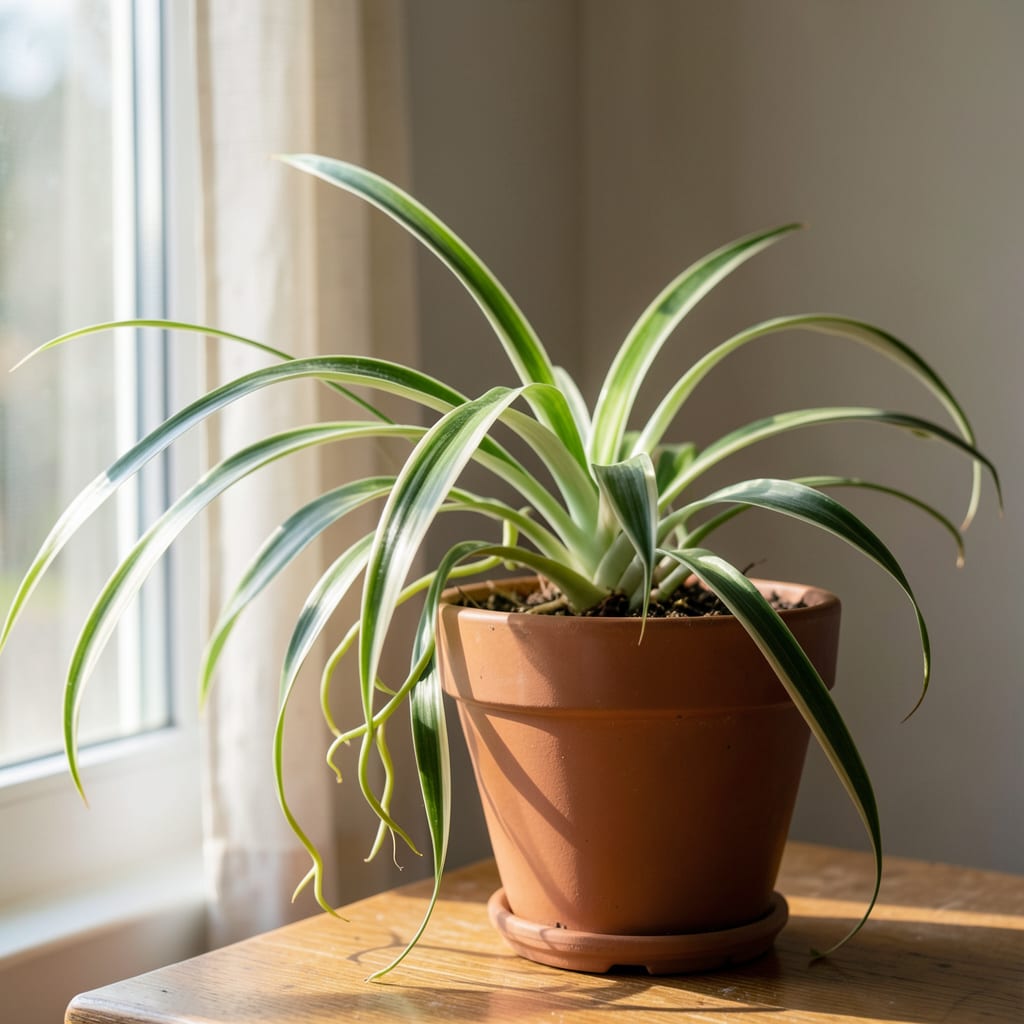
I’ve always been fascinated by how a simple change in lighting can transform my Spider Plant 🌿. When placed in the right spot indoors, it thrives and becomes a beautiful addition to any room.
So, how much light does your Spider Plant actually need to flourish? Let’s explore the ideal lighting conditions and how to achieve them in your home.

I’ve found that Spider Plants are quite adaptable when it comes to lighting, but they do have specific needs to thrive indoors. The key is understanding what bright indirect light means and how to achieve it in your home.
Spider Plants typically require 4-6 hours of bright indirect light daily. This means they should be placed near a window that receives plenty of natural light, but not directly in the sun’s rays, which can cause leaf scorch 🌿.
When it comes to the type of light, Spider Plants prefer bright indirect light. This can be achieved by placing them near an east- or west-facing window, where they’ll receive gentle, filtered sunlight. Avoid placing them in direct sunlight, especially during peak hours, as this can cause damage to the leaves.
If you’re unsure about the light intensity in your space, you can use a simple trick: hold your hand about 6-8 inches above the plant. If your hand casts a soft shadow, the light is suitable. If it’s too dark or too bright, adjust accordingly.
One of the benefits of Spider Plants is their ability to tolerate a range of light conditions. However, to encourage healthy growth and variegation, it’s best to provide them with the right amount of light. Too little light can lead to leggy growth and less vibrant foliage.
To summarize, Spider Plants need bright indirect light for 4-6 hours daily. By placing them in an east- or west-facing window and avoiding direct sunlight, you can create an ideal environment for your plant to thrive 🌿.
For those who prefer a more technical approach, the ideal light intensity for Spider Plants is around 60% of bright indirect light. This can be achieved by using sheer curtains to filter the sunlight or by placing the plant a few feet away from the window.
It’s also worth noting that while Spider Plants can adapt to lower light conditions, their growth may slow down, and the leaves may become less vibrant. On the other hand, too much light can cause the leaves to become scorched, so it’s all about finding that perfect balance.
By understanding and meeting the lighting needs of your Spider Plant, you can enjoy a healthy, thriving plant that adds beauty and freshness to your indoor space.
In my experience, even beginners can successfully care for Spider Plants by providing the right lighting conditions. With a little attention to detail and a willingness to adjust, you can enjoy the many benefits of having these wonderful plants in your home.
I’ve found that placing Spider Plants in the right spot indoors makes all the difference in their growth and overall health. When it comes to lighting, these plants thrive in bright indirect light, which can be achieved through careful window placement or using artificial lighting options.
One of the best ways to provide your Spider Plant with the right light is by placing it near an east- or west-facing window. These windows receive gentle, indirect sunlight that’s perfect for Spider Plants. Avoid south-facing windows during peak hours, as the direct sunlight can be too intense 🌞.
For optimal growth, keep your Spider Plant 3-5 feet away from east/west windows to achieve that perfect bright indirect light. This distance helps filter out harsh direct sunlight while still providing enough light for photosynthesis 🌿.
If you don’t have an east- or west-facing window, don’t worry! You can still provide your Spider Plant with the right light using artificial lighting. LED grow lights are a great option, as they provide the necessary spectrum for plant growth without generating too much heat 💡.
When using artificial lighting, keep in mind that Spider Plants need 12-14 hours of light per day for optimal growth. You can set up a timer to ensure your plant receives consistent lighting, even when you’re not around to adjust it manually.
In my experience, combining natural and artificial light can be particularly effective. For example, placing your Spider Plant near a window that receives morning or afternoon sun and supplementing with LED grow lights during the rest of the day can create an ideal lighting environment 🌟.
To further enhance your Spider Plant’s lighting conditions, consider using sheer curtains to filter the sunlight. This can help diffuse the light and prevent direct sun rays from damaging the leaves. It’s a simple yet effective way to create a more balanced lighting environment for your plant 🌿.
By paying attention to your Spider Plant’s lighting needs and making a few simple adjustments, you can enjoy a healthy, thriving plant that adds beauty and freshness to your indoor space. Remember, the key is finding that perfect balance between light and shade to support your plant’s growth 🌱.
In summary, providing the right lighting conditions for your Spider Plant involves a combination of natural and artificial light, careful window placement, and a bit of creativity. With these tips, you’ll be well on your way to creating an ideal environment for your plant to flourish 🌟.
When caring for Spider Plants indoors, it’s easy to make lighting mistakes that can affect their health and growth. I’ve learned that being aware of these common errors can help you provide the best conditions for your plants 🌿.
One of the most common mistakes is placing Spider Plants in direct sunlight for extended periods. While they need bright light, direct sun can cause leaf scorch and damage. To avoid this, keep your Spider Plant at least 3-5 feet away from south-facing windows or use a sheer curtain to filter the light 🌞.
Avoid placing Spider Plants in low-light areas for extended periods, as this can lead to leggy growth and less vibrant foliage. If you notice your plant stretching towards the light or becoming pale, it’s likely not getting enough light 🌿.
Another mistake is not adjusting the lighting according to the season. During winter months, the days are shorter, and the sun is lower in the sky, which means your Spider Plant may need to be moved closer to the window or supplemented with artificial lighting to maintain the required 4-6 hours of bright indirect light ❄️.
It’s also important to monitor your Spider Plant’s response to its lighting conditions. If you notice yellowing leaves or burnt tips, it may be a sign that the light is too intense. On the other hand, if the leaves are pale or droopy, it might not be getting enough light 🌟.
To correct common lighting mistakes, consider using LED grow lights to supplement natural light, especially during periods when daylight hours are shorter. This can help maintain a consistent lighting environment for your Spider Plant 💡.
By being mindful of these common lighting mistakes and making adjustments as needed, you can create a healthier and more thriving environment for your Spider Plant. Remember, the key is to provide bright indirect light while avoiding the extremes of too much or too little light 🌱.
In my experience, paying attention to your Spider Plant’s lighting needs and making a few simple adjustments can make a significant difference in its overall health and appearance. With the right lighting conditions, you can enjoy a beautiful and thriving Spider Plant in your indoor space 🌿.
While Spider Plants can tolerate low light, they thrive best in bright indirect light for 4-6 hours daily. In low light, their growth may slow, and the leaves may become less vibrant. Consider supplementing with LED grow lights if natural light is limited .
East- or west-facing windows are ideal for Spider Plants as they provide gentle, indirect sunlight. Avoid south-facing windows during peak hours to prevent leaf scorch. For optimal growth, keep the plant 3-5 feet away from the window .
You can use LED grow lights to provide the necessary spectrum for plant growth without generating too much heat. Spider Plants need 12-14 hours of light per day for optimal growth. Set up a timer to ensure consistent lighting, even when you’re not around .
If your Spider Plant receives too much light, you may notice yellowing leaves or burnt tips. Too little light can cause pale or droopy leaves and leggy growth. Adjust the lighting conditions accordingly to maintain a healthy plant .
