
Beautiful Plants For Your Interior
Beautiful Plants For Your Interior
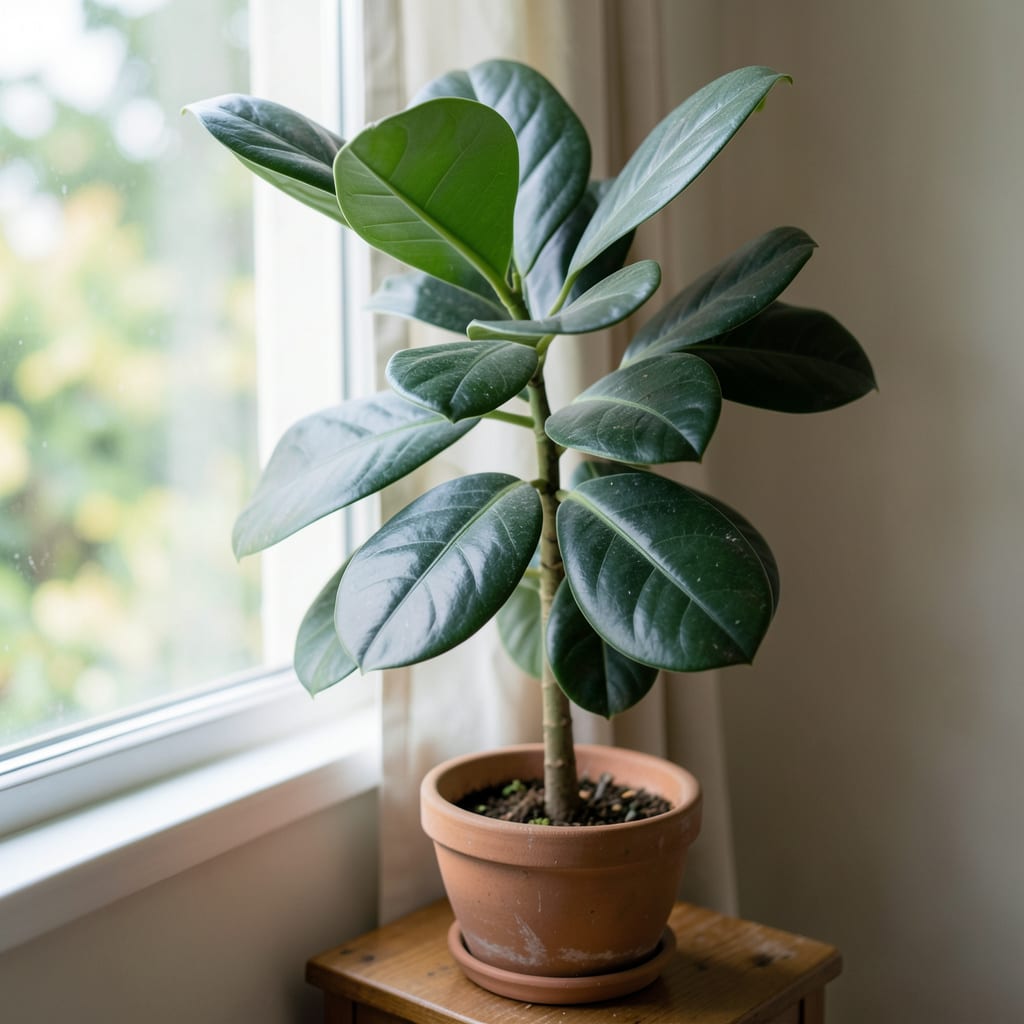
As a Rubber Plant 🌱 owner in USDA Zone 6, getting the lighting right can be tricky. Too little light leads to leggy growth, while too much can cause leaf burn – but 4-6 hours of bright, indirect light is just right.
I’ll help you understand how to provide the perfect light conditions for your Rubber Plant 🌱, whether you’re placing it near an east or west window in your General location home.

Rubber plants require specific lighting conditions to thrive. They need bright, indirect light for optimal growth. Direct sunlight can cause leaf burn, while too little light leads to leggy growth 🌱.
The ideal light duration for rubber plants is 4-6 hours daily. This can be achieved by placing them near an east or west-facing window. The light intensity should be moderate, avoiding both very bright and very dim conditions 🔥.
Understanding these lighting requirements is crucial for maintaining healthy rubber plants. Proper lighting ensures robust growth and prevents common issues like leaf discoloration 🌿.
Rubber plants are native to tropical regions where they receive filtered sunlight through dense canopies. This natural environment translates to their preference for bright, indirect light in indoor settings.
The intensity of light is as important as the duration. Rubber plants can tolerate some variation in light intensity, but consistent moderate light yields the best results.
Seasonal changes affect the light requirements of rubber plants. During summer months, they may need protection from intense afternoon sun, while in winter, they can benefit from any available sunlight.
Observing your plant’s response to light is key. If leaves become pale or leggy, it may need more light. Conversely, if leaves show signs of burn or discoloration, the light might be too intense.
Adjusting the plant’s position or using light filters can help achieve the perfect lighting conditions. This flexibility makes rubber plants adaptable to various home environments 🌻.
In summary, providing 4-6 hours of bright, indirect light daily is essential for rubber plant care. By understanding and meeting these lighting needs, you can enjoy a healthy, thriving plant with beautiful, glossy leaves 💚.
For more specific guidance on adjusting light conditions throughout the year, consider the seasonal light variations and how they impact your rubber plant’s growth.
To give your rubber plant the best chance to thrive, it’s essential to understand how to provide optimal lighting. Rubber plants prefer bright, indirect light for optimal growth, which can be achieved by placing them near an east or west-facing window 🌞.
The ideal placement for rubber plants is near a window that receives 4-6 hours of bright, indirect light daily. This can be achieved by using sheer curtains to filter direct sunlight, especially during peak hours 🔥.
For optimal lighting, rotate your rubber plant every 1-2 weeks to ensure even growth and prevent leaning towards the light source 🌱.
When using artificial lighting, consider the type and duration. LED grow lights are a popular choice for indoor plants, providing the necessary spectrum for photosynthesis without generating excessive heat 💡.
The duration of artificial lighting should mimic natural daylight hours. For rubber plants, 12-14 hours of light per day is recommended when using artificial lighting. This can be adjusted based on the plant’s response and the time of year ⏰.
Seasonal changes affect the light requirements of rubber plants. During summer months, they may need protection from intense afternoon sun, while in winter, they can benefit from any available sunlight. Adjusting the plant’s position or using light filters can help achieve the perfect lighting conditions 🌻.
Observing your plant’s response to light is key. If leaves become pale or leggy, it may need more light. Conversely, if leaves show signs of burn or discoloration, the light might be too intense. Adjusting the plant’s position can help achieve the perfect balance 🔄.
In summary, providing optimal lighting for your rubber plant involves understanding its preference for bright, indirect light and adjusting its placement or using artificial lighting accordingly. By following these tips, you can enjoy a healthy, thriving plant with beautiful, glossy leaves 🌟.
When caring for rubber plants, it’s crucial to avoid common lighting mistakes that can harm their health and appearance. One of the most significant errors is placing them in direct sunlight, which can cause leaf burn and discoloration 🔥.
Another mistake is not providing enough light, leading to leggy growth and weak, spindly stems. Rubber plants need bright, indirect light to maintain their robust growth and glossy leaves 🌱.
Avoid placing rubber plants in low-light areas for extended periods, as this can lead to permanent damage and affect their overall health.
Seasonal changes can also impact the lighting needs of rubber plants. During summer months, they may require protection from intense afternoon sun, while in winter, they can benefit from any available sunlight ⏰.
To avoid these common mistakes, it’s essential to monitor your plant’s response to its lighting conditions. If you notice any signs of stress, such as yellowing leaves or leggy growth, adjust the lighting accordingly 🔄.
By being aware of these common lighting mistakes and taking steps to avoid them, you can help your rubber plant thrive and enjoy its beautiful, glossy leaves for years to come 🌟.
In addition to avoiding these mistakes, consider implementing a rotation schedule to ensure even growth and prevent leaning towards the light source 🌱.
By following these guidelines and being mindful of your rubber plant’s lighting needs, you can create an optimal environment for it to flourish 🌿.
East or west-facing windows are perfect for rubber plants as they provide 4-6 hours of bright, indirect light daily. This direction avoids harsh direct sunlight that can cause leaf burn.
Yes, you can use artificial lighting for your rubber plant. LED grow lights are a great option as they provide the necessary spectrum for photosynthesis without generating excessive heat. Use them for 12-14 hours a day.
Rotate your rubber plant every 1-2 weeks to ensure even growth and prevent it from leaning towards the light source. This simple step helps maintain its beautiful, glossy leaves.
If your rubber plant’s leaves become pale or leggy, it may need more light. Conversely, if leaves show signs of burn or discoloration, the light might be too intense. Adjust the lighting accordingly to achieve the perfect balance.
