
Beautiful Plants For Your Interior
Beautiful Plants For Your Interior
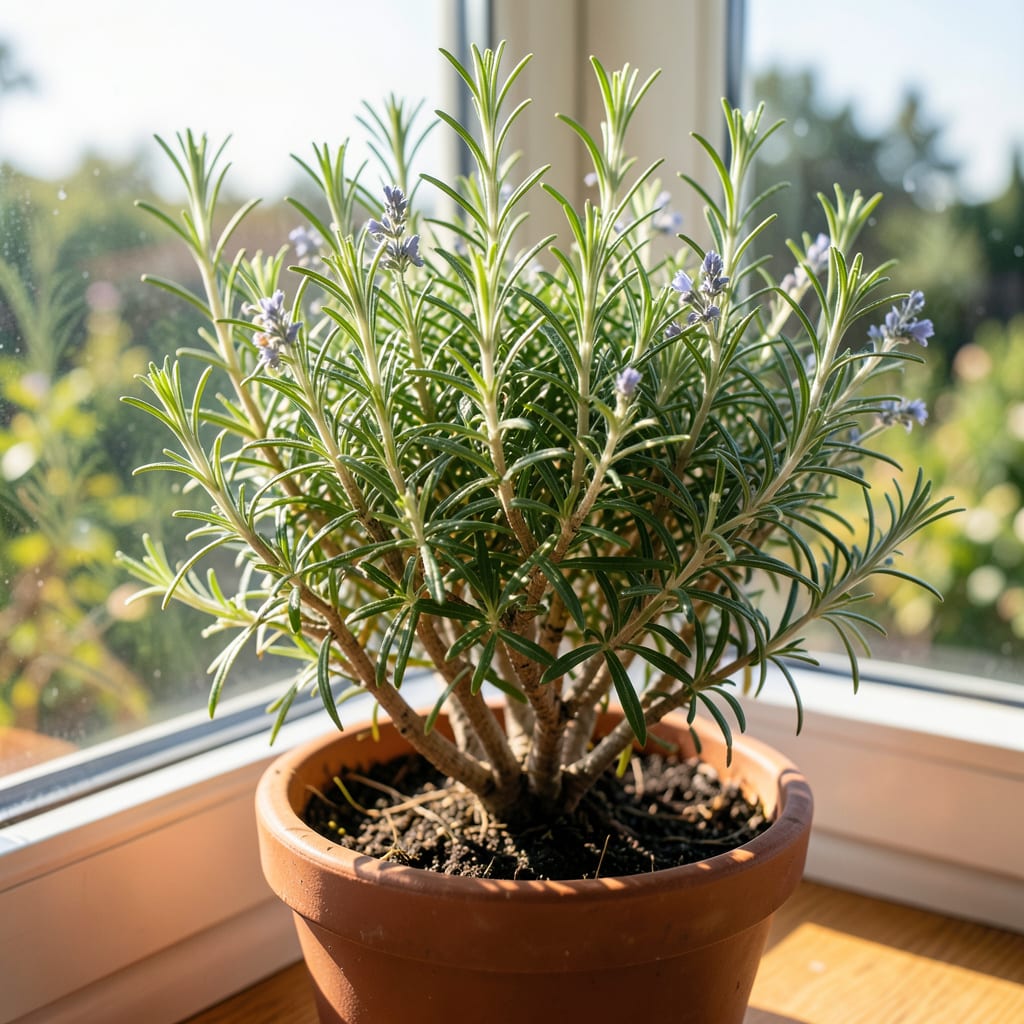
As I tend to my Rosemary 🌿 plants, I’ve learned that light is crucial for their growth. In zone 6, where I garden, these fragrant herbs need plenty of sunlight to thrive during their growing season in spring.
Let’s explore how much light your Rosemary really needs to flourish and how you can optimize its placement for the best results.
 Best Window Placement
Rosemary plants are native to the Mediterranean region, where they thrive in full sun and well-drained soil. In their natural habitat, they receive ample sunlight for most of the day, which is crucial for their growth and development 🌱.
To replicate these conditions in your garden or indoor space, it’s essential to understand the specific lighting needs of rosemary plants. They require full sun to partial shade, with a minimum of 6 hours of direct sunlight per day 🌞.
When growing rosemary indoors, it’s crucial to place it near a sunny window that receives direct sunlight for at least 6 hours a day. If this isn’t possible, consider using grow lights to supplement the natural light 🌟.
Outdoors, rosemary plants should be positioned in a location that receives full sun to partial shade. In warmer climates, some afternoon shade can help prevent scorching, while in cooler climates, full sun is beneficial 🌞.
The amount of light rosemary receives directly impacts its growth and health. Insufficient light can lead to weak and leggy growth, while excessive light can cause the leaves to become scorched 🌿.
To ensure optimal growth, monitor your rosemary plant’s response to its lighting conditions. If it’s not receiving enough light, it may become spindly or discolored ⚠️.
On the other hand, too much light can cause the plant to become stressed, leading to leaf drop or discoloration ☀️.
By understanding and meeting rosemary’s lighting requirements, you can help your plant thrive and enjoy its fragrance and flavor throughout the growing season 🌿.
For more specific guidance on optimizing light exposure for your rosemary plant, consider factors such as seasonal changes and artificial lighting options 📆.
By providing the right amount of light, you can promote healthy growth and maximize the benefits of growing rosemary 🌟.
To ensure your rosemary plants thrive, it’s crucial to optimize their light exposure. I recommend placing them in a location that receives full sun to partial shade, with a minimum of 6 hours of direct sunlight per day 🌞.
When growing rosemary indoors, position it near a sunny window, ideally south-facing, to maximize natural light. If this isn’t possible, consider using grow lights to supplement the natural light and provide the necessary light intensity 🌟.
Rotate your rosemary plant regularly to ensure even growth and prevent it from becoming lopsided due to directional light.
Outdoors, rosemary plants should be positioned in a location that receives full sun to partial shade. In warmer climates, some afternoon shade can help prevent scorching, while in cooler climates, full sun is beneficial ☀️.
To further optimize light exposure, consider the seasonal changes in sunlight. During the summer months, rosemary plants can tolerate more direct sunlight, while in the winter months, they may require some protection from intense sunlight ❄️.
By providing the right amount of light and making necessary adjustments, you can promote healthy growth and maximize the benefits of growing rosemary 🌿.
Regular monitoring of your rosemary plant’s response to its lighting conditions is essential. If it’s not receiving enough light, it may become spindly or discolored ⚠️.
On the other hand, too much light can cause the plant to become stressed, leading to leaf drop or discoloration ☀️.
When growing rosemary, understanding the consequences of incorrect lighting is just as important as knowing the ideal conditions. Too much or too little light can significantly impact the health and growth of your rosemary plant 🌿.
Let’s examine the effects of both insufficient and excessive lighting on rosemary plants. This will help you identify potential issues and make necessary adjustments to ensure your plant thrives 🔍.
To avoid these issues, it’s essential to monitor your rosemary plant’s response to its lighting conditions. If you notice any signs of stress or poor health, adjust the lighting accordingly ⚠️.
By understanding the consequences of incorrect lighting, you can take proactive steps to ensure your rosemary plant receives the right amount of light to thrive 🌟.
Regular observation and adjustments will help you provide optimal lighting conditions for your rosemary plant, promoting healthy growth and maximizing its benefits 🌿.
Yes, while rosemary loves sunlight, too much can cause leaf scorch and stress. In warmer climates, some afternoon shade can help prevent this. Monitor your plant’s condition and adjust its position if necessary.
A south-facing window is ideal for rosemary plants as it provides the most direct sunlight. If that’s not possible, a west or east-facing window can be a good alternative. Consider using grow lights if natural light is limited.
Rotate your rosemary plant every 1-2 weeks to ensure even growth and prevent it from becoming lopsided due to directional light. This will help maintain its shape and promote healthy development.
While rosemary can tolerate some shade, it won’t thrive in heavily shaded areas. For best results, choose a location that receives at least 6 hours of direct sunlight per day. If shade is unavoidable, consider using supplemental lighting.
