
Beautiful Plants For Your Interior
Beautiful Plants For Your Interior
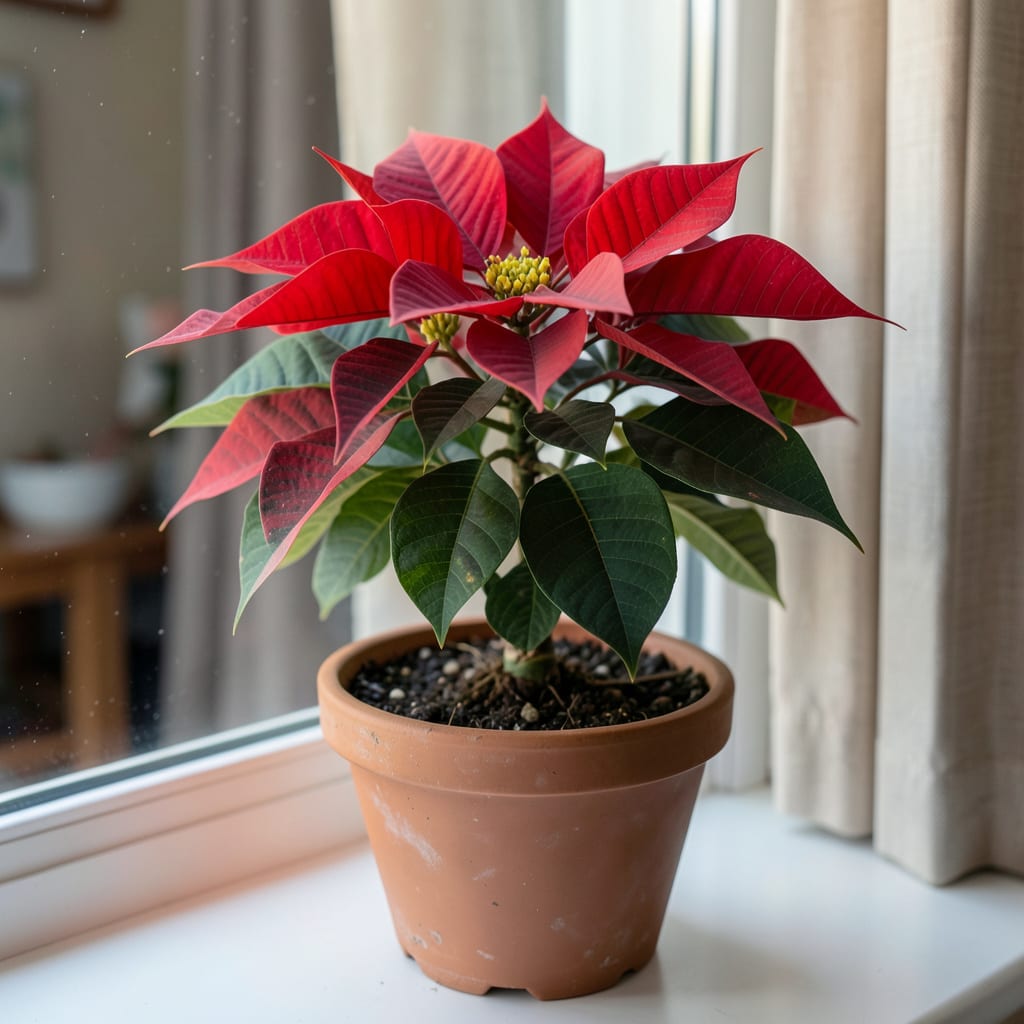
As I bring home my vibrant 🌼 Poinsettia, I’m always excited to see it thrive. But I’ve learned that getting the light just right is crucial – too little or too much can cause those beautiful leaves to drop prematurely.
In USDA Zone 9b, where I live, providing the right amount of light is key to keeping my Poinsettia healthy and colorful throughout the season. Let’s explore how to give this stunning plant the light it needs to flourish.

Poinsettia plants are native to Mexico and thrive in bright, indirect light conditions. In their natural habitat, they receive filtered sunlight through trees and vegetation, which helps them develop their characteristic vibrant colors 🌼.
To replicate these conditions indoors, it’s essential to understand the specific light requirements of poinsettias. They need bright indirect light for at least 6 hours a day to maintain their health and appearance.
Poinsettias are sensitive to extreme light conditions. Direct sunlight can be too intense and may cause leaf scorch, while too little light can lead to weak and leggy growth. Understanding these factors is crucial for providing the right environment for your poinsettia 🌿.
The ideal light conditions for poinsettias involve a balance between light intensity and duration. By providing the right amount of light, you can enjoy your poinsettia’s vibrant colors for a longer period and ensure its overall health.
To achieve optimal growth, it’s also important to consider the time of year and the plant’s natural growth cycle. During the holiday season, poinsettias are often forced to bloom by controlling their light exposure, which can affect their subsequent growth patterns.
By understanding and meeting the light requirements of your poinsettia, you can enjoy a healthier, more vibrant plant that thrives throughout the season. Proper lighting is just one aspect of poinsettia care, but it’s a critical factor in maintaining the plant’s overall health and appearance.
In addition to light, other environmental factors such as temperature and watering play a significant role in poinsettia care. However, getting the light right is the first step in creating an optimal environment for your plant.
For those looking to keep their poinsettia thriving beyond the holiday season, understanding its light needs is just the beginning. With the right care and attention, poinsettias can be enjoyed for months to come, providing a burst of color and vibrancy to any room.
As we explore the specifics of poinsettia care, it’s clear that light is a fundamental aspect of keeping these plants healthy and thriving. By providing the right conditions, you can enjoy the beauty of your poinsettia for an extended period.
Overall, poinsettias are relatively adaptable plants, but they do require specific conditions to thrive. By understanding and meeting their light requirements, you can ensure a healthy and vibrant plant that brings joy and color to your space 🌼.
I always start by understanding that poinsettias need bright indirect light to thrive. In their natural habitat, they receive filtered sunlight through trees and vegetation, which helps them develop their characteristic vibrant colors 🌼.
To replicate these conditions indoors, I
For optimal growth, ensure your poinsettia receives 6+ hours of bright indirect light daily. Consider using artificial lighting if natural light is insufficient.
When it comes to artificial lighting, I recommend using LED grow lights or fluorescent lights to supplement natural light. These options can help provide the necessary light intensity and duration for your poinsettia.
In addition to the type and duration of light, it’s also important to consider the distance between the light source and the plant. Keeping the light at an appropriate distance can help prevent overheating or insufficient light.
I also
By following these tips and providing the right amount of light, you can enjoy a healthier, more vibrant poinsettia that thrives throughout the season 🌿.
Overall, providing the right amount of light for your poinsettia requires attention to detail and a understanding of the plant’s specific needs. With the right care and attention, poinsettias can be enjoyed for months to come, providing a burst of color and vibrancy to any room 🌼.
When caring for poinsettias, it’s easy to make lighting mistakes that can significantly impact their health and appearance. One common error is placing them in direct sunlight, which can cause leaf scorch and premature color fading 🌿.
Another mistake is not providing enough light, leading to weak and leggy growth. Poinsettias need bright indirect light for at least 6 hours a day to maintain their vibrant colors and overall health.
Avoid placing poinsettias in areas with low light or direct sunlight for extended periods, as this can cause damage to the plant.
To avoid these common mistakes, it’s essential to understand the specific lighting needs of poinsettias. By providing the right amount and type of light, you can enjoy a healthier, more vibrant plant that thrives throughout the season 🌼.
In addition to avoiding direct sunlight and low light conditions, it’s also important to consider the duration of light exposure. Poinsettias require a consistent 6+ hours of bright indirect light daily to maintain their health and appearance.
By being mindful of these lighting considerations, you can create an optimal environment for your poinsettia and enjoy its vibrant colors for a longer period.
A south or west facing window with a sheer curtain is perfect for poinsettias, providing bright indirect light for at least 6 hours a day. This helps maintain their vibrant colors and overall health.
Yes, you can use LED grow lights or fluorescent lights to supplement natural light. This is especially helpful if you don’t have a suitable window or need to provide additional light during the winter months.
What happens if my poinsettia gets too much direct sunlight? Too much direct sunlight can cause leaf scorch and premature color fading. If you notice your poinsettia getting too much direct sun, consider moving it to a spot with filtered sunlight or using a sheer curtain to diffuse the light.
If your poinsettia is receiving sufficient light, it should maintain its vibrant colors and have sturdy stems. If it’s not getting enough light, it may develop weak and leggy growth. Adjust its placement or supplement with artificial lighting as needed.
