
Beautiful Plants For Your Interior
Beautiful Plants For Your Interior
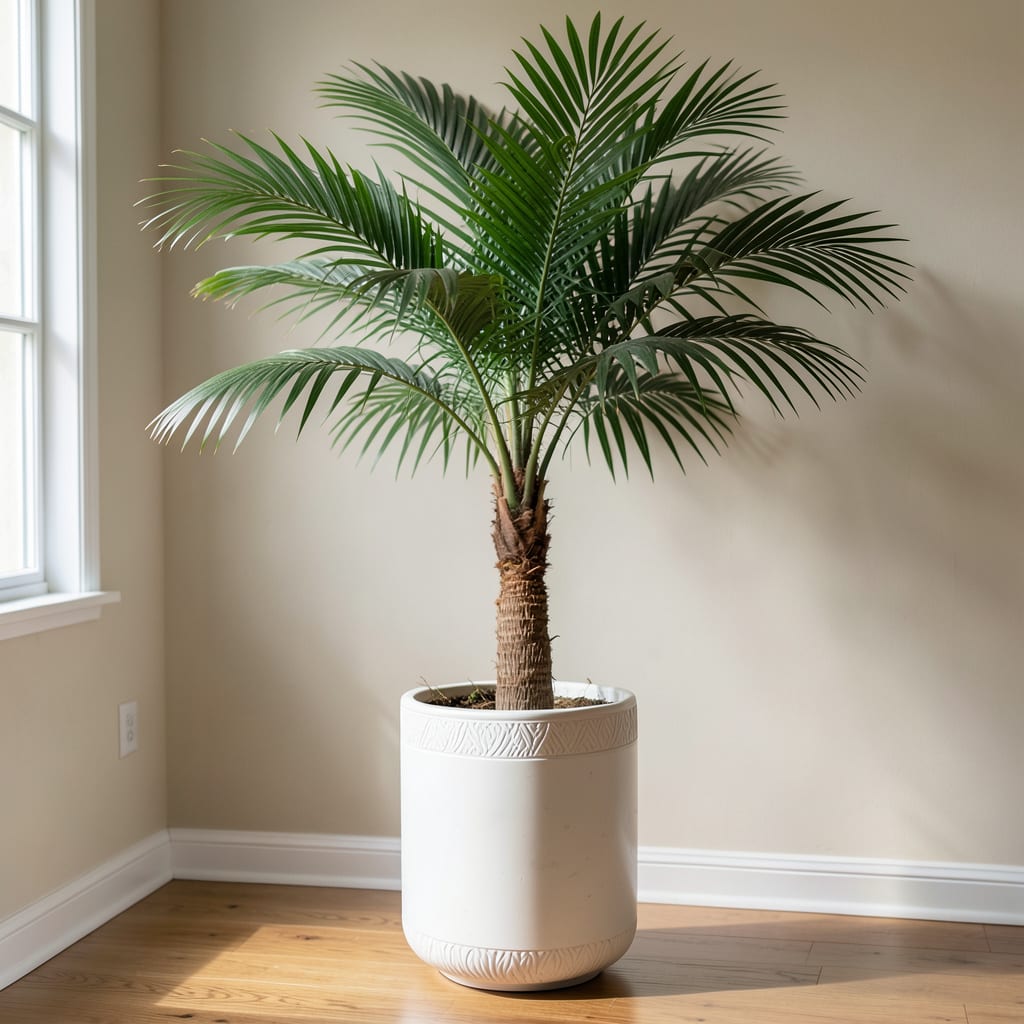
I’ve always been fascinated by palm plants 🌴 and their ability to transform any space with their tropical elegance. But getting their light requirements right is crucial for their survival.
Understanding how much light your palm plant needs can make all the difference – too little and it won’t thrive, too much and it can get scorched. Let’s explore the ideal lighting conditions for your palm plant to flourish.

I’ve found that different palm species have varying light requirements, making it essential to understand the specific needs of your plant. Some palms thrive in low-light conditions, while others require bright, indirect light or even full sun.
The amount of light a palm plant needs can significantly impact its growth and overall health. Understanding these requirements is crucial for providing the best conditions for your palm to flourish 🌴.
Low light palms, such as the Parlor Palm, can survive in conditions with limited natural light, making them ideal for indoor spaces with minimal sunlight. These palms are perfect for rooms with north-facing windows or areas far from direct sunlight.
Bright indirect light palms, like the Areca Palm, require more light but should be protected from direct sun to prevent leaf scorch. East- or west-facing windows are ideal for these plants, providing the right amount of indirect light.
Full sun palms, including the Canary Island Date Palm, need direct sunlight for several hours a day and are best suited for outdoor locations with full sun exposure. These are ideal for gardeners living in warm climates or those who can move their palms outdoors during the warmer months.
Understanding the light requirements of different palm species is key to providing the best care. By matching your palm plant to its ideal lighting conditions, you can ensure it remains healthy and thrives.
For example, if you have a Parlor Palm, you can place it in a room with a north-facing window, ensuring it gets the right amount of indirect light. On the other hand, if you have a Canary Island Date Palm, you should place it in a location that receives full sun for at least part of the day.
It’s also important to note that the light requirements of your palm plant may change with the seasons. During the summer months, your palm may require more light, while in the winter months, it may need less. Adjusting the lighting conditions according to the season can help keep your palm healthy.
In addition to understanding the specific light needs of your palm, it’s crucial to monitor its response to the lighting conditions. If your palm is not getting enough light, it may become leggy or develop yellowing leaves. Conversely, too much light can cause leaf scorch or browning.
By being aware of these signs and adjusting the lighting accordingly, you can ensure your palm plant remains in optimal health. Regularly checking your plant’s condition and making necessary adjustments will help it thrive under your care 🌿.
To further optimize the light exposure for your palm plant, consider using grow lights during the winter months or in low-light environments. These can provide the additional light your palm needs to stay healthy when natural light is scarce.
By following these guidelines and understanding the specific light requirements of your palm plant, you can create an ideal environment for it to flourish. Whether you have a low light palm or one that requires full sun, providing the right amount of light is crucial for its survival and growth 🌱.
Understanding whether your palm plant is receiving sufficient light is crucial for its health and growth. I always check for specific signs that indicate if the light conditions are right or need adjustment.
Both insufficient and excessive light can harm your palm plant, so it’s essential to recognize the symptoms early 🌱.
If your palm plant shows yellowing leaves, it might be getting too much light. Conversely, leggy growth or pale leaves can indicate insufficient light.
To determine if your palm is getting enough light, observe its leaf color and growth patterns. Healthy palms typically have vibrant, green leaves and sturdy stems.
If you notice any adverse signs, consider adjusting your palm’s location to optimize its light exposure. For instance, moving it to a brighter spot or using grow lights can help if it’s not getting enough light.
On the other hand, if your palm is exposed to too much direct sunlight, relocating it to a spot with filtered sunlight can prevent damage 🔥.
Regularly monitoring your palm plant’s response to its lighting conditions and making necessary adjustments will ensure it remains healthy and thrives under your care.
By paying attention to these signs and taking appropriate action, you can provide your palm plant with the optimal light it needs to flourish 🌿.
Adjusting the lighting for your palm plant is a simple yet effective way to enhance its health and longevity.
I’ve found that optimizing light exposure is crucial for the health and growth of palm plants. Proper positioning and understanding seasonal changes can make a significant difference 🌴.
To ensure your palm plant thrives, it’s essential to provide it with the right amount of light. Let’s explore some practical tips to achieve this.
Place your palm plant near an east- or west-facing window to provide bright indirect light without direct sun exposure that can cause scorching.
Consider using grow lights during the winter months or in low-light environments to supplement natural light and maintain optimal conditions for your palm.
Adjust your palm plant’s location seasonally to accommodate changes in natural light. For example, move it closer to a window in winter and further away in summer to avoid excessive direct sunlight.
By implementing these strategies, you can ensure your palm plant receives the optimal light it needs to thrive. Regular monitoring and adjustments will help maintain its health and promote robust growth 🌱.
Optimizing light exposure is a simple yet effective way to enhance your palm plant’s overall well-being. By following these tips, you can create a nurturing environment that supports its growth and longevity.
For example, if you have a Parlor Palm, you can place it near an east-facing window during the winter months to provide it with the necessary light. In the summer, you can move it further away from the window to avoid direct sunlight.
Additionally, using grow lights can be particularly beneficial during the winter months when natural light is scarce. This can help maintain the health and vibrancy of your palm plant year-round 🌿.
Most palm plants prefer bright indirect light, making east- or west-facing windows ideal. Direct sunlight can cause leaf scorch, so filtering the light is often beneficial. Some palms can tolerate low light conditions, but most need 4-6 hours of indirect sunlight daily to thrive .
If your palm plant is exposed to too much light, it may develop yellowing or browning leaves. In severe cases, leaves may become scorched or develop dry tips. Moving the plant to a spot with filtered sunlight can help prevent further damage .
Yes, grow lights can be particularly beneficial during the winter months when natural light is scarce. They can supplement the available light and help maintain your palm plant’s health and vibrancy. Position the grow lights 12-18 inches away from the plant for optimal effect .
It’s a good practice to monitor your palm plant’s response to its lighting conditions and make adjustments as needed. Seasonal changes may require relocating the plant to accommodate variations in natural light. Regular checks will help ensure your palm remains healthy and thrives .
