
Beautiful Plants For Your Interior
Beautiful Plants For Your Interior
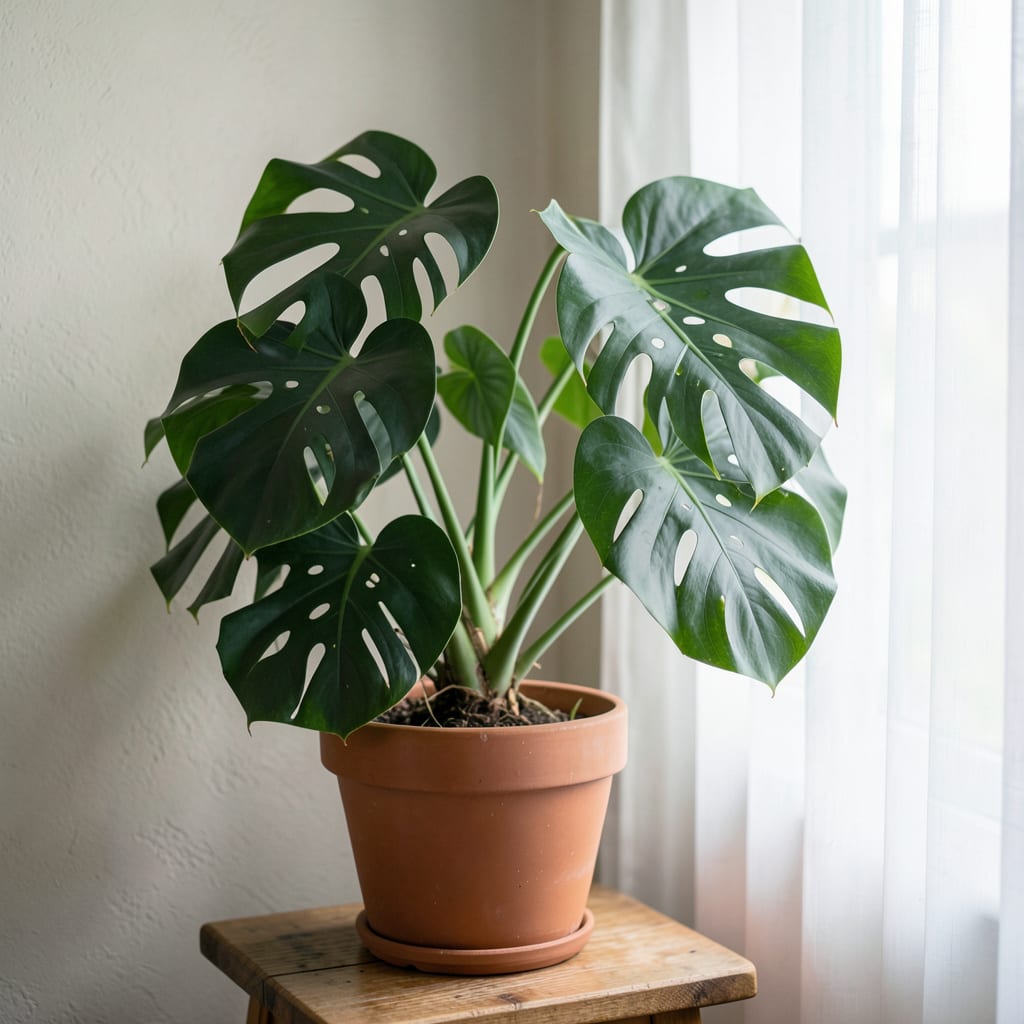
I’ve struggled to keep my Monstera 🌱 thriving until I understood its lighting needs. These plants require bright, indirect light to grow well, typically needing 4-6 hours of it daily.
Getting the light right is crucial – too little and your Monstera won’t thrive, too much and it might get scorched. Let’s explore how to provide the perfect lighting conditions for your Monstera.

I’ve found that understanding Monstera’s natural habitat is key to providing the right light conditions. In their native tropical environments, Monstera plants thrive under the canopy of larger trees, receiving filtered, indirect light. This natural setting gives us a clue about their lighting needs – they require bright light without being exposed to direct sunlight for extended periods 🌿.
To replicate these conditions indoors, it’s essential to understand that Monstera plants need 4-6 hours of bright, indirect light daily. This can be achieved by placing them near east or west-facing windows, where they receive gentle, indirect sunlight. The goal is to mimic the dappled light of their natural habitat 🌻.
One of the most common mistakes I see is placing Monstera plants in low-light conditions. While they can tolerate lower light, their growth will be significantly slower and they may develop leggy stems as they stretch towards available light sources. On the other hand, too much direct sunlight can cause leaf scorch, damaging the plant’s beautiful foliage 🔥.
I’ve learned that the key to successful Monstera care is finding that perfect balance. By providing the right amount of bright, indirect light, you can encourage healthy growth and maintain the plant’s stunning appearance. In the next section, we’ll explore practical tips for achieving these ideal lighting conditions 🌟.
Monstera plants are native to tropical regions where they grow under the canopy of larger trees. This environment provides them with filtered sunlight that is rich in nutrients. To replicate this in your home, consider using sheer curtains to filter direct sunlight, especially during peak hours 🌻.
The amount of light a Monstera needs can vary depending on the variety. Some Monstera species, like the Monstera deliciosa, are more tolerant of lower light conditions than others. However, all Monsteras will benefit from bright, indirect light that mimics their natural habitat 🌿.
When choosing a location for your Monstera, consider the time of year and how the light changes throughout the seasons. During winter months, when days are shorter and sunlight is weaker, you may need to adjust the plant’s position or supplement with grow lights to maintain optimal lighting conditions ❄️.
In my experience, using a combination of natural and artificial light can help ensure your Monstera receives consistent illumination. This is particularly useful during periods when natural light is limited, helping to maintain the plant’s health and promote steady growth 💡.
It’s also worth noting that Monstera plants can adapt to different lighting conditions over time. However, sudden changes in lighting can shock the plant. If you need to move your Monstera to a different location, do so gradually to allow it to acclimate to the new light conditions 🌞.
By understanding and replicating Monstera’s natural lighting conditions, you can create an optimal environment for your plant to thrive. This not only enhances its appearance but also supports its overall health and growth 🌱.
To summarize, Monstera plants require bright, indirect light for 4-6 hours daily. East or west-facing windows are ideal, and using sheer curtains can help filter direct sunlight. By providing the right light, you can enjoy a healthy, thriving Monstera with beautiful foliage 🌟.
I’ve found that providing the right amount of light for Monstera plants requires a combination of understanding their needs and making some practical adjustments. First, it’s essential to place your Monstera in a location that receives bright, indirect light for 4-6 hours daily. East or west-facing windows are ideal for this purpose 🌞.
To achieve the perfect lighting conditions, consider using sheer curtains to filter direct sunlight, especially during peak hours. This helps prevent leaf scorch while still providing the necessary light. If you’re unable to provide natural light, grow lights can be an effective alternative 💡.
Rotate your Monstera regularly to ensure even light distribution and prevent uneven growth.
When using artificial lighting,
It’s also important to monitor your Monstera’s response to its lighting conditions. If you notice leggy growth or yellowing leaves, it may be a sign that the light is insufficient or excessive. Adjust the lighting accordingly to maintain your plant’s health 🌿.
In addition to the type and duration of light, the distance between the light source and your Monstera matters. Keep your Monstera at least 2-3 feet away from direct light sources to avoid scorching the leaves 🔥.
By following these practical tips and being mindful of your Monstera’s lighting needs, you can create an optimal environment for your plant to thrive. Remember, the key is to provide bright, indirect light while avoiding direct sunlight for extended periods 🌻.
To further optimize lighting, consider the time of year and adjust your Monstera’s position accordingly. During winter months, when natural light is weaker, you may need to supplement with additional lighting ❄️.
By understanding and meeting your Monstera’s lighting requirements, you can enjoy a healthy, thriving plant with beautiful foliage. Regular monitoring and adjustments will help ensure your Monstera receives the right amount of light throughout the year 🌱.
I’ve learned that monitoring your Monstera’s response to light is crucial for its health. Both too much and too little light can cause noticeable changes in the plant’s appearance. By understanding these signs, you can adjust the lighting conditions to keep your Monstera thriving 🌿.
If you notice leggy growth or small leaves, it may be a sign that your Monstera isn’t getting enough light. On the other hand, yellowing or scorched leaves indicate too much direct sunlight 🔥.
To adjust the lighting, consider moving your Monstera to a different location or using sheer curtains to filter the sunlight. Regular monitoring will help you find the perfect balance for your plant 🌻.
It’s also worth noting that Monstera plants can adapt to different lighting conditions over time. However, sudden changes can shock the plant, so it’s best to make adjustments gradually 🌞.
By paying attention to these signs and making necessary adjustments, you can ensure your Monstera receives the right amount of light to stay healthy and vibrant 🌱.
To summarize, keeping an eye on your Monstera’s appearance and adjusting its lighting conditions accordingly is key to its health. With the right light, your Monstera will reward you with lush, beautiful foliage 🌟.
East or west-facing windows are perfect for Monstera plants as they provide bright, indirect light for 4-6 hours daily. This direction helps avoid harsh direct sunlight that can cause leaf scorch .
While Monstera plants can survive in low light, their growth will be significantly slower and they may develop leggy stems. For optimal health, provide bright, indirect light whenever possible .
Signs of too much light include yellowing or scorched leaves. If you notice this, consider moving your Monstera to a spot with filtered sunlight or using sheer curtains to diffuse the light .
Yes, grow lights can be an effective way to supplement natural light during winter months when days are shorter. This helps maintain optimal lighting conditions and supports healthy growth .
