
Beautiful Plants For Your Interior
Beautiful Plants For Your Interior
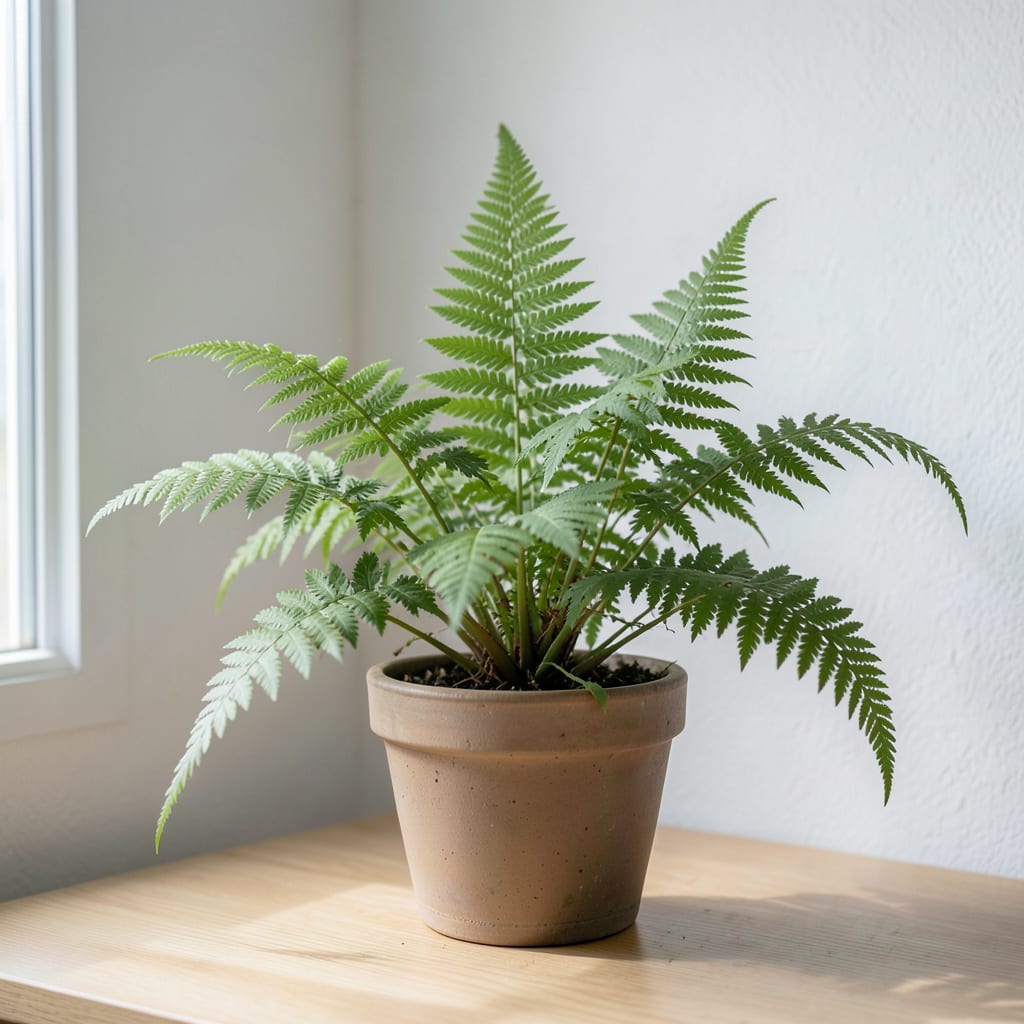
Ferns 🌿 are known for their lush, green foliage, but getting their lighting right can be tricky. Too little light leaves them pale and spindly, while too much can scorch their delicate fronds.
To keep your Fern thriving, it’s essential to understand its light requirements. I’ll guide you through the optimal lighting conditions for healthy growth, helping you find the perfect spot for your plant in your General location within USDA Zone 6.


Ferns are known for their lush, green foliage and ability to thrive in various lighting conditions. However, understanding their specific lighting needs is crucial for maintaining their health and promoting growth 🌱.
In their natural habitat, ferns typically grow in shaded or partially shaded areas, receiving filtered sunlight through the canopy above. This environment provides them with the ideal amount of light for photosynthesis without exposing them to harsh, direct sunlight 🌿.
Most fern species prefer low to moderate light conditions, making them ideal for indoor spaces with limited natural light. The ideal light intensity for ferns is typically around the 20% light level, which is significantly lower than what most other plants require 🌿.
Different fern species have varying light preferences. Some, like the Maidenhair Fern, require more shade, while others, such as the Autumn Fern, can tolerate slightly brighter conditions. Understanding the specific needs of your fern species is key to providing the right light 💡.
Ferns have adapted to their natural environment by developing delicate fronds that are sensitive to light. Too much light can cause these fronds to become scorched, while too little light can lead to weak, spindly growth. Finding the right balance is essential for maintaining healthy ferns 🌿.
In addition to light intensity, the duration of light exposure also plays a crucial role in fern health. Most ferns benefit from 2-4 hours of indirect light per day, which mimics their natural habitat conditions ⏰.
When growing ferns indoors, it’s essential to replicate their natural light conditions as closely as possible. This can be achieved by placing them near a north-facing window or using filtered light to reduce intensity 🌞.
Ferns are not just limited to indoor spaces; they can also thrive in outdoor gardens with appropriate light conditions. In USDA Zone 6, ferns can be grown in shaded areas, providing a lush, green backdrop for other plants 🌿.
To ensure your ferns receive the right amount of light, monitor their response to their current lighting conditions. Adjust their placement as needed to achieve the optimal light level for healthy growth 📊.
By understanding and meeting the lighting requirements of your ferns, you can enjoy their beautiful, lush foliage and the tranquility they bring to your indoor or outdoor space 🌸.
In summary, ferns require low to moderate light conditions to thrive. By providing the right amount and type of light, you can promote healthy growth and maintain the beauty of these versatile plants 🌿.
Providing optimal light for ferns indoors requires careful consideration of their natural habitat and light preferences. Most ferns thrive in low to moderate light conditions, making them ideal for indoor spaces with limited natural light 🌿.
When growing ferns indoors, it’s essential to replicate their natural light conditions as closely as possible. This can be achieved by placing them near a north-facing window, which provides gentle, indirect light that mimics their natural habitat 🌞.
Use sheer curtains to filter direct sunlight and prevent scorching of delicate fronds. This simple trick can make a significant difference in maintaining healthy ferns indoors 🔥.
In addition to natural light, grow lights can be used to supplement the lighting needs of ferns. When using grow lights, ensure they are not too intense, as this can cause damage to the plants. A fluorescent or LED grow light is ideal for ferns, as it provides the necessary spectrum for photosynthesis without generating excessive heat 💡.
The duration of light exposure is also crucial for fern health. Most ferns benefit from 2-4 hours of indirect light per day, which can be achieved by adjusting the placement of the plant or using timers for grow lights ⏰.
To ensure your ferns receive the right amount of light, monitor their response to their current lighting conditions. If the fronds become pale or spindly, it may be a sign that the plant needs more light. Conversely, if the fronds become scorched or discolored, it may be receiving too much light 📊.
By providing the right amount and type of light, you can promote healthy growth and maintain the beauty of your ferns. With a little attention to their lighting needs, you can enjoy the lush, green foliage and tranquility that ferns bring to your indoor space 🌸.
In summary, providing optimal light for ferns indoors requires a combination of natural light and potentially supplemental grow lights. By understanding and meeting their lighting needs, you can keep your ferns thriving and healthy 🌿.
Ferns can be sensitive to lighting conditions, and improper light can lead to various problems. Understanding how to identify and address these issues is crucial for maintaining healthy ferns 🌿.
One common problem is too little light, which can cause ferns to become pale and spindly. If your fern is not receiving enough light, it may also experience slow growth and weak fronds 🌱.
To fix lighting problems, you can adjust the placement of your fern or use supplemental lighting such as grow lights. If your fern is receiving too much light, consider moving it to a shadier location or using a sheer curtain to filter the sunlight 🌞.
Monitoring your fern’s response to its lighting conditions is essential. By making adjustments as needed, you can ensure your fern receives the right amount of light for healthy growth 📊.
In summary, recognizing and fixing fern lighting problems requires attention to detail and a willingness to make adjustments. By understanding the signs of too little or too much light, you can take steps to provide your fern with the optimal lighting conditions 🌿.
By following these tips, you can help your ferns thrive and enjoy their beautiful, lush foliage. Proper lighting is just one aspect of fern care, but it’s a critical one for maintaining their health and promoting growth 🌸.
Ferns generally thrive in low to moderate light conditions, making them perfect for indoor spaces with limited natural light. Most species prefer 2-4 hours of indirect light per day.
No, direct sunlight can be harmful to ferns as it may cause their delicate fronds to become scorched. Instead, place them near a north-facing window or use filtered light to reduce intensity.
If your fern’s fronds are pale or spindly, it may need more light. Conversely, if the fronds are scorched or discolored, it’s likely receiving too much light. Adjust the plant’s placement accordingly to achieve optimal light levels.
Yes, fluorescent or LED grow lights can be used to supplement the lighting needs of ferns. Ensure the lights are not too intense, as this can cause damage. Use them to provide the necessary spectrum for photosynthesis without generating excessive heat.
