
Beautiful Plants For Your Interior
Beautiful Plants For Your Interior
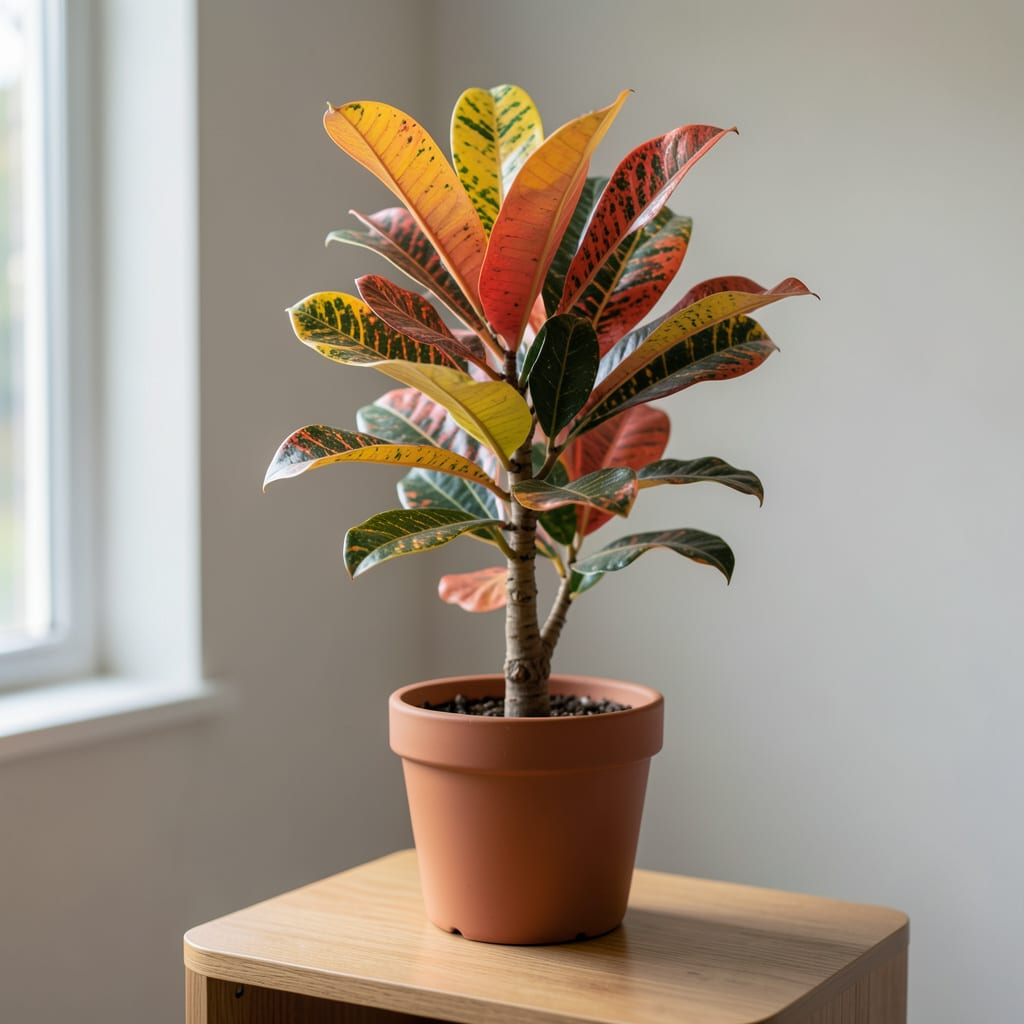
I’ve always been fascinated by the vibrant colors of Croton plants 🌿. To keep these beauties thriving, understanding their light requirements is crucial. Too little light can cause fading, while too much can lead to scorching.
So, how much light does your Croton need? Let’s explore the ideal conditions for these stunning plants in USDA Zone 6 and beyond.


Croton plants are known for their vibrant colors and tropical beauty, but their lighting needs are often misunderstood. Understanding how much light your croton needs is crucial for maintaining its health and vibrant foliage 🌿.
The ideal light conditions for croton plants are bright, indirect light for 4-6 hours daily. This can be achieved by placing them near east or west-facing windows where they receive gentle, filtered sunlight.
Understanding these lighting requirements is essential because croton plants are native to tropical regions with filtered sunlight. In their natural habitat, they receive dappled light through the canopy, which helps maintain their vibrant colors and healthy growth.
The intensity of light is particularly important for croton plants. While they need bright light to maintain their colorful foliage, direct sunlight can be too intense and may cause leaf scorch. On the other hand, insufficient light can lead to fading colors and leggy growth as the plant stretches towards the light source.
Light duration also plays a significant role in the health of croton plants. While they require 4-6 hours of bright light, the quality of that light matters. Morning or afternoon sun is generally better than the intense midday sun, which can be too harsh 🌞.
In addition to intensity and duration, the type of light is also important. Croton plants thrive in bright, indirect light, which can be achieved through filtered sunlight or supplemental lighting such as LED grow lights. These lighting conditions help maintain the plant’s vibrant colors and promote healthy growth.
It’s also worth noting that croton plants can adapt to different lighting conditions, but their color intensity may vary. In lower light conditions, the colors may become less vibrant, while brighter conditions can enhance the color display 🌿.
To ensure your croton plant thrives, it’s essential to monitor its response to the available light and make adjustments as necessary. Observing the plant’s growth and color can provide valuable insights into whether it’s receiving the right amount of light.
By understanding and meeting the light requirements of your croton plant, you can enjoy its beautiful, vibrant foliage year-round. Proper lighting is a key factor in maintaining the health and aesthetic appeal of these stunning plants 🌸.
To keep your croton plant thriving, it’s essential to provide the right lighting conditions. I recommend placing your croton near an east or west-facing window where it can receive bright, indirect light for 4-6 hours daily 🌞.
The ideal lighting setup for croton plants involves filtered sunlight, which can be achieved by using sheer curtains or placing the plant a few feet away from the window. This helps prevent leaf scorch from direct sunlight while still providing enough light for vibrant color development.
For optimal results, rotate your croton plant every 1-2 weeks to ensure even light distribution and prevent uneven growth.
In addition to natural light, you can also use supplemental lighting to support your croton plant’s needs. LED grow lights are an excellent option as they provide the necessary spectrum for plant growth without generating excessive heat 🔦.
When using supplemental lighting, maintain a distance of 12-18 inches between the light source and the plant to avoid burning the leaves. A 12-hour daily lighting schedule can help mimic natural daylight conditions and support healthy growth 🌱.
It’s also important to consider the seasonal changes in natural light. During winter months, when daylight hours are shorter, you may need to adjust your supplemental lighting schedule to ensure your croton receives adequate light ❄️.
By providing the right lighting conditions and making necessary adjustments, you can enjoy your croton plant’s vibrant foliage throughout the year.
Proper lighting is just one aspect of caring for your croton plant. Combining optimal lighting with appropriate watering and fertilization practices will help your plant thrive and maintain its stunning appearance 💪.
With the right care and attention to lighting needs, your croton plant can become a beautiful focal point in your home or garden, adding a touch of tropical beauty to any space 🌸.
Understanding the consequences of incorrect lighting is crucial for maintaining the health of your croton plant. Both too little and too much light can have negative effects on the plant’s appearance and overall well-being 🌿.
Insufficient light can lead to several issues, including fading colors and leggy growth. When croton plants don’t receive enough light, their vibrant colors may dull, and they may stretch towards the light source, resulting in an uneven shape 🌟.
On the other hand, excessive light can cause leaf scorch, where the leaves develop brown or yellow patches due to too much direct sunlight. This can be particularly problematic if the plant is exposed to intense midday sun without proper filtering 🔥.
To avoid these issues, it’s essential to monitor your croton plant’s response to its lighting conditions. If you notice signs of stress, such as color fading or leaf scorch, adjust the plant’s position or lighting setup accordingly 🔄.
By understanding the consequences of incorrect lighting and taking steps to provide the right conditions, you can help your croton plant thrive and maintain its stunning appearance 💪.
Proper lighting, combined with other care practices like appropriate watering and fertilization, will ensure your croton plant remains healthy and vibrant throughout the year 🌸.
With the right care and attention, your croton plant can be a beautiful addition to your home or garden, bringing a touch of tropical beauty to any space 🌴.
East or west-facing windows are ideal for croton plants as they provide bright, indirect light for 4-6 hours daily. This gentle, filtered sunlight helps maintain the plant’s vibrant colors and healthy growth.
While croton plants need bright light, direct sunlight can be too intense and may cause leaf scorch. It’s best to filter the sunlight through sheer curtains or place the plant a few feet away from the window. This helps prevent damage while still providing enough light.
If your croton plant is not receiving enough light, you may notice fading colors and leggy growth as it stretches towards the light source. To fix this, move the plant to a brighter location or consider using supplemental lighting like LED grow lights.
Yes, LED grow lights are an excellent option for supplementing your croton plant’s lighting needs. They provide the necessary spectrum for plant growth without generating excessive heat. Maintain a distance of 12-18 inches between the light and the plant.
