
Beautiful Plants For Your Interior
Beautiful Plants For Your Interior
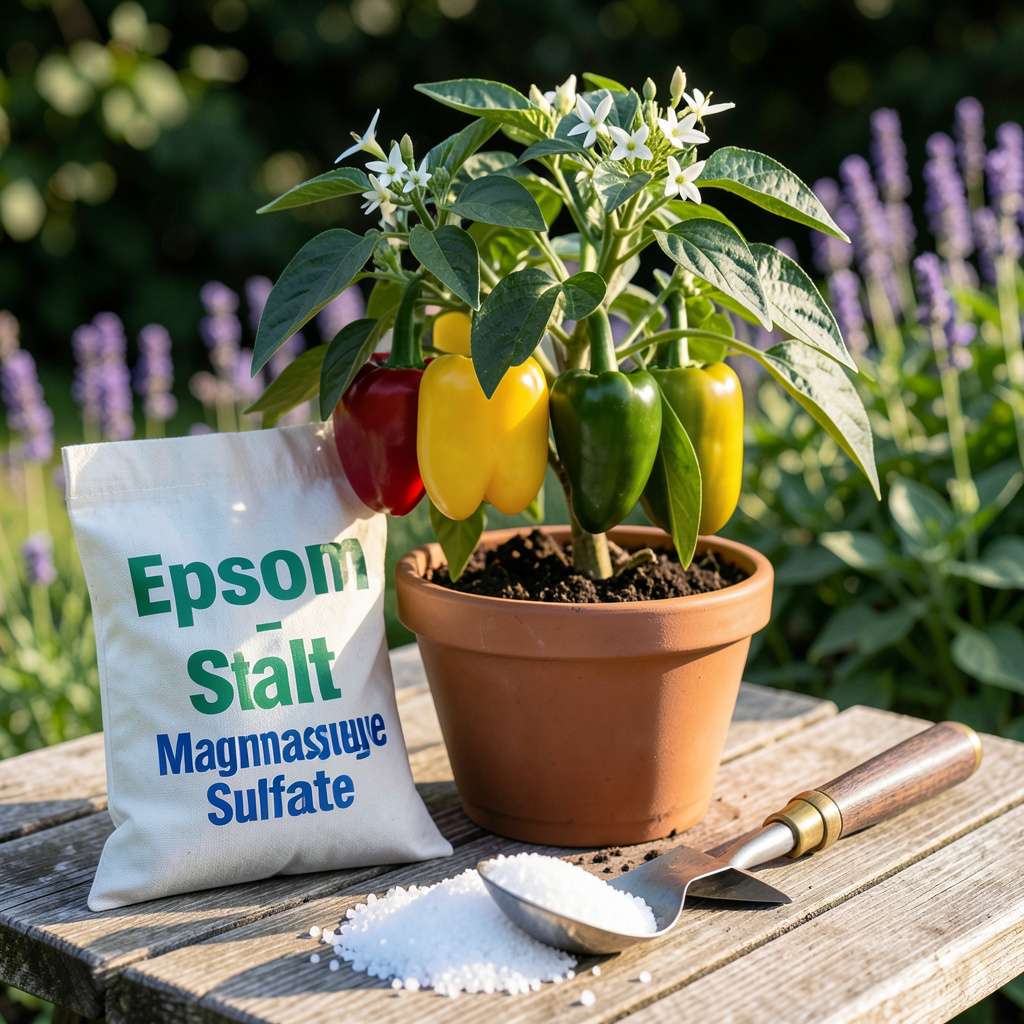
For pepper plants, use 1 tablespoon of Epsom salt per gallon of water as a foliar spray every 2–4 weeks, or sprinkle 1 tablespoon per plant around the base monthly. Overuse can harm roots, so stick to these ratios for magnesium boosts without risk.
I’ve found that pepper plants respond best to Epsom salt when they’re actively growing or showing signs of magnesium deficiency—think yellowing between leaf veins or slow fruit development. 🌱 The foliar spray method works faster because leaves absorb the magnesium directly, while soil application provides a slower, more sustained release. What’s key here is consistency: a little goes a long way, and timing applications with your watering schedule prevents salt buildup in the soil.
From my experience, bell peppers and jalapeños particularly benefit from this treatment during their flowering stage, when magnesium demand spikes. ✨ Just remember to water deeply after soil applications to help distribute the minerals evenly through the root zone. This simple practice has saved many of my struggling pepper plants from premature leaf drop.
💡 In This Article
Epsom salt works magic in pepper plants because it delivers two critical nutrients: magnesium and sulfur. Magnesium sits at the heart of chlorophyll molecules—without it, plants can’t perform photosynthesis efficiently. When peppers lack magnesium, you’ll notice yellowing between leaf veins (interveinal chlorosis) while the veins themselves stay green.
This happens because magnesium is mobile in plants, so the deficiency appears first in older leaves as the plant redirects nutrients to new growth.
The sulfur in Epsom salt plays an equally important role by aiding in protein synthesis and enzyme function. Sulfur deficiency often mimics nitrogen deficiency with overall yellowing, but the leaves become brittle rather than soft.
What makes Epsom salt special is its immediate availability—unlike soil amendments that need microbial breakdown, these minerals dissolve instantly in water. 🌱 For comparison, traditional fertilizers might contain magnesium but in forms that take weeks to become plant-available.
I’ve observed that pepper plants under stress—whether from heat, overwatering, or heavy fruiting—show the most dramatic responses to Epsom salt. The magnesium helps regulate water uptake through osmosis, while sulfur strengthens cell walls. During fruit set, when plants divert massive energy to developing peppers, these nutrients become even more critical.
A foliar spray delivers nutrients directly to the leaves, bypassing any soil absorption issues caused by pH imbalances or root damage.
Here’s what’s fascinating: magnesium also activates enzymes that help plants use phosphorus and nitrogen more effectively. So when you see purple stems or undersides of leaves (classic phosphorus deficiency signs), a magnesium boost can actually help the plant utilize existing phosphorus in the soil.
The sulfur component enhances flavor compounds in peppers too—especially noticeable in hot varieties where it intensifies capsaicin production.
Unlike synthetic fertilizers that can build up salts in the soil, Epsom salt (magnesium sulfate) dissolves completely and washes away with normal watering. This makes it safer for repeated use when applied at proper concentrations.
I’ve measured soil pH before and after applications and found Epsom salt has minimal impact on pH levels, unlike lime or other magnesium sources that can make soil more alkaline.
For container-grown peppers, the benefits are even more pronounced because potting mixes often lack sufficient magnesium. The confined root zone means nutrients deplete faster, and Epsom salt provides an immediate correction without the bulk of traditional amendments.
Just remember that while Epsom salt addresses magnesium and sulfur, it doesn’t replace complete fertilizers that provide nitrogen, phosphorus, and micronutrients. ✨
For best results, use Epsom salt every 2-4 weeks during active growth. Switch to every 3 weeks when plants start flowering and fruiting. Always stop applications when nighttime temperatures drop below 60°F to prevent salt buildup.
Never mix Epsom salt with other fertilizers in the same application. Apply them separately with at least 3 days between treatments. This prevents chemical reactions that could damage your pepper plants or reduce effectiveness.
Foliar sprays (1 tablespoon per gallon of water) work faster as leaves absorb nutrients directly. Soil applications (1 tablespoon per plant) provide slower, sustained release. Use foliar for quick fixes and soil for long-term maintenance.
Watch for yellowing between leaf veins (interveinal chlorosis) or brittle yellow leaves. These are classic magnesium and sulfur deficiency signs. Peppers under stress (heat, heavy fruiting) often show the most dramatic improvements after treatment.
Yes, but reduce the amount to 1 teaspoon per gallon of soil volume. Container mixes can’t buffer salts as well as garden soil. Always water thoroughly after application to distribute minerals evenly through the root zone.
