
Beautiful Plants For Your Interior
Beautiful Plants For Your Interior
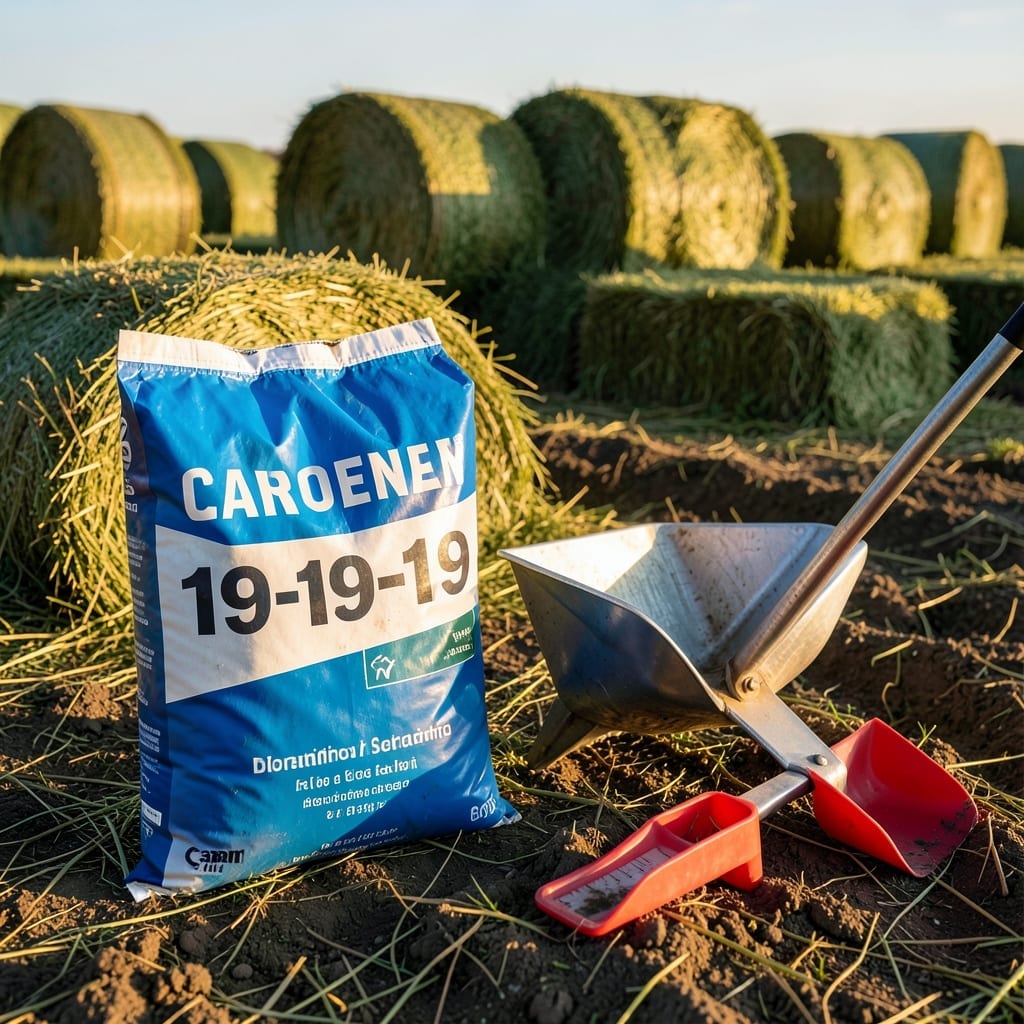
Applying the right amount of 19-19-19 fertilizer to your 🌾Hay fields can transform your crop from average to exceptional. This balanced fertilizer delivers equal parts nitrogen, phosphorus, and potassium—the key nutrients for vigorous growth.
Getting the dosage right per acre ensures you’re not wasting resources while maximizing your yield. Whether you’re growing alfalfa, bermudagrass, or fescue, precision matters.
Let me walk you through exact application rates and timing so you can achieve that lush, high-yield hay you’re aiming for this season.
For optimal hay production, the standard 19-19-19 fertilizer rate is 500-800 lbs per acre annually. This balanced formula supports root development, leaf growth, and overall vigor in most hay types.
I recommend splitting this into 2-3 applications for best results. Early spring, late spring, and fall are ideal timing windows for most regions.
| Hay Type | Annual Rate | Applications |
|---|---|---|
| Alfalfa | 600-800 lbs | 3 |
| Bermudagrass | 500-700 lbs | 2-3 |
| Fescue | 400-600 lbs | 2 |
Always test your soil before applying fertilizer. A soil analysis reveals existing nutrient levels, helping you fine-tune the 19-19-19 amount. I’ve seen fields where 300 lbs sufficed due to rich soil.
For new hay stands, consider a starter application of 200-300 lbs per acre at planting. This gives young plants the nutrient boost they need for strong establishment.
Timing matters as much as quantity. Apply the first dose at green-up in spring when plants are 6 inches tall. This kickstarts growth when hay needs it most.
In summer months, use light applications of 150-200 lbs per acre to maintain growth. Avoid heavy feeding during drought stress as this can damage plants.
Fall applications should focus on root development. I apply 200-300 lbs per acre in early fall to help hay store nutrients for winter and next spring’s growth.
Remember that weather conditions affect fertilizer efficiency. In wet years, you might reduce rates by 10-15% as nutrients are less likely to leach away.
For organic hay production, 19-19-19 may not be suitable. Instead, consider organic alternatives like compost or manure, but expect different application rates and timing.
🌾Several key variables determine how much 19-19-19 fertilizer your hay needs. I’ve found that soil nutrient levels are the most critical factor to consider first.
Hay species also play a major role. Alfalfa typically requires more nitrogen than bermudagrass or fescue, which affects your application rate.
Climate conditions significantly impact fertilizer needs. In hotter regions, you might increase rates by 10-15% to compensate for faster nutrient depletion.
The growth stage of your hay matters too. I apply more nitrogen during early growth and more potassium before flowering for best results.
Rainfall patterns affect nutrient leaching. Areas with heavy rainfall may require split applications to prevent nutrient loss through runoff.
For established hay fields, I recommend reducing rates by 10-20% compared to new plantings, as mature plants are more efficient at nutrient uptake.
🌾