
Beautiful Plants For Your Interior
Beautiful Plants For Your Interior
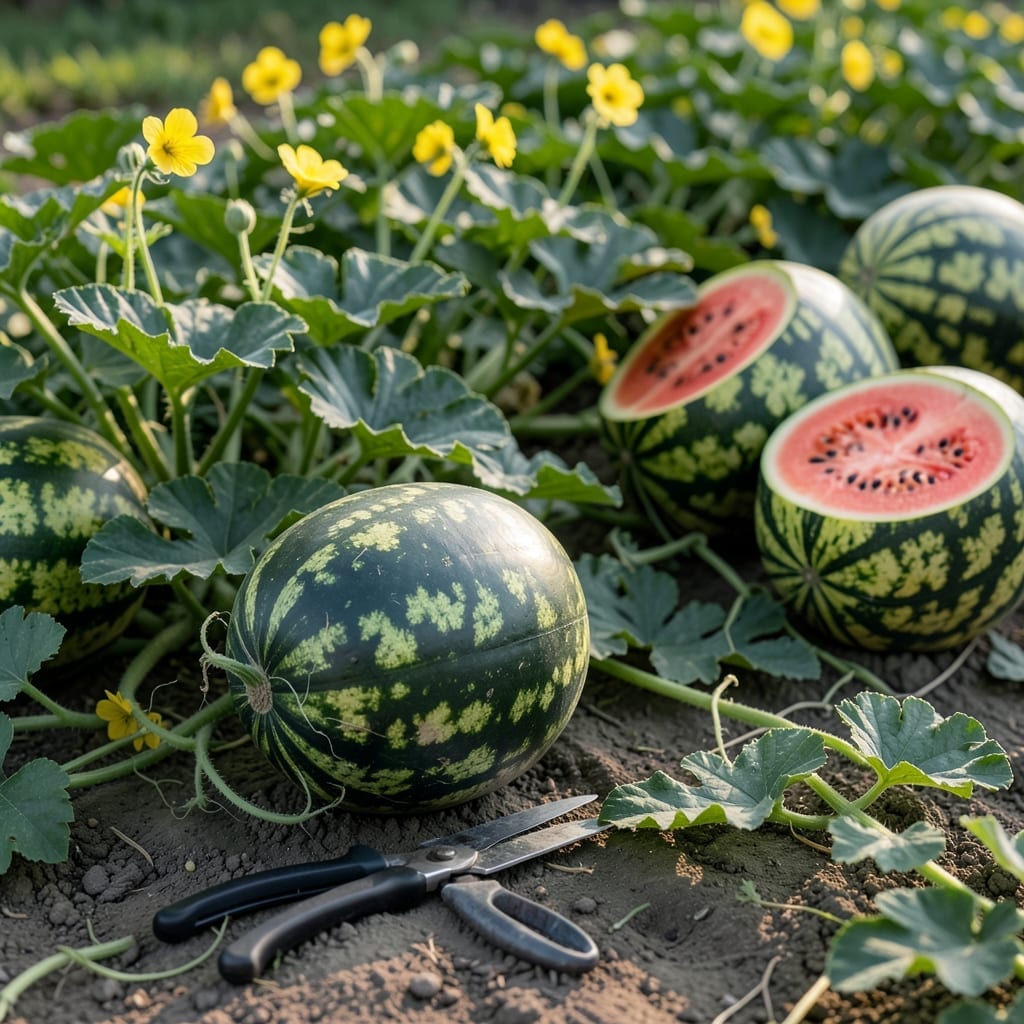
Curious about how many watermelons a single 🍉 plant can produce? The answer isn’t as simple as you might think. It all depends on the variety, your growing conditions, and the care you provide.
Some gardeners harvest just 1-2 melons per vine, while others coax 4-6 from a single plant. The difference often comes down to a few key practices that anyone can master.
Let me walk you through what affects yield and how to set your Watermelon plants up for their most productive season yet. The results might surprise you.

If you’re wondering about watermelon yield, the variety makes all the difference. Seedless types like ‘Triple Crown’ often produce 1-2 melons per vine, each weighing 10-15 lbs. These need pollination help from seeded varieties nearby.
For bigger harvests, try seeded varieties like ‘Sugar Baby’ or ‘Crimson Sweet’. With ideal conditions, these can yield 2-4 melons per plant, each around 15-25 lbs. Their vines spread 6-8 feet, so give them room to roam.
| Variety | Fruits per Plant | Fruit Weight | Vine Length |
|---|---|---|---|
| Seedless (Triple Crown) | 1-2 | 10-15 lbs | 6-8 ft |
| Seeded (Sugar Baby) | 2-4 | 15-20 lbs | 6-10 ft |
| Mini (Golden Midget) | 4-6 | 2-4 lbs | 3-5 ft |
| Large (Carolina Cross) | 1-2 | 25-35 lbs | 8-12 ft |
Don’t overlook mini watermelons like ‘Golden Midget’. These compact plants can produce 4-6 small fruits, perfect for containers. Each melon is only 2-4 lbs, but their sweet flavor packs a punch.
On the other end, giant varieties like ‘Carolina Cross’ focus their energy on 1-2 enormous melons. These can reach 35 lbs or more, but require longer growing seasons and plenty of space.
The key is matching the variety to your garden space and climate. In cooler areas, choose early-maturing types like ‘Black Diamond’ which can produce 2-3 melons in 80-90 days.☀️
Remember that vining habits affect yield too. Bush types stay compact but may produce fewer fruits. Running vines take more space but often reward you with more melons per plant.
For the best results, I always recommend starting with 2-3 plants of different varieties. This gives you a mix of sizes and flavors while ensuring cross-pollination for seeded types. Plus, it extend your harvest window!
In my experience, the most productive plants receive consistent water and full sun. Watermelons are 90% water, so don’t let the soil dry out completely during fruit development.🌱
Finally, be patient. Even the most prolific varieties need 70-100 days to mature. The wait is always worth it when you slice into that first homegrown watermelon of the season.
To get the most watermelons from each plant, start with proper spacing. Give vines 3-4 feet between plants and 6-8 feet between rows. Crowding stresses plants and reduces yield.
Ensure full sun exposure for at least 6-8 hours daily. Watermelons thrive in warm conditions, so plant in well-draining soil with plenty of organic matter. This boosts vine health and fruit production.
I always monitor pollen activity in my garden. Bees are great, but sometimes I give them a hand by transferring pollen from male to female flowers with a small brush. This can double your fruit set rate.
Consistent watering is critical, especially during fruit development. Aim for 1-2 inches per week, tapering off as harvest nears. Too much water late in the season can dilute sugar content.
Avoid over-fertilizing with nitrogen, which promotes leaf growth at the expense of fruit production. Instead, use a low-nitrogen, high-phosphorus fertilizer to encourage blooming and fruiting.
Finally, rotate crops yearly to prevent disease buildup. Watermelons are heavy feeders, so I always plant them where beans or peas grew the previous year. This keeps the soil fertile and reduces pest issues.🌱