
Beautiful Plants For Your Interior
Beautiful Plants For Your Interior
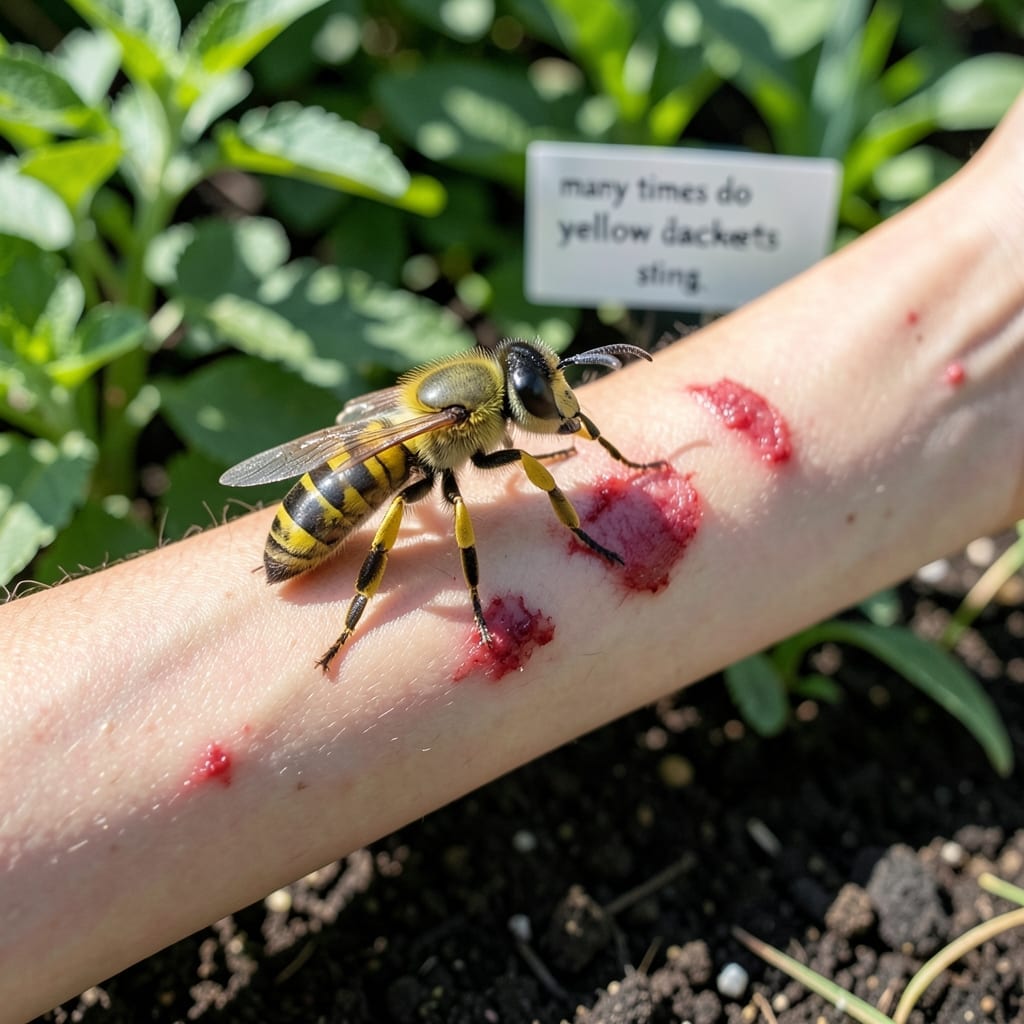
Yellow jackets can sting repeatedly because their smooth stingers don’t detach. A single wasp may sting multiple times in rapid succession if it feels threatened or provoked.
Unlike honeybees that lose their barbed stingers and die after one attack, yellow jackets retain their smooth stingers. This allows them to deliver venom in quick bursts, often targeting the same victim repeatedly. I’ve seen these aggressive wasps chase intruders for short distances to continue stinging. ⚡
Their venom contains compounds that trigger pain and allergic reactions, making multiple stings particularly dangerous. Always stay calm and move away slowly if you encounter them.
💡 In This Article
The smooth stinger structure is the game-changer. Unlike honeybees with barbed stingers that tear away, yellow jackets have lance-like stingers that slide in and out effortlessly. This design allows them to pump venom in 0.1-second intervals, delivering multiple doses without self-harm. The stinger itself is connected to a venom sac that contracts with each thrust.
Each sting injects about 2-3 micrograms of venom containing acetylcholine, histamine, and kinase. These compounds trigger immediate pain and inflammation. What’s more, the venom contains pheromones that signal other yellow jackets to join the attack, creating a swarm response. This is why a single disturbance can lead to dozens of stings in seconds. ⚡
Yellow jackets are particularly aggressive from late summer to fall when colonies peak at 1,000-4,000 workers. Their nests, often built underground or in wall voids, are defended fiercely. Unlike paper wasps that retreat after one warning sting, yellow jackets perceive threats as existential and will pursue intruders up to 10-15 feet away from their nest.
The smooth stinger also means they can vary their attack angle. I’ve observed them sting, withdraw, and reorient their bodies to target different body parts in rapid succession. This adaptability makes them more dangerous than other stinging insects with fixed attack patterns. Their ability to sting through thin fabrics adds to the risk. 💫
This biological advantage serves their role as colony protectors. While honeybees sacrifice themselves for the hive, yellow jackets preserve their lives to continue defending their territory. This evolutionary adaptation explains why they’re responsible for the majority of wasp-related emergency room visits in the U.S. each year.
Their stingers are smooth, unlike honeybees’ barbed ones. This lets them pull out and sting again immediately without harming themselves. A single wasp can deliver 5-10 stings in rapid succession.
Yellow jackets can pump venom in 0.1-second intervals. Their venom sac contracts automatically with each thrust, allowing near-instant repeated attacks if threatened.
Sudden movements, swatting, or disturbing their nest provokes repeated stings. They release pheromones that signal other wasps to join the attack, escalating the threat.
They can pursue intruders up to 10-15 feet from their nest. Unlike other wasps, they don’t retreat after one sting—they’ll keep attacking if they sense continued danger.