
Beautiful Plants For Your Interior
Beautiful Plants For Your Interior
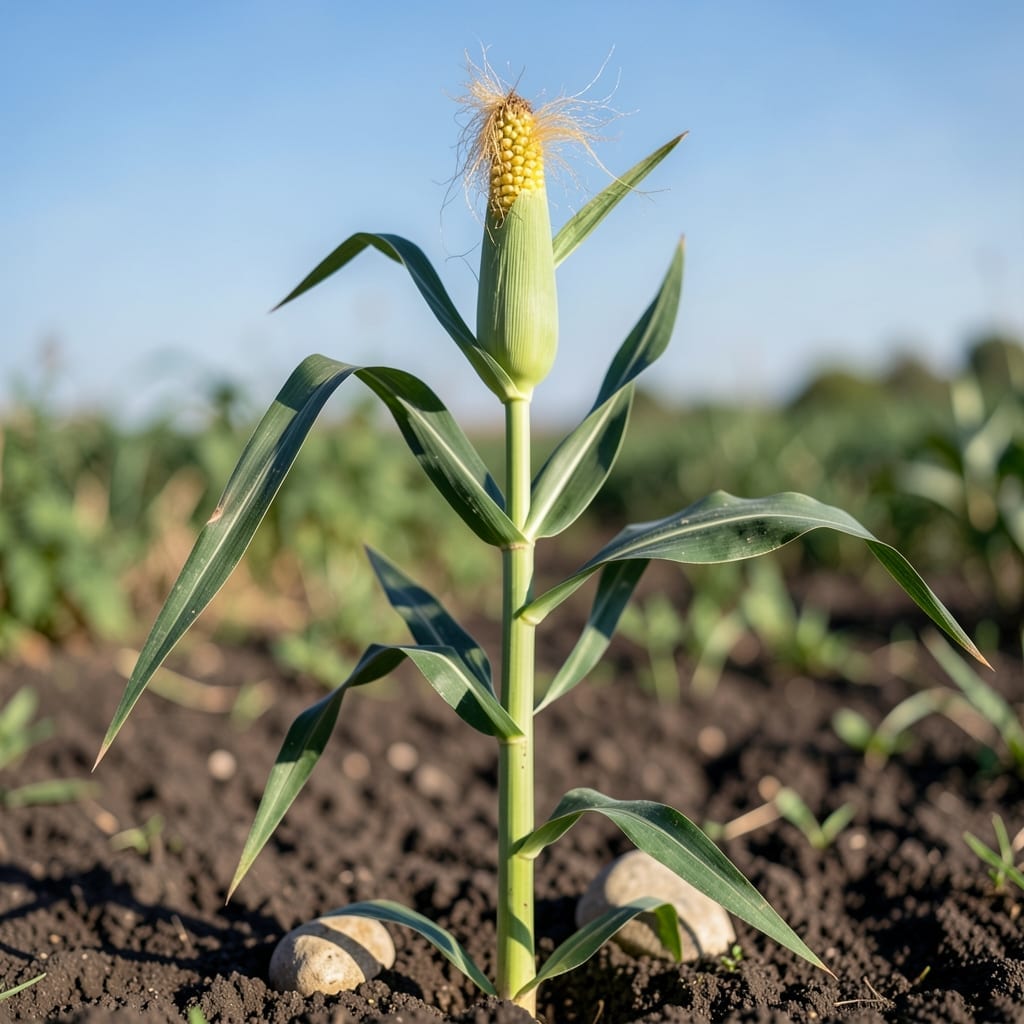
Ever wondered how many ears of Corn 🌽 you can expect from a single stalk? The answer might surprise you—and it could change how you plan your garden this season.
I’ve seen many gardeners assume each stalk produces just one ear, but the reality is often more productive. Understanding this simple fact can help you maximize your harvest.
Let me walk you through what to expect and how to get the best yield from your Corn this year.
Most corn stalks produce 1-2 ears per plant, though some robust varieties can yield 3 ears under ideal conditions. This is the natural biology of Zea mays, our common garden corn.
I’ve found that sweet corn varieties typically give 1-2 ears, while field corn might produce slightly more. The key is understanding your corn variety and its growth habits.
| Corn Type | Ears Per Stalk | Notes |
|---|---|---|
| Sweet Corn | 1-2 | Most common for home gardens |
| Field Corn | 1-3 | Taller varieties, more ears |
| Baby Corn | 2-4 | Small ears, multiple per stalk |
| Popcorn | 1-2 | Smaller ears, less frequent |
The number of ears per stalk depends on several factors. Genetics play the biggest role, as some hybrids are bred for multiple ears. I always check the seed packet for specific yield information.
Growing conditions also make a difference. Full sun and rich soil help maximize production. I’ve noticed my corn plants in well-drained soil with plenty of organic matter tend to produce more ears.
Spacing is another critical factor. When I plant my corn seeds 12-18 inches apart, each stalk has enough room to develop multiple ears. Crowded plants compete for resources and often yield less.
Water and nutrients are equally important. I make sure my corn patch gets 1-2 inches of water weekly and is fertilized with a balanced 10-10-10 formula. This encourages strong stalk growth and ear development.
Pollination can’t be overlooked. Corn is wind-pollinated, so I plant in blocks of 4 rows rather than single rows. This ensures good pollen distribution between plants, leading to better ear formation.
In my experience, the first ear is always the largest. Any additional ears on the same stalk tend to be smaller but still perfectly edible. I’ve had success with varieties like Golden Bantam producing two good-sized ears per stalk.
Remember that environmental stress can reduce yield. Drought or extreme heat during silking can prevent ears from forming properly. I always monitor weather conditions during this critical growth stage.
By understanding these factors, you can realistically expect 1-2 ears per stalk in most home garden situations. With optimal conditions and the right variety, you might even get three from some of your healthiest plants 🌱
To get the most ears per stalk, I focus on optimal planting density. I plant my corn seeds in blocks of 4 rows rather than single rows for better pollination success.
Soil fertility is another game-changer. I always work in plenty of compost before planting and use a balanced fertilizer to ensure my corn has the nutrients it needs to produce multiple ears.
Watering plays a huge role in ear development. During the silking stage, I make sure my corn gets 1-2 inches of water per week to support ear formation.
I’ve found that mulching around the base of my corn plants helps retain moisture and keep roots cool, which can lead to better ear production. It also suppresses weeds.
For maximum yield, I choose high-yielding varieties like Silver Queen or Peaches and Cream. These are known to produce 2 ears per stalk consistently under good conditions.
Finally, I monitor for pests like corn earworms, which can damage developing ears. Regular scouting and organic controls help protect my harvest and ensure each stalk reaches its full potential 🌱