
Beautiful Plants For Your Interior
Beautiful Plants For Your Interior
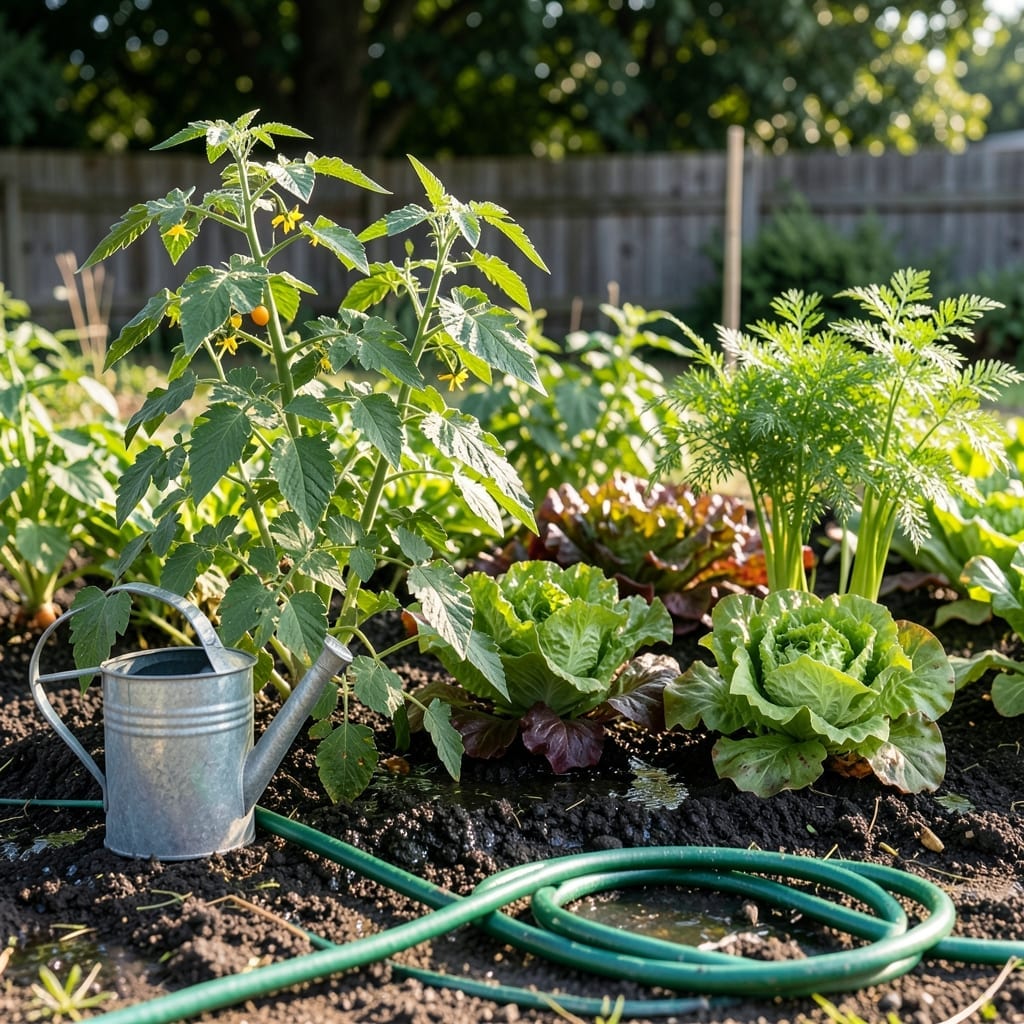
Watering your 🥕 Vegetable Garden seems simple, but doing it correctly can mean the difference between a bountiful harvest and wilted, struggling plants.
The key lies in timing, technique, and understanding your plants’ unique needs. What works for tomatoes won’t necessarily work for carrots.
I’ve learned through trial and error that even 5 minutes too much or too little can impact your garden’s health. The good news? It’s easier than you think once you know the basics.
Let me show you how to get it just right for thriving, productive plants all season long.
Knowing how long to water vegetable garden areas starts with recognizing that different plants have unique moisture needs. Leafy greens like lettuce and spinach require consistent moisture but can’t tolerate soggy soil.
Root crops such as carrots and beets need deep watering to develop properly, while fruiting plants like tomatoes and peppers demand more frequent watering during fruit set. 🌱
| Vegetable Type | Stage | Duration | Frequency |
|---|---|---|---|
| Leafy Greens | Seedlings | 10-15 min | Daily |
| Leafy Greens | Mature | 15-20 min | Every 2-3 days |
| Root Crops | Seedlings | 15-20 min | Every 3 days |
| Root Crops | Mature | 20-25 min | Weekly |
| Fruiting Plants | Flowering | 20-30 min | Every 2-3 days |
| Fruiting Plants | Harvest | 25-30 min | Every 2 days |
For seedlings, I recommend shorter but more frequent watering sessions of 10-15 minutes to keep the top inch of soil consistently moist without waterlogging.
As plants mature, you can reduce frequency but increase duration to 20-30 minutes, encouraging deep root growth. This is especially true for drought-tolerant varieties like Swiss chard or kale. 🌿
During peak summer, I’ve found that early morning watering between 6-9 AM reduces evaporation loss and helps plants absorb moisture before the heat kicks in.
For container gardens, daily watering is often necessary as potted soil dries out faster than ground soil. I check my container tomatoes every morning with a moisture meter.
The finger test works well: stick your finger 1-2 inches into the soil. If it feels dry, it’s time to water. For clay soil, you may need longer but less frequent sessions.
Remember that sandy soil drains quickly, so you’ll need more frequent but shorter watering. I’ve seen lettuce wilt in sandy beds after just 24 hours without water. 💧
Finally, always adjust based on weather conditions. In drought periods, I increase both duration and frequency, while in cool, rainy weeks, I might skip watering entirely.
Watering your vegetable garden efficiently starts with choosing the right method. I always recommend drip irrigation for its precision, delivering water directly to roots while minimizing waste.
Sprinklers work too, but they’re less efficient and can wet foliage, increasing disease risk. For me, morning watering is non-negotiable—it reduces evaporation and fungal issues.
For deep watering, I aim for 1-2 inches per week, including rainfall. This encourages strong root growth and drought resistance. Shallow watering leads to weak roots that struggle in heat.
I check soil moisture by sticking my finger 1-2 inches deep. If it’s dry, it’s time to water. Mulching helps retain moisture and reduces the need for frequent watering.
In hot summer months, I water every 2-3 days, while in cooler seasons, weekly watering is often enough. Adjust based on your soil type and weather.
Finally, always water at the base of plants, not the leaves. This prevents fungal diseases and ensures water reaches the roots where it’s needed most. 🌱