
Beautiful Plants For Your Interior
Beautiful Plants For Your Interior
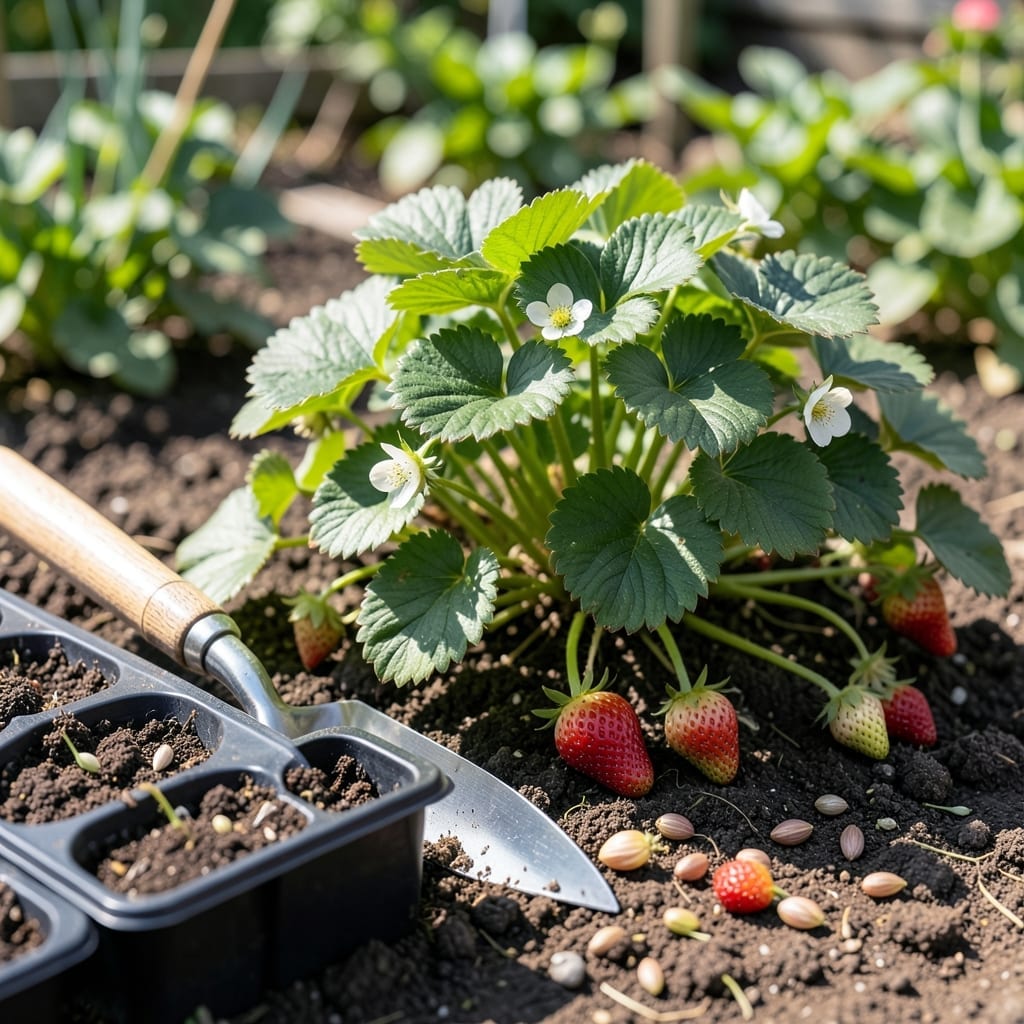
Growing 🍓 Strawberry from seed can test your patience, as germination often feels like waiting for a secret to unfold. The timeline varies more than you might expect, depending on factors you can control.
From temperature to moisture levels, every detail plays a role in how quickly those tiny seeds sprout. I’ll show you what to watch for and how to create the ideal conditions.
Discover the typical range and pro tips to speed up the process. Your future harvest starts with understanding this first critical stage.


If you’re wondering how long for strawberry seeds to germinate, the answer isn’t simple. Typical timelines range from 7 to 28 days, but some varieties may take up to 6 weeks to sprout.
In my experience, the ideal temperature of 60-70°F speeds up germination significantly. Cooler conditions slow it down, while too much heat can harm the seeds. Consistency is key here.
| Germination Factor | Optimal Condition |
|---|---|
| Temperature | 60-70°F (15-21°C) |
| Moisture | Consistently damp, not soggy |
| Light | Bright, indirect light |
| Soil Depth | 1/4 inch deep |
| Seed Age | Fresh seeds (1-2 years old max) |
I’ve found that light exposure matters more than many realize. While strawberry seeds don’t need light to germinate, they sprout faster with 14-16 hours of light daily once they begin to emerge.
Soil moisture is another critical factor. The medium should stay evenly damp but never waterlogged. A spray bottle works wonders for maintaining this balance without disturbing the seeds.
Don’t overlook seed age and viability. Older seeds take longer to germinate, if they sprout at all. I always check the packet date and opt for seeds less than 2 years old for best results.
The planting depth makes a difference too. Bury seeds no deeper than 1/4 inch. Any deeper, and they’ll struggle to reach the surface, delaying germination significantly.
For the fastest results, I recommend using a seed-starting mix rather than regular garden soil. These mixes are sterile and free of weeds or diseases that could hinder your strawberry seeds.
Remember that patience is key with strawberries. Even under perfect conditions, some seeds in a batch may take longer than others to sprout. Don’t give up too soon!
If you’re starting indoors, a heat mat can provide the consistent warmth strawberry seeds love. This simple tool often shaves a week or more off the germination time.
Finally, keep your seed trays in a warm location away from drafts. A sunny windowsill might seem ideal, but temperature fluctuations there can actually slow down the process.
If you’re eager to see strawberry seeds sprout faster, I’ve got proven tricks. The first is cold stratification, which mimics winter and breaks seed dormancy.
Place seeds in a damp paper towel inside a sealed bag, then refrigerate for 2-4 weeks. This simple step can cut germination time in half for many varieties.
A seedling heat mat is my go-to tool for consistent warmth. It maintains that 60-70°F sweet spot strawberry seeds love, often speeding up sprouting by 7-10 days.
For light, I recommend a grow light setup if natural light is unreliable. Position it 2-4 inches above the soil and adjust as seedlings grow to prevent legginess.
Remember that moisture consistency is crucial. I check my trays daily, misting when the surface starts to dry. Avoid letting them sit in water, though, as soggy soil can rot seeds.
Finally, air circulation helps prevent mold. A small fan on low near your trays (not directly blowing on them) keeps air moving while maintaining the perfect environment for fast germination.
With these methods, you can expect to see sprouts in as little as 7-10 days instead of the typical 2-4 weeks.