
Beautiful Plants For Your Interior
Beautiful Plants For Your Interior
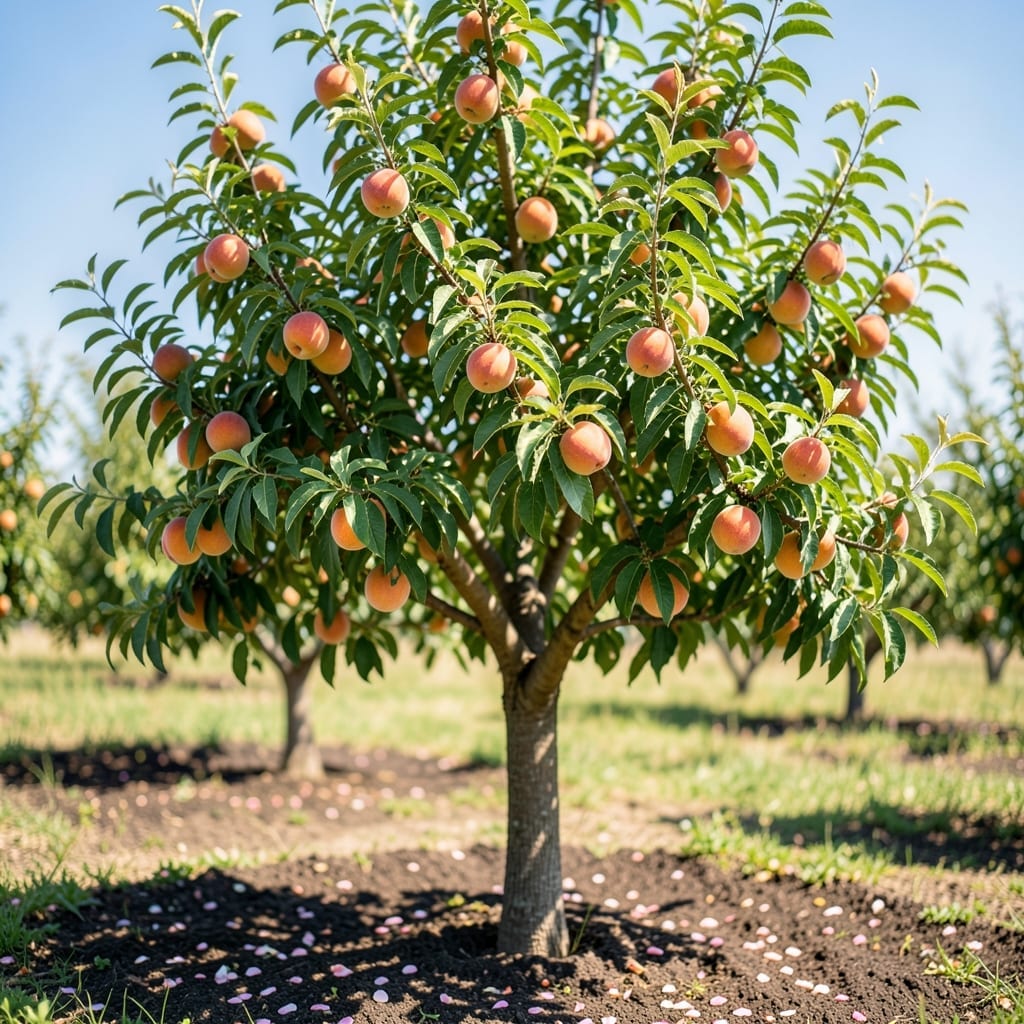
Watching your Peach Tree 🍑 grow is exciting, but waiting for that first juicy fruit can test even the most patient gardener. The timeline for a Peach Tree to bear fruit varies widely depending on the variety, growing conditions, and care.
Some early-bearing types may produce in 2-3 years, while standard varieties often take 4-5 years to mature. Understanding these factors can help you set realistic expectations and enjoy the process.
I’ll break down the key influences on fruiting time and share practical tips to help your Peach Tree reach its full potential faster. Let’s get started.
The fruiting timeline for your peach tree depends heavily on its variety and how it was planted. I’ve seen dwarf peach trees bear fruit in as little as 2-3 years, while standard peach trees may need 4-5 years to mature.
Grafted trees, which combine a mature rootstock with a young variety, often fruit sooner than seed-grown trees. Climate and growing conditions also play a huge role, with warmer zones often speeding up the process.
| Variety | Fruiting Age | Notes |
|---|---|---|
| Dwarf Peach | 2-3 years | Compact size, great for containers |
| Semi-Dwarf Peach | 3-4 years | Balanced size, easier to manage |
| Standard Peach | 4-5 years | Tall, full-size tree, needs space |
| Grafted Peach | 2-4 years | Faster maturity, rootstock dependent |
Early-bearing varieties like ‘Reliance’ are popular for gardeners who want faster results. This cold-hardy type can produce peaches in 2-3 years with proper care, even in cooler climates.
In contrast, traditional varieties like ‘Elberta’ or ‘Redhaven’ typically require 4-5 years before fruiting. These trees are larger and often produce bigger harvests once they mature.
Rootstock choice also impacts fruiting time. A dwarfing rootstock can speed up maturity, while a standard rootstock may take longer but results in a sturdier tree with a longer lifespan.
If you plant a bare-root peach tree in late winter, it may establish faster than a container-grown tree planted in summer. Proper planting depth and soil preparation are key to encouraging early fruiting.
In warmer USDA zones 7-9, peach trees may fruit 6-12 months earlier than in cooler zones like 5-6. Consistently frost-free winters and long growing seasons help trees mature more quickly.
I always recommend testing soil pH before planting. Peach trees thrive in slightly acidic soil (pH 6.0-6.5). Amending your soil with organic compost can give your tree the best start for faster fruiting. ☀️
Finally, remember that even after reaching fruiting age, young peach trees may produce only a few fruits at first. Yields typically increase as the tree matures, reaching full production by year 6-8.
If you’re wondering why your peach tree isn’t fruiting yet, several key factors could be at play. I’ve found that soil quality and sunlight exposure are often the biggest influencers on how quickly a tree reaches fruiting age.
Watering practices also make a difference. Too much or too little water stress can delay fruit production, while consistent moisture helps trees establish faster. 🌱
I always recommend testing your soil before planting. Amending with organic compost can improve drainage and fertility, giving your tree the best start for faster fruiting.
Sunlight is another critical factor. Peach trees need full sun to thrive. If your tree is in a shady spot, consider transplanting it to a sunnier location to boost fruit production.
Pruning is essential for shaping young trees and encouraging fruiting wood. I prune my peach trees in late winter to remove dead or crossing branches and open up the canopy for better airflow and sunlight penetration. ✂️
Finally, pest and disease control can’t be overlooked. Common issues like peach leaf curl or brown rot can weaken trees and delay fruiting. Regular inspections and preventative sprays help keep trees healthy.
By optimizing these factors, you can create the ideal conditions for your peach tree to start producing fruit as soon as possible. With the right care, you might even see earlier harvests than expected! 🌳